Every hospitality trade publication is currently throwing a pity party for Rogano. The headlines read like an obituary for small business justice after the UK Supreme Court rejected the iconic Glasgow restaurant’s appeal for pandemic-related lost profits. The lazy consensus among legal commentators and armchair restaurateurs is predictable: big insurance won, the little guy got crushed, and the courts have abandoned common sense.
That narrative is completely backwards.
If Rogano had won that appeal, the entire commercial insurance market would have imploded into an uninsurable mess of retroactive liability. Worse, business owners would have been handed a false sense of security that encourages sloppy risk management. The Supreme Court didn’t betray the hospitality sector. They enforced the basic mathematics of risk transfer—and exposed a brutal truth that most founders refuse to confront until they are staring at a shuttered storefront.
The Seductive Lie of "All-Risk" Protection
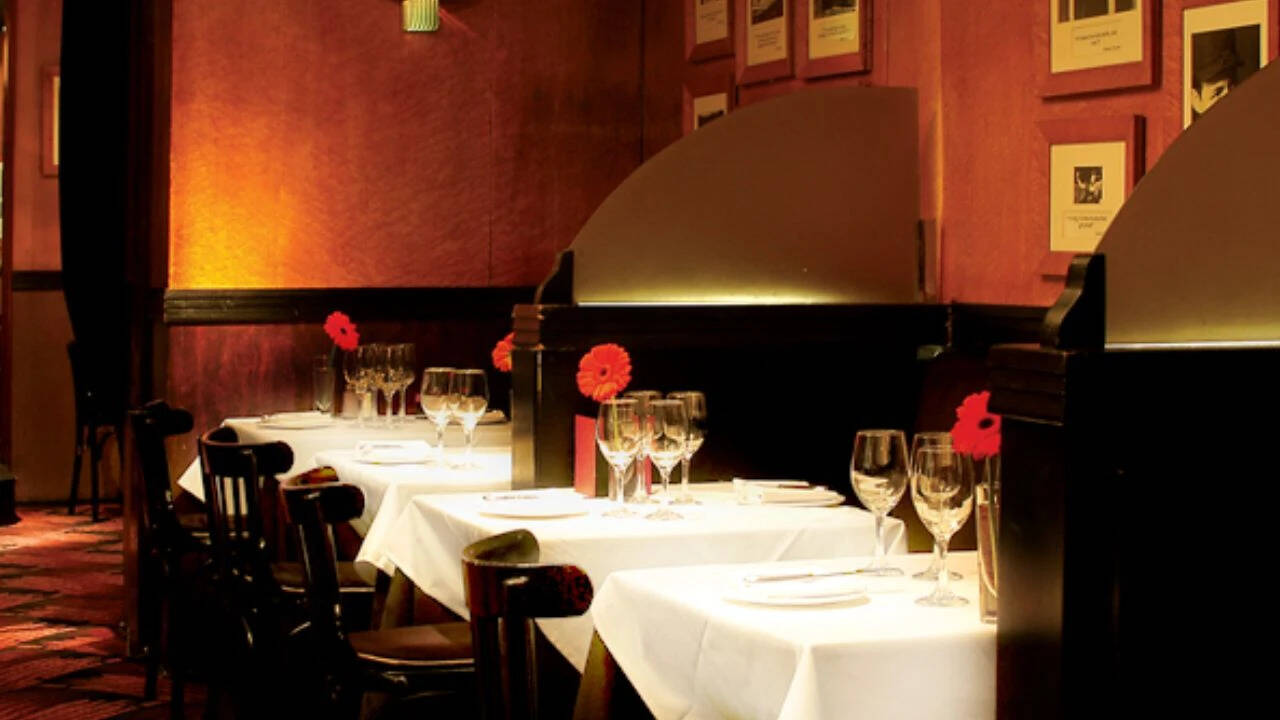
Let’s look at what actually happened in Rogano Ltd v Brit Syndicates Ltd. When the COVID-19 lockdowns hit in 2020, Rogano—an Art Deco institution in Glasgow operating since 1935—was forced to close its doors. Like thousands of operators, management reached for their commercial combined insurance policy, hoping the business interruption (BI) clause would act as a financial parachute.
Their policy contained an extension for notifiable diseases. On the surface, to a layperson reading a broker’s glossy summary, that sounds like a slam dunk. A pandemic is a disease. The government notified everyone. Pay up.
Except that isn't how underwriting works.
Rogano’s policy was triggered by the occurrence of a notifiable disease at the premises or within a specific radius, or by denial of access due to a localized incident. In Scotland, the Inner House of the Court of Session—and subsequently the UK Supreme Court—looked at the precise causation chain. Was Rogano closed because someone caught COVID-19 inside their dining room on Exchange Place? No. Rogano was closed because the Scottish Government issued sweeping nationwide regulations affecting every restaurant from the Borders to the Highlands simultaneously.
The mainstream press treats this distinction like a cheap semantic parlor trick. It isn't. It is the foundational firewall of actuarial science.
Insurance is not a magic pot of money designed to absorb macroeconomic catastrophes. Insurance works on the law of large numbers and uncorrelated risk. If a kitchen fire burns down Rogano, the premiums paid by ten thousand other restaurants in London, Manchester, and Edinburgh cover the loss. Those other ten thousand restaurants are still open, still generating cash flow, and still paying into the pool.
When a government shuts down every restaurant at the exact same moment, the pool evaporates. No private insurer on earth collects enough premium to pay out 100% of national GDP losses simultaneously. If the courts had forced Brit Syndicates to rewrite policy wordings post-hoc to cover nationwide statutory lockdowns under localized disease clauses, insurers wouldn't just absorb the hit and smile. They would exit the SME market entirely or triple premiums overnight.
I’ve sat in underwriting rooms in the City of London watching directors tear up entire hospitality binders because judicial activism made pricing risk impossible. You don't want a court system that turns localized property policies into sovereign bailout funds. If you get that, nobody gets insured next year.
Why the 2021 FCA Test Case Misled Business Owners
To understand why so many operators felt blindsided by the Rogano ruling, you have to trace the hangover from the landmark 2021 Financial Conduct Authority (FCA) test case (FCA v Arch Insurance).
When the Supreme Court ruled largely in favor of policyholders in 2021, business owners celebrated as if every pandemic claim was now guaranteed. Brokers didn't do much to correct that euphoria. They let clients believe the door was wide open.
That was a massive misreading of the law. The 2021 FCA ruling specifically analyzed non-damage denial of access and disease clauses where the wording did not strictly tether the loss to a localized, premises-specific outbreak in the way Rogano’s contract did. Lord Hamblen and Lord Leggatt—the architects of the 2021 judgment—established a nuanced causation framework, ruling that individual cases of COVID-19 within a 25-mile radius could be treated as concurrent causes alongside the wider pandemic.
Policyholders saw "concurrent cause" and stopped reading the fine print.
Rogano’s legal team tried to stretch that precedent across a policy wording that simply couldn't bear the weight. Their contract required a direct link between the disease at the premises and the restriction imposed. By rejecting the appeal, the Supreme Court drew a hard, necessary boundary around the 2021 test case. They signaled that judicial sympathy has a strict contractual ceiling.
Here is the uncomfortable reality: contracts are read literally when millions of pounds are on the line.
Most founders treat insurance renewal as an annual administrative chore—a box-ticking exercise delegated to a junior finance manager who picks the cheapest quote from a broker PDF. Then, when disaster strikes, they expect a judge to rescue them from a contract they never actually read.
Dismantling the Wrong Questions
When rulings like this drop, search engines light up with frantic queries from business owners trying to figure out where they stand. Almost every single one of those questions starts from a flawed premise.
"How can I make sure my business interruption insurance covers future lockdowns?"
Stop asking this. You can’t—at least not at a price your balance sheet can survive.
Following 2020, virtually every major syndicate at Lloyd’s and every composite insurer in the UK slapped absolute communicable disease exclusions (like LMA5393) onto standard commercial policies. Even if you find a specialist parametric product willing to cover government-mandated closures, the premium will cannibalize your net margin. Systemic, government-ordered shutdowns are a sovereign risk, not an insurable commercial peril. Trying to buy your way out of sovereign risk through a standard broker is burning cash.
"Are insurance companies legally allowed to use technicalities to dodge payouts?"
Calling a policy exclusion or a specific insuring clause a "technicality" is like calling the brakes on a car an optional accessory.
An insurance policy is a unilateral contract of adhesion where the scope of the promise is defined entirely by the words on the page. You didn't buy "everything that goes wrong insurance." You bought named perils or specific triggers priced down to the basis point. If an insurer pays a claim outside the wording, they aren't being generous—they are violating their fiduciary duty to their capital providers and driving up the cost of capital for every compliant policyholder in the pool.
"Should I sue my insurer if my pandemic or supply chain claim was denied?"
Only if you have £500,000 sitting around that you enjoy lighting on fire, or if your specific wording mirrors one of the exact templates already validated by the Supreme Court in FCA v Arch or Corbin & King. Litigation funders have already picked over the carcass of UK pandemic claims. If a litigation funder won't take your case on a non-recourse basis today, it isn't because they missed a hidden angle. It’s because your wording is dead on arrival.
The Structural Blind Spot in Commercial Risk
I’ve seen companies blow millions chasing phantom recoveries while their actual operational vulnerabilities bled them dry. A restaurant group in Manchester spent eighteen months and six figures in legal retainers fighting a losing battle over a £400,000 BI claim, completely ignoring the fact that their lease terms had zero force majeure rent-suspension provisions. Had they spent a fraction of that legal budget renegotiating their commercial lease at the last break clause, they would have saved twice what the insurer owed them.
That is the real lesson of Rogano.
Hospitality operators obsess over external payouts while ignoring internal contractual armor. Think about the anatomy of a restaurant’s fixed cost base during a forced closure:
- Commercial Rent: Usually 8% to 12% of top-line revenue, rigid and unforgiving.
- Labor: Sticky, emotionally charged, and legally protected.
- Debt Service: Interest clock ticking regardless of covers served.
- Supplier Contracts: Minimum volume commitments that turn into liabilities overnight.
Notice where insurance sits on that list. It doesn't. Insurance is a lagging, contested, friction-heavy recovery mechanism that takes years to pay out—even when you win. If your survival depends on an insurance claims adjuster agreeing with your interpretation of proximate cause during a global crisis, your business model is fundamentally fragile.
Imagine a Scenario Where Rogano Won
Let’s play out the alternative universe that the pundits are wishing for.
Imagine the UK Supreme Court overturned the Scottish courts and ruled that localized disease clauses automatically trigger whenever a national government passes a public health statute.
Within 48 hours, every commercial insurer operating in the UK would have to recalculate their Incurred But Not Reported (IBNR) reserves. Solvency II capital requirements would spike immediately. Reinsurers in Munich and Zurich—the people who actually backstop UK insurers—would hike treaty rates by 40% to 60% at the next renewal cycle.
Who pays for that? Not the shareholders of Brit Syndicates. You do.
Every café in Brighton, every gastropub in Leeds, and every fine-dining room in Glasgow would watch their property and liability premiums double, while deductibles climbed from £1,000 to £25,000. Marginal operators—the exact independent businesses the commentators claim to defend—would be priced out of basic fire and theft cover entirely, forcing them into breach of their commercial lease covenants.
You cannot cheat actuarial gravity. When courts force insurers to pay for unpriced systemic risk, the market retaliates by shrinking coverage and raising prices for everyone left standing.
What Smart Operators Actually Do Instead
If you run a capital-intensive, bricks-and-mortar business, stop treating your insurance broker like a wizard and start treating risk like an engineer. The Rogano decision is your wake-up call to overhaul how you structure contractual survival.
1. Weaponize Your Lease Agreements
Your landlord is your real business interruption partner, whether they like it or not. During your next lease renewal or acquisition, refuse to sign standard institutional FRI (Full Repairing and Insuring) leases without a pandemic or statutory closure rent-suspension clause.
Landlords will push back hard. Stand your ground. Propose a 50/50 pain-share formula: if government action legally prohibits trading from the premises, base rent drops by 50% automatically for the duration of the restriction, with zero deferred arrears. Getting a landlord to share sovereign risk upfront is infinitely more reliable than suing an insurer three years after the fact.
2. Audit Your Policy Wordings Before You Bind
Never accept a "Statement of Fact" or a summary schedule as proof of coverage. Demand the full, unredacted policy wording before you pay the deposit. Look specifically at the Business Interruption extensions:
- Does the Denial of Access clause require physical damage to neighboring property, or does it cover non-damage prevention of access?
- Is there a radius restriction (e.g., 1 mile vs. 25 miles), and how is the trigger defined?
- Does the policy rely on "Trends Clauses" that allow the insurer to reduce your payout if the wider economy was already tanking anyway?
If you don't understand the difference between a prevention of access and a hindrance of access, pay a specialist policyholder coverage lawyer for two hours of their time prior to renewal. Two thousand pounds spent on pre-loss wording review beats two hundred thousand spent on post-loss litigation.
3. Build a Sovereign Liquidity Buffer
Stop treating retained earnings as lazy capital. In low-margin, high-fixed-cost sectors like hospitality and retail, holding less than 90 days of bare-bones fixed overhead in unencumbered cash or an undrawn, committed revolving credit facility is operational Russian roulette.
When a black swan event hits, cash in your own operating account clears in seconds. An insurance claim clears in three to five years—if the Supreme Court doesn't throw it out first.
The Necessary Brutality of Contract Law
To be completely transparent, there is a harsh downside to strict contractual enforcement. Smaller businesses lack the bargaining power of FTSE 100 corporations. When an independent restaurant buys an off-the-shelf commercial combined policy, they aren't negotiating bespoke manuscript wordings with a Lloyd's underwriter. They are taking what they are given. Upholding strict literalism inevitably leaves outgunned founders holding the bag when unprecedented disasters strike.
That asymmetry is real. It stings. Watching an eighty-five-year-old culinary landmark like Rogano lose its final appeal is genuinely grim for the people who built and ran it.
But bending contract law to soothe that sting destroys the very predictability that allows commerce to function. A legal system where words mean whatever a sympathetic judge decides they should mean after a crisis is a system where nobody can price risk, nobody can underwrite capital, and nobody knows what their contracts are actually worth.
Stop waiting for the courts to turn your insurance policy into a safety net it was never designed to be. Read your wordings, fix your leases, hoard your cash, and build a business that doesn't need a miracle from the Supreme Court to stay alive.