International outrage erupted in European capitals this week after Ratko Mladic, the convicted war criminal infamously known as the Butcher of Bosnia, received a quasi-state funeral in Belgrade. The spectacle prompted the United Kingdom to summon a top Serbian diplomat to answer for official state and military participation in the ceremony.
Mladic died in late August while serving a life sentence handed down by the United Nations International Criminal Tribunal for the former Yugoslavia. His convictions included genocide for the 1995 Srebrenica massacre, where roughly 8,000 Bosniak Muslim men and boys were systematically murdered, alongside orchestrating the brutal 43-month siege of Sarajevo. Rather than passing quietly, his death triggered an outpouring of nationalist pageantry that exposed deep fractures in European security relations.
Inside the Belgrade Memorial Service
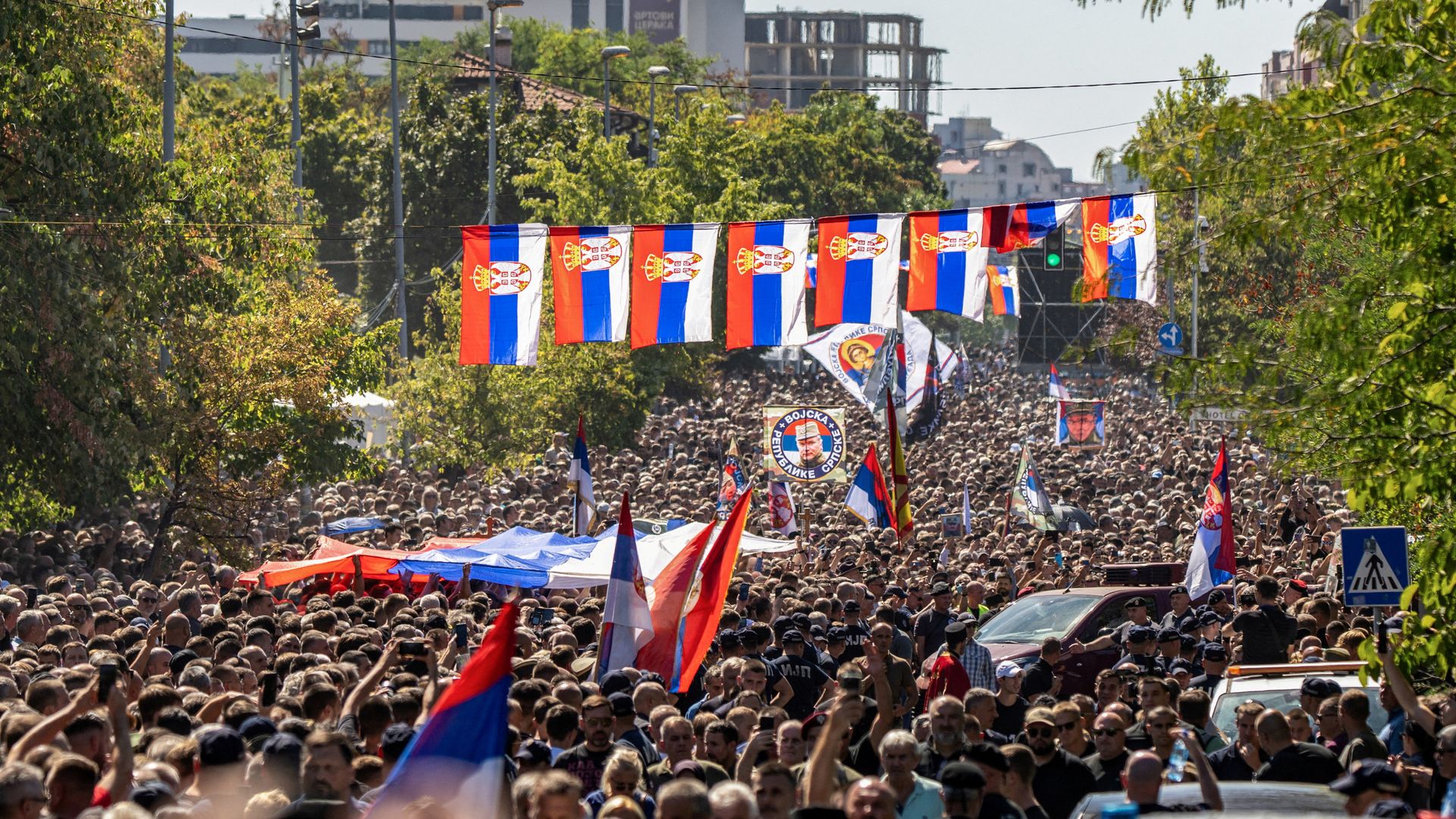
Thousands packed into the small St. Luke Church in Belgrade to pay respects, transforming what could have been a private burial into a public exhibition of defiance. Patriarch Porfirije, the head of the Serbian Orthodox Church, personally led the service. Soldiers from the Serbian armed forces openly carried the flag-draped coffin.
High-ranking government officials stood shoulder-to-shoulder with the family. Justice Minister Nenad Vujic attended in an official capacity, while President Aleksandar Vucic sent his son Danilo to the grounds. Conspicuously present too was Russia's ambassador to Serbia, alongside hardline regional actors like Bosnian Serb nationalist leader Milorad Dodik. Football ultras in the city also joined the chorus, displaying massive banners praising the convicted architect of ethnic cleansing during local matches.
State authorities defended their hands-on approach by claiming they only stepped in to keep public order and ensure the event remained dignified. Western governments viewed it differently.
The Diplomatic Fallout
London didn't wait long to react. The UK Foreign Office hauled in Serbia's charge d'affaires to issue a formal rebuke. British officials stated clearly that the active involvement of government and military personnel in glorifying a war criminal directly threatens regional stability and undermines reconciliation efforts in the Western Balkans.
Brussels mirrored this condemnation. European Commission President Ursula von der Leyen and European Council President Antonio Costa took to social media to call the images coming out of Belgrade shocking. Marta Kos, the EU enlargement commissioner, cancelled an upcoming official trip to Serbia, warning that embracing a convicted butcher flies in the face of everything the European Union stands for.
Serbia has technically been an EU candidate country since 2014, though progress has stalled for years. Brussels officials repeated a straightforward ultimatum: integration requires confronting the past and stamping out genocide denial, not rolling out the red carpet for war criminals.
Domestic Pressures Behind the Posturing
President Vucic continues walking a very narrow political tightrope. Having previously built his early career in far-right nationalist politics during the breakup of Yugoslavia, he now tries to balance lucrative ties with Moscow against the financial lifelines offered by the European Union.
Domestic stability has also been shaky. Public anger has surged against Vucic's ruling Serbian Progressive Party following infrastructure disasters and persistent corruption scandals. Capitalizing on the emotional momentum surrounding nationalist sentiment, the government announced plans to dissolve parliament and force snap elections.
By leaning into nationalist flashpoints, leadership aims to shore up its conservative base. However, alienating Western allies through open defiance over war crimes risks severe economic isolation, including the potential loss of billions in EU development funds.
The diplomatic pressure from London and Brussels signals that Western patience with historical revisionism in the Balkans is wearing thin. Serbia's leaders must decide whether their future lies with European integration or historical grievance.