The Persian Gulf just got a lot more volatile. The United Arab Emirates recently announced that its air defense network successfully intercepted an Iranian drone flying directly over its territorial waters.
If you think this is just another minor border skirmish, you're missing the bigger picture. This interception follows a tense weekend exchange where U.S. forces struck rocket launchers on an Iranian island to stop potential minelaying operations near the Strait of Hormuz. When drones start crossing into Emirati airspace, the buffer zone protecting regional stability evaporates instantly.
The Reality of the Strait of Hormuz Standoff
You cannot understand this drone incident without looking at what happened twenty-four hours prior. U.S. Central Command launched a precise strike on Larak Island after spotting Iranian forces prepping sea mines. Washington wants that vital shipping lane open. Tehran wants leverage.
The UAE finds itself squeezed right in the middle of this geopolitical vice. Abu Dhabi has tried walking a diplomatic tightrope for years, maintaining trade ties with Iran while anchoring its security architecture to Western alliances. That balancing act is failing. When the UAE Defense Ministry labeled the incoming unmanned aerial vehicle a dangerous escalation and a direct violation of sovereignty, they stopped playing diplomatic games.
Dissecting the Claims and Counter-Claims
Propaganda moves fast when missiles start flying. Following the drone interception over Emirati waters, Iranian military channels claimed they had targeted the Al Minhad Air Base in Dubai.
The UAE didn't hesitate to call that bluff. Officials flatly denied any successful strike on the base, pointing out that the drone was dealt with before it could cause structural damage or casualties.
Meanwhile, Iranian President Masoud Pezeshkian insists Tehran isn't looking for all-out war, pointing fingers outward while deploying rhetoric about exercising the right to self-defense. But actions speak louder than press conferences. Launching drones toward Gulf neighbors while U.S. Treasury officials ramp up economic isolation campaigns proves that hardliners in Tehran are calling the shots.
What Happens Next for Regional Business and Security
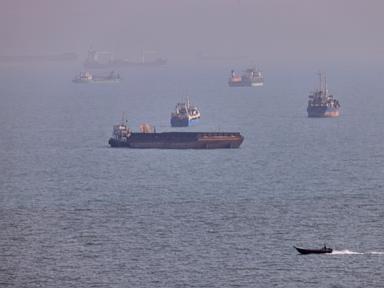
Companies operating in Dubai and Abu Dhabi are already re-evaluating risk matrices. Commercial shipping through the Strait of Hormuz remains under constant threat, and insurance premiums for cargo vessels are climbing by the day.
Economic pressure from Washington is working in tandem with military deterrence. The UAE previously suspended trade with Iran after previous missile splashes near commercial lanes, signaling that economic patience has worn thin.
Expect tougher maritime patrols, stricter airspace monitoring across the Gulf Cooperation Council states, and a much colder cold war between Tehran and its southern neighbors. The illusion of regional immunity is gone. Every nation in the Gulf now knows they are square in the crosshairs.