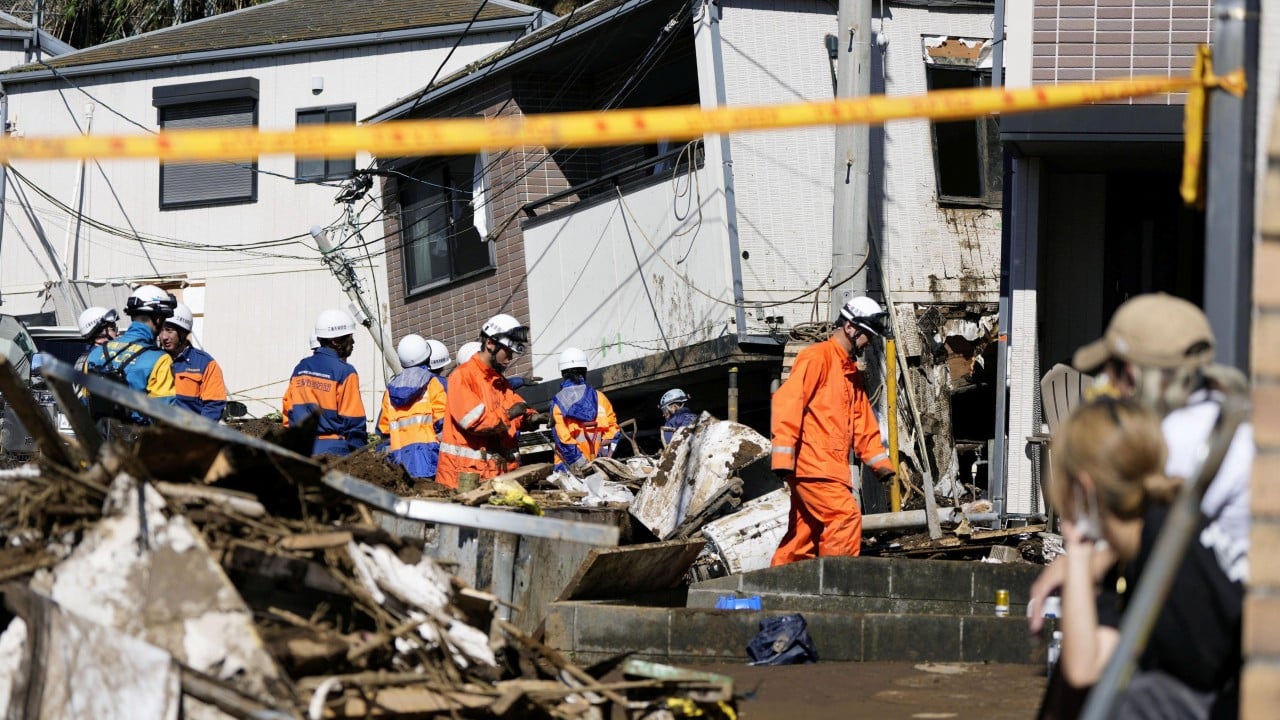
Natural hazard management operates on a strict cost-accounting balance sheet where preparation expenditure directly offsets structural failure liability. When Typhoon Dujuan struck eastern Japan, bringing intense precipitation, structural strain, and localized disruption, the event tested the operational boundaries of regional civil engineering and municipal logistics. Weather disturbances of this scale expose the latent vulnerabilities within urban drainage systems, transport networks, and coastal defenses. Analyzing the aftermath requires examining how physical systems absorb kinetic stress, how municipal response networks mobilize capital and labor, and where resource allocation models break down under peak environmental loading.
At the core of any meteorological disaster response is the management of kinetic energy dissipation and hydrological saturation. Typhoons present a dual challenge consisting of high-velocity wind vectors and volumetric water surplus. When wind speeds compromise overhead distribution networks, the immediate failure mode is electrical grid segmentation. Power failure cascading through secondary infrastructure halts municipal pumping stations, which subsequently triggers localized inundation independent of direct coastal storm surges. The operational friction in post-typhoon recovery is rarely the clearing of debris alone; it is the coordination bottleneck created by interdependent utility failures. If a grid segment remains de-energized, subterranean drainage clearing equipment cannot operate at full capacity, creating a compounding delay in infrastructure rehabilitation.
Resource mobilization following an environmental shock relies on a decentralized command hierarchy backed by pre-positioned logistical assets. Municipalities operating in high-hazard zones utilize modular deployment frameworks where repair crews, heavy machinery, and emergency medical personnel are staged across radial nodes. However, spatial dispersion introduces communication latency during the critical initial operational window immediately following landfall. The efficiency of the initial phase can be measured through mean time to route clearance, defined as the duration required to restore primary arterial transit corridors for emergency logistics. Secondary and tertiary distribution routes inherently experience extended recovery windows due to priority weighting algorithms that favor high-density commercial corridors over residential side streets. This prioritization, while economically rational for minimizing macroeconomic friction, exacerbates isolation metrics for vulnerable populations residing in peripheral residential zones.
Structural resilience against high-precipitation events involves managing soil mechanics and slope stability. Eastern Japan features topography characterized by steep gradient elevations adjacent to densely populated coastal plains. When precipitation rates exceed infiltration capacity, pore water pressure within hillside soils increases exponentially, reducing shear strength and triggering mass-wasting events such as landslides and debris flows. Traditional civil engineering mitigates this through retaining walls, catch basins, and afforestation initiatives designed to anchor topsoil. When these defenses are overwhelmed by extreme precipitation anomalies, the resulting remediation cost shifts from preventative maintenance to emergency geotechnical stabilization. The financial allocation model typically skews heavily toward reactive reconstruction rather than proactive reinforcement, driven by the low probability and high severity characteristics of extreme weather tails.
Evaluating economic impact necessitates separating direct asset destruction from business interruption loss. Direct damage encompasses the physical capital stock replacement value, including compromised residential structures, buckling road surfaces, and ruptured utility pipelines. Business interruption loss, conversely, measures the productivity contraction resulting from workforce absenteeism, supply chain severance, and commercial closure during the immediate response phase. In highly integrated industrial economies, a localized disruption in transport logistics propagates upstream and downstream, affecting regional manufacturing output and logistical throughput indices. Supply chain elasticity depends on inventory buffering capacity and alternative routing availability. When primary transit links are severed by flooding or fallen timber, the friction coefficient of regional commerce spikes, penalizing small enterprises lacking redundant operational capacity.
The institutional response to Typhoon Dujuan highlights the friction between rigid regulatory frameworks and fluid emergency demands. Bureaucratic procurement protocols, designed for fiscal transparency and accountability during normal operating conditions, often introduce paralyzing delays when applied to emergency infrastructure procurement. Streamlining post-disaster execution requires pre-negotiated contingency contracts with private-sector heavy civil engineering firms, allowing municipal authorities to bypass standard bidding latency during critical operational windows. The performance of these public-private operational hybrids serves as a key metric for institutional adaptability in hazard-prone jurisdictions.
Long-term adaptation strategies must pivot from hazard resistance to systemic resilience. Total resistance to high-magnitude natural forces is economically prohibitive and physically impossible given thermodynamic constraints. Consequently, modern infrastructure planning implements controlled degradation zones, where specific non-critical areas are engineered to flood or absorb shock, protecting core economic and demographic centers from catastrophic failure. Integrating real-time sensor arrays into drainage and structural frameworks enables predictive load distribution, reducing the margin of error in early-warning mobilization sequences. Capital expenditure directed toward these adaptive architectures reduces the volatility of post-disaster recovery budgets, shifting the expenditure curve from perpetual reconstruction toward stable, calculated maintenance.