Money has a heartbeat.
In New York, it sounds like a brass bell echoing across a marble floor at nine in the morning, followed by the frantic, rhythmic tapping of a thousand keyboards, each keystroke a prayer offered to the gods of perpetual growth. In Beijing, the heartbeat sounds different. It is heavier, muffled by thick concrete and measured in the slow, deliberate breathing of state planners trying to keep a runaway train on rusted tracks.
Distance makes fools of us. Looking from the outside, we tend to treat the global economy as a single scoreboard where two teams play the same sport by the same rules. They do not.
To understand what is happening right now, you have to leave the glowing Bloomberg terminals behind. You have to walk down a quiet residential alley in Shanghai, past shuttered storefronts where property developers once promised families a golden future, and then take a red-eye flight to Manhattan, where cocktail parties in TriBeCa hum with the quiet arrogance of portfolios hitting all-time highs.
Two parallel universes. Two entirely different definitions of reality.
The Sound of Air Hissing Out
Take Mr. Chen.
He is a hypothetical composite, yes, but built from the raw, unvarnished experiences of millions across China’s urban centers. Chen bought his apartment in 2016. It was a concrete shell back then, smelling of dust and wet plaster, but to Chen, it was an altar. In China, the stock market has historically been a casino for speculators, a place where ordinary people lose their savings to sudden regulatory storms. Property was different. Property was concrete. Property was the dowry for his son, the security for his aging parents, the physical manifestation of a rising nation.
When Chen handed over his life savings plus a heavy mortgage, he did not buy a home. He bought a share in the Chinese miracle.
Now, walk with him today. The elevator in his tower groans. The lobby tiles are cracked. Down the street, a half-built skyscraper sits abandoned, its cranes frozen against the gray sky like prehistoric skeletons.
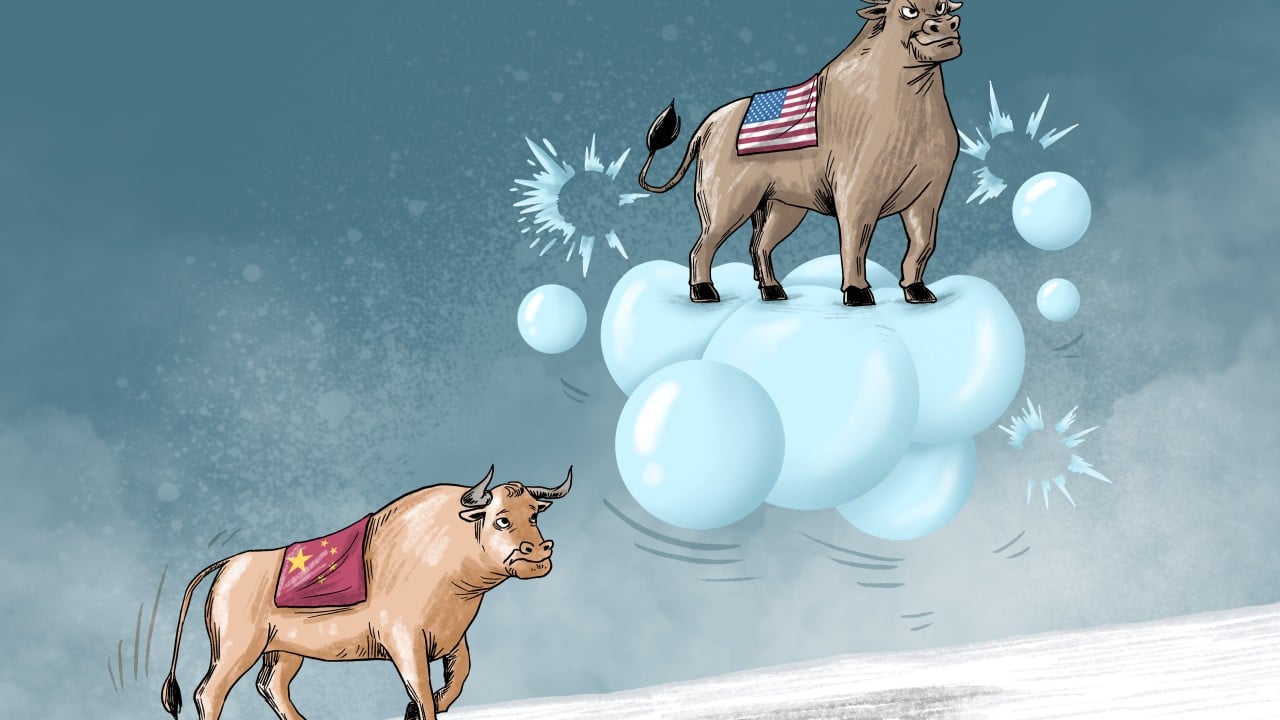
Beijing is deflating a bubble. That sounds clinical. It sounds like an economic adjustment you read about in a morning briefing over lukewarm coffee. But on the ground, deflating a bubble feels like slow-motion suffocation.
For decades, the engine of Chinese growth ran on debt and asphalt. Local governments sold land to developers, developers borrowed billions to build cities before the people arrived, and citizens poured their earnings into apartments that doubled in value every few years. It was a magnificent, dizzying pyramid.
And President Xi Jinping decided to stop it.
Why? Because mathematics brooks no mercy. The leadership looked at the debt loads, looked at the empty ghost cities, looked at birth rates plunging off a cliff, and blinked. They realized that if they let the property mania continue, the entire financial system would eventually collapse under its own weight. They implemented the "three red lines" policy, starving over-leveraged developers of cash.
The medicine was necessary. The patient is screaming.
When you pop a real estate bubble worth trillions of dollars, wealth vanishes into thin air. Chen looks at his apartment app, sees the plunging values of neighboring units, and stops going out to dinner. He cancels his son's piano lessons. He saves every yuan, terrified that the shoe is about to drop.
This is the Beijing reality: a deliberate, agonizing deflation. The government is trying to pivot the economy away from speculative concrete and toward advanced manufacturing, electric vehicles, and green energy. But factories do not make Chen feel rich the way a skyrocketing apartment did. Consumer confidence has flatlined. People are hoarding cash because the future feels like an untuned piano, ready to twang out of key at any moment.
Champagne and Neon in Manhattan
Now, pack your bags. Cross the Pacific. Land at JFK. Take a yellow cab through the exhaust-choked tunnel and emerge into the blinding neon glare of Midtown Manhattan.
Here, gravity seems optional.
While Beijing fights a grueling war against asset deflation, Wall Street is high on a cocktail of technological euphoria and corporate resilience. The S&P 500 touches record highs with the casual indifference of a seasoned athlete breaking his own personal best.
Walk into a sleek Midtown steakhouse. The leather booths are packed. Bankers in tailored suits laugh over dry martinis, celebrating bonuses born from a market that refuses to quit.
How is this possible? How can one half of the global engine seize up while the other roars ahead?
The answer lies in America's superpower: its ability to reinvent its own narrative. While the Chinese consumer pulls back, the American consumer keeps swiping. Inflation has bitten, yes, but wages for many have adjusted, and the relentless, unstoppable wave of artificial intelligence investment has injected billions of dollars of corporate adrenaline straight into the stock market.
Investors look at the magnificent seven technology giants—companies dominating cloud computing, semiconductor design, and generative intelligence—and they see a new industrial revolution. They are not entirely wrong. The technological shift happening in Silicon Valley is seismic. It is reshaping how the world works, codes, and thinks.
Yet, there is a hollow ring to the cheer.
Back away from the Midtown steakhouse for a moment. Walk three blocks over to a subway entrance, past the person sleeping on a grate wrapped in a thermal blanket. Listen to the young couple trying to figure out how they will ever afford a down payment on a modest apartment when mortgage rates sit near seven percent.
Wall Street is cheering record highs, but Main Street is sweating. The stock market is not the economy. It never was.
The top ten percent of Americans own the vast majority of stocks. When the market hits a record high, it is a magnificent windfall for the wealthy, turbocharging asset portfolios and fueling luxury spending. But for the average worker whose grocery bill has jumped thirty percent over the last few years, the record highs on the screen feel like a broadcast from a foreign planet.
The Great Divergence
We are watching a historic bifurcation.
For the past forty years, the global economy was stitched together by a simple, elegant bargain: China made things cheaply with mountains of debt and labor, and America bought them cheaply with mountains of credit and consumption. They were two dancers locked in a clumsy, interdependent tango.
That dance is over.
Beijing is turning inward, prioritizing national security, technological self-sufficiency, and financial stability over breakneck growth. They are willing to endure a painful economic winter today if it means building a high-tech fortress for tomorrow.
Washington and Wall Street, meanwhile, are doubling down on dominance. They are riding a wave of digital innovation, trying to outrun their own monumental national debt through sheer inventive brilliance and market liquidity.
These two paths cannot easily coexist without friction. When China produces millions of electric vehicles and solar panels that its own domestic consumers cannot afford to buy because their wealth is trapped in deflating real estate, those goods must go somewhere. They flood global markets. Western nations look at the incoming tide of cheap, state-subsidized green technology and panic, raising tariffs and erecting trade barriers to protect their own domestic industries.
Globalization is not dying in a sudden explosion. It is fracturing, fault line by fault line, into regional camps.
The Human Cost of the Ledger
We tally these shifts in percentages and basis points. We talk about gross domestic product growth rates falling from eight percent to four percent as if they were weather patterns.
They are not weather. They are human lives.
In a quiet apartment in Shenzhen, a young engineer wonders if her stock options in a tech startup will ever be worth the paper they are printed on, now that venture capital has dried up. In a suburb of Columbus, Ohio, a warehouse worker watches his savings erode, wondering why the news keeps talking about a booming economy when his credit card balance keeps climbing.
The story of our time is not about a winner and a loser. It is about two giants attempting impossible transitions at the exact same moment.
One is trying to let the air out of a balloon without letting it pop. The other is trying to keep a hot air balloon aloft in the middle of a hurricane, fueled by the intoxicating gas of technological revolution.
Watch them closely. Listen to the silence behind the numbers in Beijing. Listen to the too-loud laughter in Manhattan.
The future is being forged in the tension between the two. And the air is getting thin.