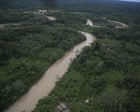
Pilot programs paying roughly two pounds a day to residents in the Amazon rainforest can reduce local forest clearing when cash reaches households reliably and ties to verifiable conservation rules. Yet a modest daily stipend does not automatically stop commercial land speculation, illegal logging syndicates, or cattle ranchers backed by regional credit. It works best as an immediate liquidity bridge for people living on thin margins, not as a standalone cure for industrial deforestation.
I have watched conservation budgets swell and shrink across three decades of covering environmental policy and resource markets. Billions of dollars have flowed into carbon registries, multilateral funds, and corporate pledges with grand promises and fragile results. Against that backdrop, a two-pound daily payment sounds almost absurdly small. It barely buys a loaf of bread in London. Inside a remote river settlement miles from a paved road, however, steady cash changes daily calculus in ways glossy summit declarations never touch.
Why Cash Changes Forest Math on the Ground
Deforestation rarely happens in a vacuum. Most forest loss starts with an economic squeeze. A family needs cash for medicine, school supplies, boat fuel, or tools, and standing timber or cleared pasture looks like the fastest route to liquidity.
Cash alters that trade-off. When households receive predictable, small payments, they gain breathing room to avoid distress sales of timber or rush into clearing marginal plots just to cover immediate expenses. Liquidity timing matters as much as total payout size because rural incomes swing sharply with river levels, harvests, and weather.
Consider a hypothetical household living along a tributary far from market towns. Without regular cash income, an unexpected illness or broken outboard motor can force a choice between going into high-interest debt or clearing an extra patch of forest to plant quick cash crops. If a small, reliable payment arrives on schedule, that immediate shock is cushioned, reducing the pressure to liquidate natural capital on the spot.
Yet cash alone does not rewrite property law. If outside actors hold guns, chainsaws, or bulldozers and claim de facto control over land, a resident receiving two pounds a day faces a brutal power imbalance. Money in hand helps a family make choices; it does not hand them armed enforcement authority over thousands of hectares.
What Pilot Findings Actually Prove and What They Miss
Pilot studies are built to measure short-term shifts under controlled conditions. They show whether participants clear less tree cover, report higher food security, or engage in forest monitoring over a defined window. That evidence is useful, especially when baselines are tracked with satellite imagery rather than self-reported surveys alone.
Still, pilot conditions rarely match full-scale reality. Pilots often enjoy dedicated staff, hand-picked communities, clear communication channels, and donor patience that evaporate once a program scales from hundreds of people to hundreds of thousands. When a boutique experiment becomes a regional policy, administrative friction creeps in.
Satellite Pixels vs. Social Reality
Satellite alerts tell us when canopy disappears. They do not tell us who cut the trees, why they cut them, or whether clearing simply moved three miles downriver. Leakage remains one of the thorniest problems in forest conservation: protect one parcel tightly, and pressure shifts to an unmonitored neighbor.
A two-pound daily transfer can curb opportunistic clearing by local residents who participate in the scheme. It cannot stop a well-financed timber cartel or a speculative land grabber who views fines and patrols as a routine cost of doing business. Treating pilot forest preservation as permanent protection confuses a temporary behavior shift with structural security.
The Hidden Cost of Last-Mile Delivery
Moving small amounts of money into remote tropical basins is expensive. Bank branches are scarce, mobile coverage can be patchy or nonexistent, and physical cash transport carries security and logistical risks.
When intermediaries take heavy fees or payments arrive months late, the real value of a two-pound daily promise erodes fast. A program that costs four pounds in administration and logistics to deliver two pounds of household support has to prove it beats direct public services or community land titling. Transparency around delivery overhead separates serious policy design from feel-good charity marketing.
How Direct Payments Stack Up Against Legacy Conservation Models
For decades, rainforest protection leaned on two dominant playbook extremes: strict exclusion zones and complex market offsets. Both have left scars.
| Approach | Core Mechanism | Main Strength | Key Vulnerability |
|---|---|---|---|
| Direct daily stipends | Regular cash transfers tied to forest rules | Immediate household relief and lower distress clearing | Vulnerable to inflation, scale friction, and outside land invaders |
| Protected parks and bans | Legal restrictions and enforcement patrols | Clear boundaries on paper | High conflict with local livelihoods when enforcement is weak |
| Carbon offset projects | Selling verified emission credits to buyers | Attracts private and corporate capital | Measurement disputes, slow payouts, and weak local trust |
| Land tenure formalization | Securing legal title for communities | Durable legal leverage over territory | Slow bureaucracy and fierce political pushback |
Direct cash transfers shine where local livelihoods are tightly bound to forest decisions and where bureaucracy previously starved communities of basic support. Unlike distant carbon markets that can take years to issue credits and distribute crumbs locally, a direct payment puts resources straight into household hands.
Still, cash is a tool, not a shield. Secure land tenure gives communities legal standing to push back against illegal loggers and miners in court and in regional politics. Without legal recognition of rights, a monthly stipend can look like hush money rather than empowerment.
The Uncomfortable Questions Nobody Likes to Answer
Spend enough time following tropical land conflicts and you start asking questions that make funding committees squirm. First, who decides the conditionality? If a payment depends on strict rules against clearing, how are edge cases handled when a family needs wood for shelter or a small garden to feed children?
Second, what happens when the pilot ends? A program that trains people to rely on external stipends without building durable local livelihoods risks snapping back once donor money runs out. Turning a temporary transfer into a permanent expectation without a funding backstop creates political and social whiplash.
Third, we have to look honestly at global demand. Beef, soy, minerals, and timber tied to international supply chains drive massive pressure across the Amazon basin. Paying residents in the forest two pounds a day while global commodity markets reward cheap land clearing is like mopping the floor while leaving the tap wide open.
Where Real Leverage Lies Next
If policymakers and funders want to build on what two-pound daily payments get right, they should treat cash as one piece of a wider legal and economic architecture. Pair predictable household support with clear community land rights, reliable local banking or payment rails, and tough enforcement against commercial land grabbers operating outside the law.
Track outcomes over years, not months, and publish raw data on both forest cover and delivery costs so critics and supporters alike can judge what actually holds. Real forest protection happens when the people living inside the ecosystem have legal authority, economic dignity, and backing strong enough to outlast the next news cycle.