Seven in the morning in São Paulo smells like damp concrete, diesel exhaust, and strong, bitter coffee poured into plastic cups the size of thimbles.
By eight, the lines outside public schools begin to curl around the block. People stand in flip-flops, in pressed Sunday shirts, in soccer jerseys faded from too many washes. Nobody is shouting. Not yet. Mostly, there is the quiet shuffling of sneakers on pavement and the low murmur of neighbors checking their phones, verifying their voting zones, and holding their paper título de eleitor or digital e-Título screens against the morning glare.
This is a Brazilian presidential runoff. On paper, and in the dry dispatches that wire services transmit across the globe every four years, it is a straightforward constitutional mechanism: when no candidate secures more than fifty percent of valid votes in the first round, the top two contenders face each other on the last Sunday of October. Over 156 million eligible voters are called to cast their ballots between 8:00 a.m. and 5:00 p.m. Brasília time.
Wait. Read those numbers again.
One hundred and fifty-six million people. Moving through thousands of municipalities, from the flooded riverbanks of Amazonas to the windswept plains of Rio Grande do Sul, all converging on electronic voting machines that will tabulate the fate of Latin America’s largest economy and the custodian of the world’s largest tropical rainforest before the evening news finishes airing.
To reduce that day to a headline about turnout and polling margins is like describing a hurricane as a drop in barometric pressure. Technically accurate. Emotionally bankrupt.
The Architecture of a Choice
Consider a hypothetical voter—let us call her Dona Helena—standing in line at a municipal school in the Baixada Fluminense, outside Rio de Janeiro. She is sixty-two, a retired seamstress whose knees ache when the humidity rises. In Brazil, voting is mandatory for literate citizens between eighteen and seventy, and optional for sixteen- and seventeen-year-olds, the elderly, and those who cannot read. Helena does not have to be here anymore, yet she arrives before nine.
Why? Because in Brazil, the ballot box is rarely an abstract exercise in political philosophy. It is a direct negotiation over the price of cooking gas, the safety of the bus ride home after dark, and whether a grandchild will find a spot in a public university or an underfunded clinic.
For decades, the modern Brazilian runoff has functioned like a national pressure cooker. Since the country’s return to democracy and the ratification of the 1988 Constitution, the two-round system—known as the segundo turno—was deliberately engineered to force consensus. In a fragmented multiparty democracy where dozens of parties compete in the first round, a candidate could theoretically win a plurality with thirty percent of the vote and govern without a mandate. The runoff strips away the periphery. It forces a binary choice.
That binary, however, has grown sharper, heavier, and far more personal in recent cycles.
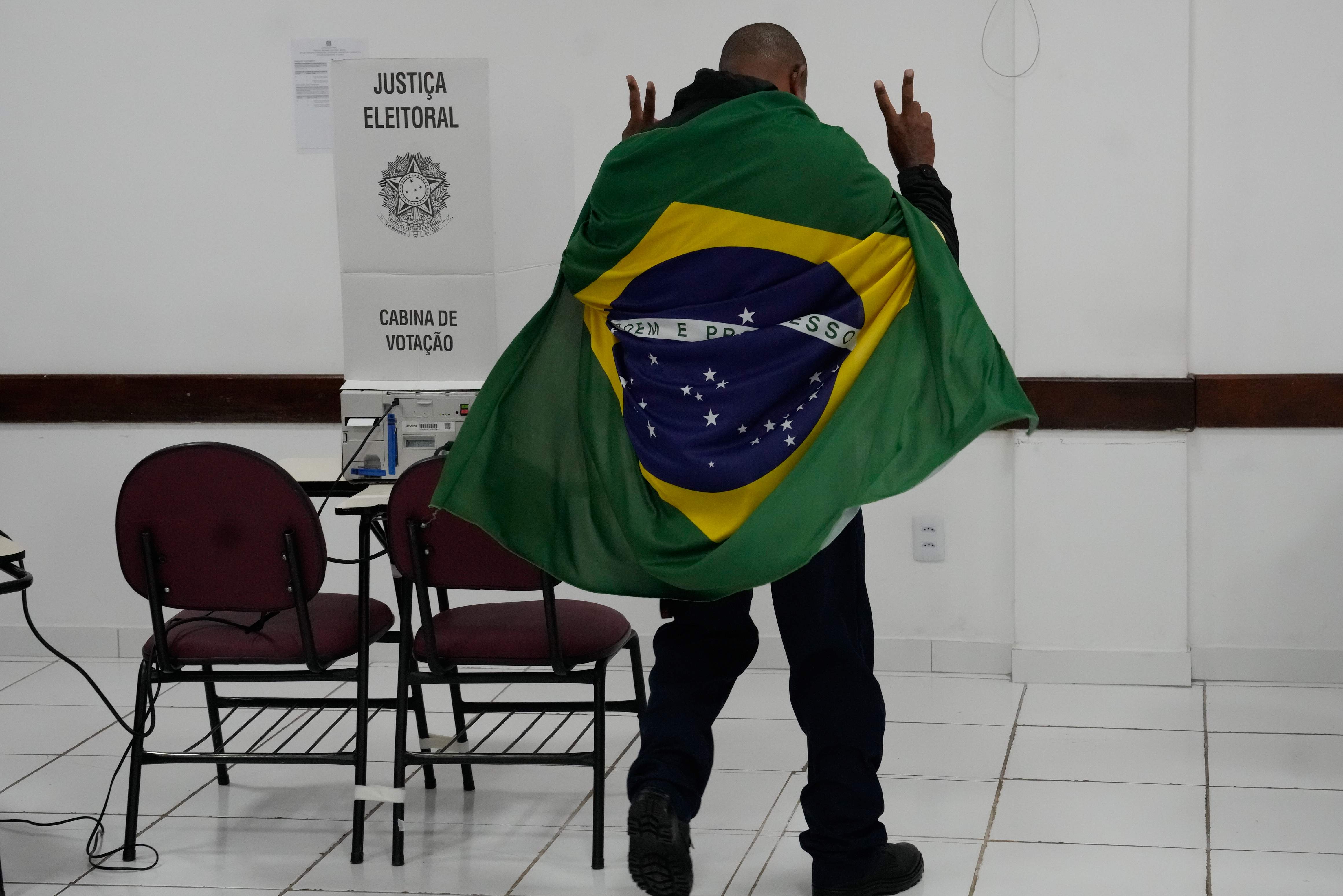
When Dona Helena steps behind the cardboard privacy screen, she faces an urna eletrônica—Brazil’s gray, keypad-driven electronic voting machine, first introduced in 1996. There are no paper ballots to mark, no hanging chads, no weeks-long recounts. You type two digits corresponding to your candidate’s party number. A black-and-white photograph flashes on the small monochrome screen alongside the candidate's name and party. You press the green Confirma button. The machine emits a short, crisp, two-tone chime—pililim—that every Brazilian recognizes instantly.
Three seconds. That is all it takes.
Yet those three seconds carry the accumulated weight of months of televised debates, algorithmic warfare on WhatsApp and TikTok, furious family group chats that have gone silent out of self-preservation, and competing visions of what Brazil is supposed to be.
Two Brazils in One Room
To understand why the runoff feels so existential to the people standing in those school hallways, you have to understand the fault lines running beneath the country. According to political scientists and electoral analysts studying Brazilian democracy, modern runoffs rarely pit mere policy tweaks against one another; they pit entire moral universes against each other.
On one side sits a vision anchored in state-led social investment, environmental preservation, labor protections, and institutional multilateralism. Supporters of this approach point to the expansion of conditional cash transfer programs like Bolsa Família, which helped lift millions out of extreme poverty in the early 2000s, alongside efforts to curb deforestation in the Amazon basin and strengthen public healthcare through the Sistema Único de Saúde (SUS). For voters in this camp, the state is an indispensable shield against historical inequality in a nation where the richest one percent still holds a vastly disproportionate share of national wealth.
On the other side stands a vision rooted in economic deregulation, fiscal austerity, conservative social values, aggressive public security policies, and agricultural expansion. Advocates of this path argue that heavy state intervention stifles entrepreneurship, bloats public debt, and breeds corruption. They look to Brazil’s powerhouse agribusiness sector—which feeds hundreds of millions of people worldwide—and to the rapid growth of evangelical Christianity, which has reshaped community life and political mobilization across urban peripheries, as the true engines of national renewal.
Notice how neither worldview is a caricature when you listen to the people living inside it.
Take Carlos, a hypothetical truck driver hauling soy from Mato Grosso to the port of Santos. When Carlos thinks about the runoff, he thinks about diesel taxes, highway tolls, interest rates on his rig, and the fear of cargo theft along isolated stretches of road. When he hears talk of strict environmental crackdowns or higher public spending, he hears threats to his livelihood and inflation at the grocery store.
Now place Carlos beside Mariana, a hypothetical biology graduate student in Belém working on river conservation. When Mariana looks at the same runoff, she sees satellite data showing forest loss, rising temperatures, indigenous territories under pressure, and the erosion of scientific funding. To her, rolling back state oversight is not deregulation; it is ecological surrender.
Both Carlos and Mariana love their country. Both pay taxes. Both stand in the same fluorescent-lit classrooms on Sunday morning, pressing the same green button on the same gray machine.
And neither can fathom how the other arrived at their choice.
The Speed of Reckoning
There is a particular psychological phenomenon that happens in Brazil on runoff Sunday, something that sets it apart from almost every other major democracy on earth.
In the United States, election night can stretch into days or weeks of county-by-county uncertainty. In India, voting unfolds in phases across more than a month. In Brazil, everything happens at once, and it finishes before dinner.
Because the Tribunal Superior Eleitoral (TSE)—Brazil’s Superior Electoral Court—operates a fully unified, offline electronic tabulation system, the results begin streaming in moments after the polls close at 5:00 p.m. Brasília time.
At 5:01 p.m., the television networks switch to live tally maps. Percentage bars creep upward by tenths of a point every few seconds. At first, early returns from smaller towns or specific regions skew the numbers, sending waves of premature euphoria or dread through living rooms across the country. Refresh. Fifty-two percent counted. Refresh. Sixty-eight percent counted.
By 7:30 or 8:00 p.m., mathematical certainty usually arrives. The TSE declares the result.
Think about what that compression does to the human nervous system. There is no slow decompression, no gradual easing into defeat or victory. One moment, everything is possible; the next, a digital graphic freezes the nation’s political reality for the next four years.
I remember watching a previous runoff in a cramped apartment in Rio, where neighbors across the airshaft were divided down the middle. Around seven in the evening, when the tally crossed ninety percent and the outcome became mathematically irreversible, the entire neighborhood erupted simultaneously—not in one unified sound, but in two colliding ones. From one balcony came fireworks, champagne corks, and celebratory chants. From the window directly across the courtyard came dead silence, followed by the heavy, unmistakable thud of wooden shutters being pulled shut.
Both sounds belonged to the same city. Both belonged to the same democracy.
What the Headlines Miss About Stability
Whenever a fiercely polarized election unfolds in Latin America, international commentators inevitably reach for words like "fragile" or "volatile." It is an easy framing, and a lazy one.
Look closer at the mechanics of what actually happens on runoff day. Despite intense rhetoric, doubts cast over institutions, and the relentless churn of online misinformation, tens of millions of ordinary citizens voluntarily participate in a peaceful transfer or affirmation of power. Poll workers—ordinary citizens drafted by electoral courts—spend twelve hours checking IDs, helping elderly voters navigate ramps, and printing out the boletim de urna (the paper tally tape printed directly from each voting machine at 5:00 p.m. and taped to the classroom door for anyone with a smartphone camera to verify against the central tally).
That paper tape taped to a schoolroom door is one of the quietest, most underrated safeguards in modern democracy. Anyone—party observers, journalists, skeptical neighbors—can photograph that receipt before the data ever travels to Brasília, then compare those exact numbers against the official online database later that night.
Democracy rarely survives because politicians are noble. It survives because millions of tired, stubborn, ordinary people show up on a Sunday morning and follow the rules anyway.
The Monday Morning After
Of course, the ballot box solves nothing on its own. It merely assigns responsibility.
Whoever wins a Brazilian presidential runoff inherits an immediate, unforgiving ledger. Roughly half the electorate—tens of millions of people—voted for the other person. Congress remains a complex mosaic of regional power brokers, ideological caucuses, and transactional alliances where no president governs without tireless negotiation. The global economy does not pause for inaugurations; bond markets, currency traders, and international partners watch every signal from Brasília for clues about fiscal discipline, interest rates, and trade policy.
Meanwhile, the real work returns to the streets.
On Monday morning, the campaign stickers begin peeling off car bumpers in the rain. The plastic cups of coffee are back on the counters at seven in the morning. Dona Helena still has to navigate the uneven sidewalks on her way to the pharmacy. Carlos still has to drive five hundred kilometers before sunset. Mariana still has to collect water samples from tributaries that do not care who won the presidency.
Somewhere in a storage facility, millions of gray electronic machines are unplugged, wiped clean, and locked away until the next municipal cycle.
All that remains is the echo of that brief, familiar chime—pililim—and the quiet, persistent hope of a hundred and fifty-six million people that the person they chose will remember the weight of the hand that pressed the button.