The fluorescent lights in the Shenzhen warehouse hummed at a frequency that made Marcus’s teeth ache. It was 3:00 AM in southern China, 2:00 PM in Ohio, and Marcus—a hypothetical mid-sized manufacturer we will use to trace the invisible wire connecting global politics to your kitchen table—was staring at a spreadsheet that refused to balance.
On the screen sat two numbers. The first was the cost of three thousand custom-machined aluminum housings sitting on wooden pallets twenty feet away. The second was the tariff rate he would have to pay the moment those pallets touched the port of Los Angeles. Between Tuesday and Thursday, a single post on a social media platform and a retaliatory decree from a ministry in Beijing had turned a profitable quarter into a slow-motion bankruptcy.
Marcus does not care about geopolitical grand strategy. He does not read white papers on the Thucydides Trap or debate the long-term containment of rising powers. He cares about whether he can make payroll on the fifteenth of the month without liquidating his retirement account.
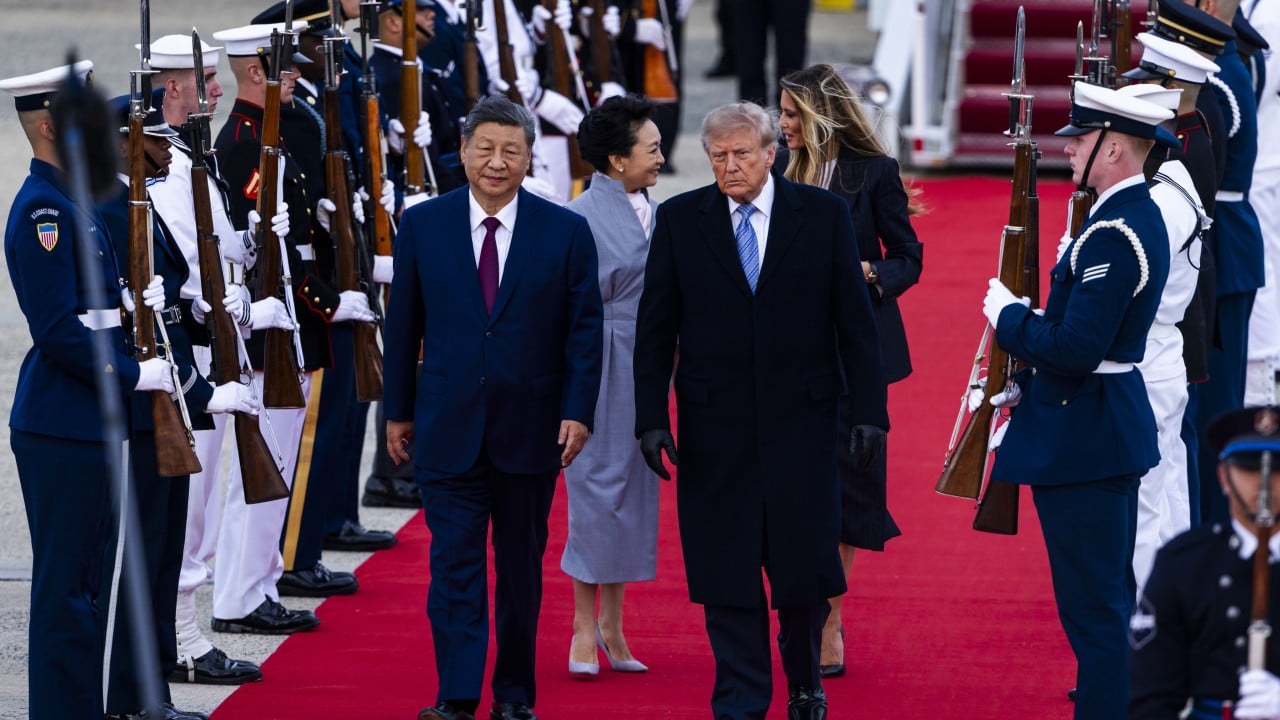
Yet, when Donald Trump and Xi Jinping sit across from one another at a summit table, Marcus is the ghost in the chair between them.
Most coverage of a Xi-Trump summit reads like a box score from a sport nobody actually plays. Pundits tally up basis points, parse the stiffness of a handshake, and ask a deceptively simple question. Will the leaders walk away with a grand, structural overhaul of the world’s most consequential relationship, or will they settle for a splashy, transactional deal? Big picture, or big deals?
That framing misses the point entirely. To ask whether a summit will produce a big picture or a big deal is to misunderstand the two men holding the pens—and to ignore the quiet, grinding reality of how their decisions rewrite the daily lives of three hundred million Americans and over a billion Chinese citizens.
The Illusion of the Grand Bargain
Walk through the corridors of Washington or the diplomatic compounds of Beijing before any high-stakes bilateral meeting, and you will hear the same whispered hope from veteran diplomats. They want the "big picture." They want a framework. They want rules of the road that prevent an accidental collision in the South China Sea, guardrails around artificial intelligence, and a shared understanding of where national security ends and normal commerce begins.
It sounds noble. It is also largely a fantasy.
To understand why, consider what a "big picture" agreement actually requires. It demands trust that outlasts an election cycle. It requires Beijing to believe that Washington is not actively trying to strangle its technological rise, and it requires Washington to believe that Beijing’s state-subsidized industrial machine will not hollow out whatever remains of American manufacturing.
Neither side believes a word of that.
I remember standing on the docks in Savannah, Georgia, years ago during the first wave of the trade war, watching a crane operator named Daryl hoist shipping containers off a vessel from Ningbo. Daryl had voted for tariffs because he watched his father’s textile town wither in the nineties. He wanted the big picture fixed. He wanted the factories back. When I asked him how business was that week, he pointed at a row of rusting chassis waiting for loads that had been canceled overnight. "They're fighting a war with my overtime," he said, spitting tobacco into the gravel. "And neither of 'em is paying my mortgage."
Daryl’s confusion is the confusion of an entire era. We have been taught to view geopolitics as a chess match between two rational grandmasters. In reality, it looks much more like two heavyweight boxers clinched together in the eleventh round, exhausted, bleeding, and trying to land one last body blow without dropping their guard.
Xi Jinping arrives at the table presiding over an economy facing severe structural headwinds. A prolonged property crisis has evaporated household wealth across China’s tier-one and tier-two cities. Youth unemployment remains stubbornly high, and local governments are drowning in debt. Xi’s solution has been to double down on "new productive forces"—electric vehicles, solar panels, batteries, and advanced semiconductors. He needs foreign markets to absorb that industrial overcapacity, and he needs time to achieve technological self-reliance without the American financial system cutting off his oxygen.
Donald Trump arrives with a fundamentally different worldview, one forged not in the statecraft of Henry Kissinger, but in the brutal, zero-sum real estate battles of 1980s Manhattan. To Trump, structural frameworks are traps designed by lawyers to tie America’s hands. He does not want a thirty-year roadmap. He wants leverage. He wants a scoreboard. He wants to look into a television camera and announce that China has agreed to buy fifty billion dollars of American soybeans, crack down on the chemical precursors used to make fentanyl, and open its markets to American banks—all in exchange for holding off on a fresh round of crippling tariffs.
Big picture versus big deals is not a debate between two diplomatic strategies. It is a collision between two entirely incompatible theories of power.
The Anatomy of a Transactional Truce
Watch what happens when these two worlds collide in a summit room.
The cameras flash. The translators lean in, their voices dropping to a near-whisper as they convert idioms of imperial history and populist bravado into something resembling diplomatic prose. Behind the closed doors, the grand ideological war quietly dissolves into a series of hyper-specific horse trades.
Think of the US-China relationship right now like an old, load-bearing brick wall held together by failing mortar. A "big picture" solution would mean tearing down the wall and pouring a new concrete foundation—a project that would take a decade, cost trillions, and likely collapse the neighborhood while under construction. A "big deal" is slapping a fresh coat of plaster over the cracks and agreeing not to lean against it until after the next election.
Plaster is ugly. Plaster is temporary. And plaster is almost certainly what we are going to get.
Look at the bargaining chips sitting on the table. On the American side, tariffs remain the blunt instrument of choice, alongside export controls on high-end semiconductors and restrictions on outbound investment. On the Chinese side, Beijing holds near-monopoly chokeholds over the processing of rare earth minerals, critical active pharmaceutical ingredients, and the sprawling supply chains that assemble everything from your iPhone to the toaster on your counter.
When Trump and Xi negotiate, they are not negotiating the future of the twenty-first century. They are negotiating pain thresholds.
How much inflation can American consumers stomach before the political cost outweighs the satisfaction of "getting tough" on Beijing? How many factory closures in Guangdong can the Chinese Communist Party tolerate before social stability begins to fray?
In that calculus, a big deal becomes irresistible to both men. Trump can claim a historic victory for American farmers and workers by securing massive purchase commitments and enforcement mechanisms on fentanyl. Xi can return to Beijing having bought precious breathing room for his domestic economy, projecting an image of the indispensable statesman who stood toe-to-toe with the American president and forced him to back down from maximum pressure.
Everybody wins. Until you look closer at the fine print.
The Invisible Tax on Everything
The danger of a summit built on transactional deals is not that it fails. The danger is that it succeeds just enough to mask the deeper rot—and leaves ordinary people holding the bill.
Let us return to Marcus in his Shenzhen warehouse, or to Sarah, a hypothetical small-business owner in Denver who imports custom packaging for craft breweries.
When Washington and Beijing strike a narrow, transactional truce, they rarely dismantle the underlying machinery of economic conflict. The tariffs enacted in previous rounds almost never go away; they simply become the new baseline. The export controls tighten a millimeter at a time. Companies caught in the crossfire realize that a handshake in a palace or a resort hotel does not guarantee their supply chain will survive the next tweet, the next spy balloon, or the next flare-up in the Taiwan Strait.
So businesses do the only rational thing they can do. They hedge.
They spend millions moving assembly lines from Shenzhen to Vietnam, Mexico, or India—only to discover that the raw components still originate in China, meaning they are now paying for two factories, two shipping routes, and two layers of compliance lawyers. Those costs do not evaporate into the ether. They flow downstream, quiet as groundwater, until they surface in the price of your morning coffee, the cost of a replacement alternator for your Honda, and the interest rate on your mortgage.
It is a silent tax, levied without a vote in Congress, collected every time you tap your credit card at a grocery store.
Worse still, transactional diplomacy breeds a dangerous illusion of stability. When leaders trade short-term concessions—soybeans for tariff delays, TikTok divestment extensions for rare-earth export licenses—they treat national security and economic survival like poker chips. What happens when a crisis hits that cannot be bought off with a purchase order?
Consider the Taiwan Strait. Consider the cyber intrusions sitting dormant inside American power grids and water treatment plants. Consider the race to build artificial general intelligence, where falling behind by six months could mean permanent strategic irrelevance. You cannot sign a memorandum of understanding to fix a fundamental clash of existential interests. A big deal might keep the cargo ships moving across the Pacific for another eighteen months, which is no small thing if you are trying to keep a global recession at bay. Yet beneath the calm surface of the water, the tectonic plates are still grinding against each other, building pressure for an earthquake that no trade representative will be able to negotiate away.
The Weight of the Room
I have spent years watching smart, well-intentioned people try to predict the outcome of these summits, and I have come to believe that our obsession with forecasting the communiqués makes us blind to the human reality unfolding in front of us.
We want certainty. We want a headline that tells us whether to buy stocks or hoard canned goods, whether the cold war is heating up or thawing out. Admission of uncertainty feels like weakness in an era of hot takes. But the honest truth is that even the principals walking into the room do not fully know how the story ends.
Xi Jinping is a leader deeply scarred by the chaos of the Cultural Revolution, obsessed with control, order, and the historical destiny of his nation. To him, retreating under foreign pressure is not just bad politics; it is an existential threat to the legitimacy of the Party.
Donald Trump is an instinctual disruptor who views predictability as a flaw and thrives in the high-wire tension of brinkmanship, genuinely believing that his personal chemistry with strongmen can cut through decades of bureaucratic paralysis.
Put those two personalities in a room together, strip away the armies of aides and the carefully scripted talking points, and anything can happen. A sudden breakthrough on a frozen issue. A walkout over a perceived slight. A flashy announcement that sounds monumental on cable news and dissolves into bureaucratic stalling six weeks later.
Yet, outside the gilded doors of the summit hall, the real negotiation is already over.
It is happening in boardrooms in Detroit and Munich, where executives have quietly drawn a red line through their twenty-year China expansion plans. It is happening in laboratories in Boston and Hefei, where young scientists are choosing between two increasingly walled-off ecosystems of innovation. And it is happening in that fluorescent-lit warehouse in Shenzhen, where Marcus finally closes his laptop at 4:00 AM, rubs his burning eyes, and decides he has no choice but to raise his prices by twelve percent on Monday morning.
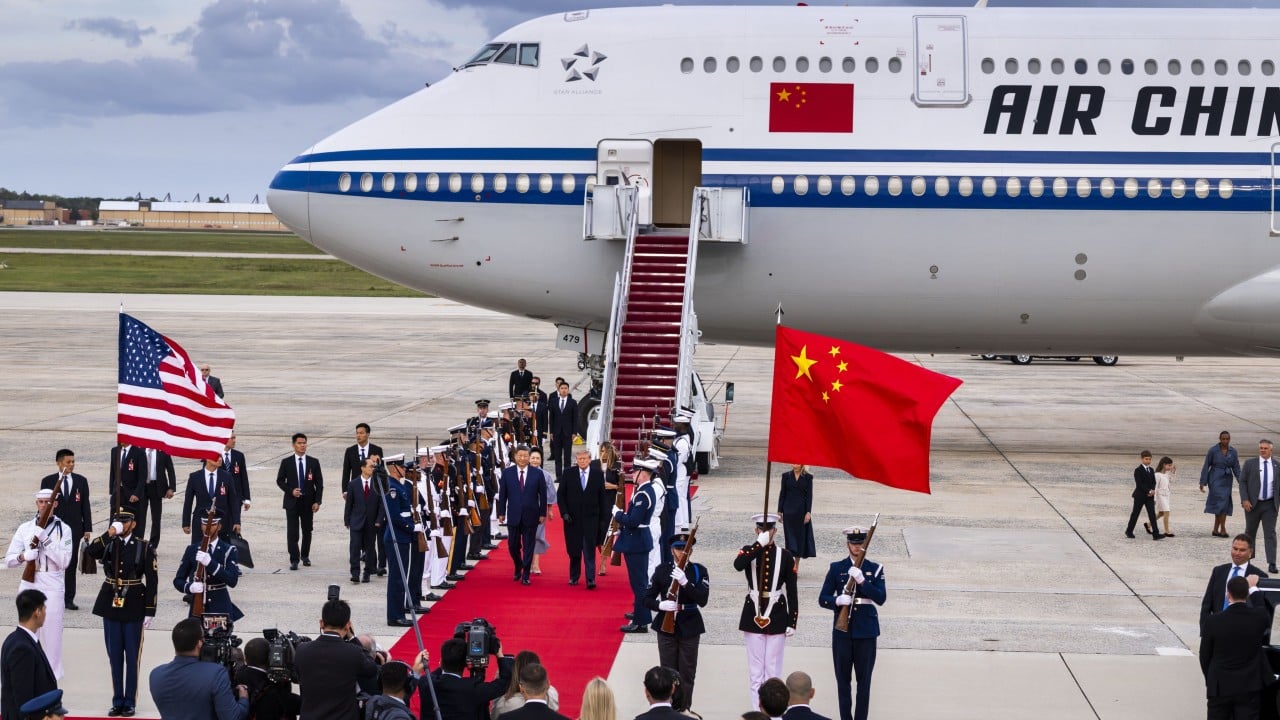
The summit will end. The motorcades will pull away, the flags will be folded, and the pundits will spend weeks arguing over who won the big picture and who got the better deal.
Meanwhile, the bill will arrive in your mailbox, right on schedule.