At 04:12 local time, the bridge of a Very Large Crude Carrier is the quietest room on earth.
The air smells of stale instant coffee, ozone from the radar screens, and salt creeping under the steel weather doors. Outside, the Persian Gulf looks like black glass. For a hypothetical chief mate—let us call him Mateo, forty-two years old, three weeks away from flying home to Manila—the hardest part of the watch is simply staying awake while forty million gallons of heavy sour crude oil sloshes gently beneath his boots.
Then the ocean punches the hull.
Sound travels through seawater at nearly five thousand feet per second, four times faster than it moves through air. Before Mateo even hears the roar, the shockwave slams upward through the steel deck plates into the soles of his boots, snapping his knees straight. Coffee mugs shatter against the bulkhead. Alarms shriek in three different pitches. Down below the waterline, a naval mine—an unassuming cylinder of high explosive costing less than a used compact car—has just punched a jagged hole through two inches of marine-grade steel.
Silence follows. Just the hiss of escaping air and the sudden, terrifying tilt of the deck.
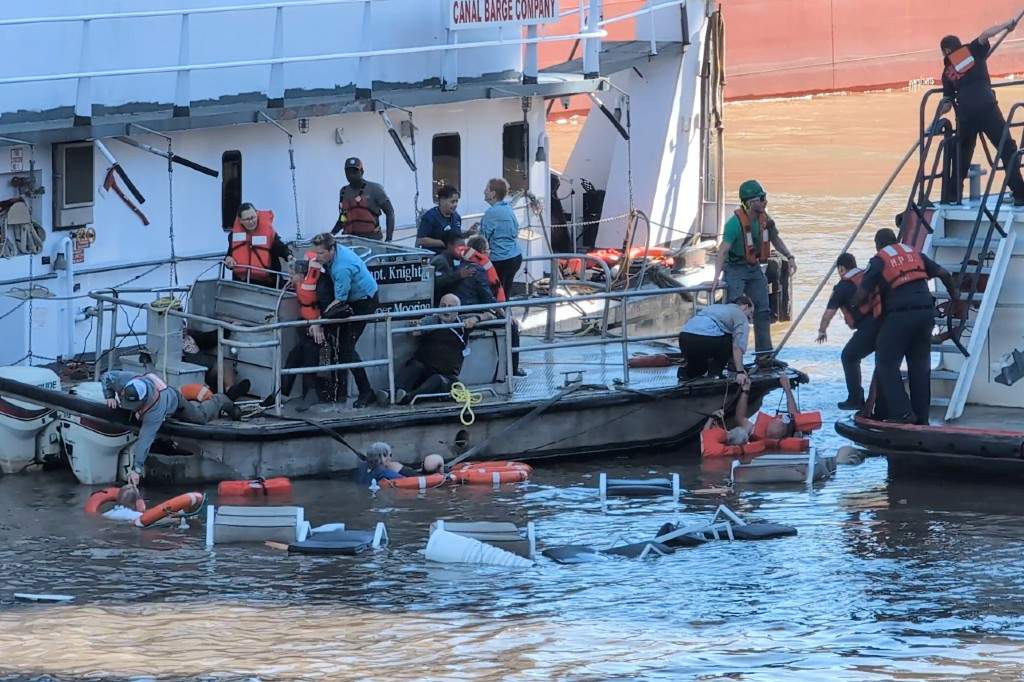
When headlines report that oil tankers have struck sea mines in the Strait of Hormuz, we tend to read the news with the detached curiosity we reserve for distant weather reports. We see gray grainy photographs of scorched metal above the waterline. We hear analysts talk about geopolitical posturing, asymmetric warfare, and barrel-per-day capacities. And then we scroll past.
That detachment is a failure of imagination. Because the Strait of Hormuz is not merely a strip of water between Oman and Iran. It is the jugular vein of the modern world, and when a mine detonates beneath a hull there, the shockwave does not stop at the hull plates. It travels straight into your kitchen, your commute, and the cost of every single object sitting within arm's reach of you right now.
The Chokepoint You Never Think About
To understand why a piece of submerged scrap metal can rattle the global economy, you have to picture the geography.
At its narrowest point, the Strait of Hormuz is just twenty-one nautical miles wide. That is roughly the distance across the English Channel, or a thirty-minute drive on an empty highway. Yet inside that narrow corridor, international shipping lanes squeeze two-way supertanker traffic into channels barely two miles wide in each direction, separated by a two-mile buffer zone.
Through that tiny needle passes roughly one-fifth of the world's total petroleum liquids consumption. According to the U.S. Energy Information Administration, around twenty million barrels of oil flow through those waters every single day, alongside roughly a fifth of the world's liquefied natural gas.
Think of the global economy as a high-pressure hydraulic system. The pipes are massive, stretching from the deserts of Saudi Arabia, Iraq, Kuwait, and the United Arab Emirates to refineries in Rotterdam, Houston, Singapore, and Yokohama. The Strait of Hormuz is the single narrow valve through which almost all that pressure must pass. You do not need to destroy the oil fields to break the system. You do not even need to sink a ship.
You just need to make captains afraid to turn the wheel.
The Psychology of an Invisible Weapon
I remember the first time I stood on the deck of a commercial vessel transiting high-risk waters off the Arabian Peninsula years ago, watching the horizon through binoculars until my eyes watered. You expect danger to announce itself. You look for fast attack craft cutting white wakes through the swell, or low-flying drones buzzing like angry wasps against the sun. You prepare for a fight you can see.
Sea mines do not fight. They wait.
As a weapon, the naval mine is terrifying precisely because it requires zero manpower once deployed. A small fishing dhow, indistinguishable from hundreds of legitimate local boats, can slip out under cover of darkness and drop dozens of mines off its stern in twenty minutes. Some are moored to the seabed by cables, floating just beneath the keel depth of a laden tanker. Others are limpet mines, attached directly to a hull by divers using magnets, timed to detonate hours later when the ship is miles away in open water.
When an explosion rips through a tanker's hull—as happened during the 2019 Gulf of Oman incidents involving vessels like the Front Altair and the Kokuka Courageous, and in the older, bloodier Tanker War of the 1980s—the immediate physical damage is often surprisingly localized. Modern supertankers are built with double hulls, a cellular honeycomb of steel designed to keep oil inside even when the outer skin is torn open.
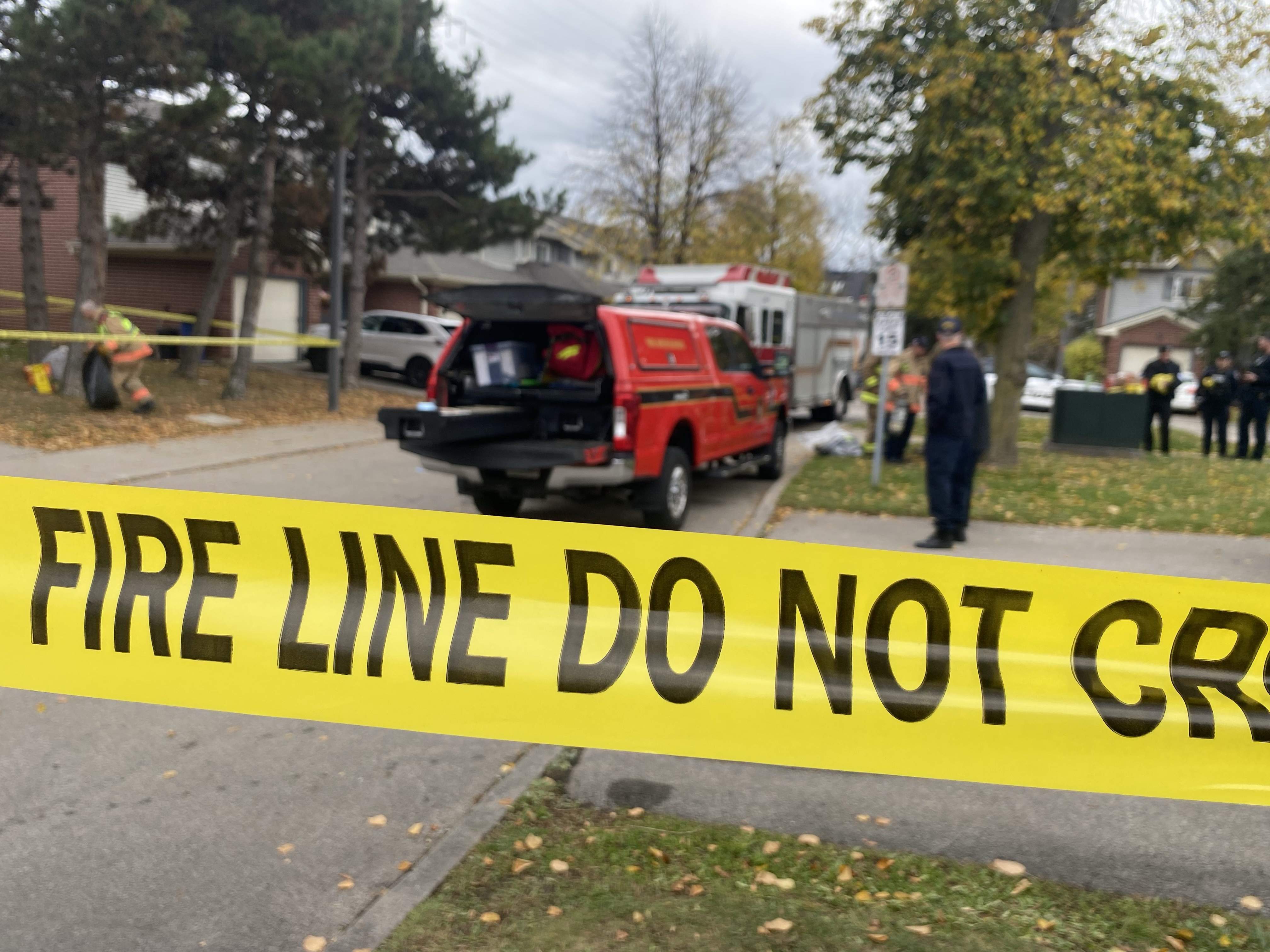
Firefighters in fire-retardant suits scramble onto scorching decks. Salvage tugs rush in to spray foam onto burning methanol or crude. Usually, the ship stays afloat.
So why do markets panic?
Because maritime trade runs on confidence and insurance, and both evaporate the second a hull breaches.
The Real Price Tag Lives in London
Consider what happens next, far away from the smoke and seawater, in the quiet, glass-walled offices of marine underwriters in London.
Before a supertanker worth a hundred million dollars can carry eighty million dollars' worth of crude oil through the Strait of Hormuz, it must be insured. Under normal conditions, hull and machinery insurance is a routine line item, a fraction of a percent of the vessel's value.
The moment a mine strikes a ship, the Joint War Committee—a group of underwriters from Lloyd's and the International Underwriting Association—updates its list of high-risk areas. Suddenly, entering the Persian Gulf requires "war risk" premiums. During spikes in maritime tension, those premiums have been known to surge tenfold overnight, jumping from tens of thousands of dollars per voyage to hundreds of thousands of dollars for a single seven-day transit.
Shipowners do the math instantly. If freight rates do not cover the staggering cost of war risk insurance, they simply refuse to send their ships into the Gulf. Crews demand danger pay, or exercise their contractual right to disembark rather than sail into a minefield.
No blockade is declared. No navy fires a shot at a port. Yet within forty-eight hours, hundreds of millions of barrels of oil are effectively trapped behind an invisible wall of financial liability.
Why Your Groceries Care About Crude Oil
It is tempting to look at all this and shrug if you drive an electric car or take the subway. We have been conditioned to think of oil exclusively as gasoline—the stuff we pump into a tank on Sunday afternoons while watching the digital numbers spin faster than we would like.
That is a dangerous misconception. Oil is not just fuel; it is the foundational substrate of modern industrial life.
Let us trace a single hypothetical barrel of crude that fails to make it out of the Strait of Hormuz because a tanker captain drops anchor off Fujairah to wait out a mine-clearing operation.
First comes diesel. Nearly every freight train, cargo ship, eighteen-wheeler, and combine harvester on earth runs on diesel. When crude supply tightens, diesel prices spike immediately. Within two weeks, the trucking company hauling lettuce from California or apples from Washington adds a fuel surcharge to its invoices. Your grocery store passes that surcharge directly to you at the checkout scanner.
Second comes petrochemicals. Look around the room you are sitting in right now. The casing of your laptop, the foam inside your couch cushions, the synthetic fibers in your carpet, the fertilizer that grew the wheat in your morning toast, the sterile syringe waiting at your local clinic—all of them begin their lives as naphtha and natural gas liquids extracted from those very tankers.
Third comes inflation itself. Central banks spent years fighting to bring consumer prices under control. An energy shock originating in the Persian Gulf acts like throwing gasoline onto dying embers. Energy costs bleed into manufacturing, aviation, shipping, and agriculture all at once.
And here is the catch that frustrates energy economists most: oil is priced on a single, unified global market. Even if the United States produces millions of barrels of shale oil in Texas and North Dakota, a mine explosion in the Middle East raises the price of American oil by the exact same dollar amount. Refineries bid against each other globally. You cannot wall off your local gas station from a crisis ten thousand miles away.
The Myth of the Easy Bypass
Whenever tensions flare in the Strait of Hormuz, commentators inevitably ask why oil producers do not simply route their pipelines around the water.
They have tried. It is not nearly enough.
Saudi Arabia operates the East-West Pipeline, stretching across the desert to the Red Sea port of Yanbu, with a capacity of roughly five million barrels per day. The United Arab Emirates built the Habshan-Fujairah pipeline, which bypasses the Strait entirely to empty into the Gulf of Oman, moving around 1.5 million barrels per day.
Do the arithmetic. Even if both pipelines run at absolute maximum engineering capacity—something rarely sustained for months on end—they can carry roughly 6.5 million barrels a day. That still leaves more than thirteen million barrels per day with nowhere else to go.
You cannot conjure supertankers out of thin air, and you cannot lay four-foot-wide steel pipelines across mountain ranges overnight. Physics and geography do not negotiate.
Hunting Needles in a Moving Haystack
So how do navies actually clear a sea mine once one goes off?
With agonizing, nerve-shredding slowness.
Mine countermeasures are among the most unglamorous and terrifying operations in modern naval warfare. You cannot simply send a fast destroyer charging through a suspected minefield; a single acoustic or magnetic mine triggers on the exact sound of a ship's propellers or the faint disturbance in the earth's magnetic field caused by a passing steel hull.
Instead, specialized minehunters—often built with fiberglass or wooden hulls to minimize their magnetic signature—creep forward at walking speed. They deploy unmanned underwater vehicles equipped with high-frequency side-scan sonar, painting ghostly, high-resolution images of the seabed meter by meter.
Every jagged rock, every lost shipping container, every discarded oil drum looks like a mine on sonar until an underwater drone or a human clearance diver swims down into the murk to inspect it nose-to-nose.
I have spoken with naval divers who describe descending into the warm, turbid waters of the Gulf with visibility barely stretching past their own outstretched fingertips. You feel your way along the bottom in total darkness, knowing that brushing the wrong horn or triggering the wrong pressure sensor means instant vaporization. Clearing a single shipping channel can take days or even weeks, during which dozens of massive tankers sit idling at anchor like sitting ducks in the blazing heat.
The Human Hands on the Wheel
We talk about "global supply chains" as if they were automated conveyor belts run by algorithms. They are not.
They are run by people like our fictional chief mate Mateo, and the roughly 1.9 million real merchant seafarers from the Philippines, India, Ukraine, Greece, and dozens of other nations who spend eight months at a time away from their families inside floating steel boxes.
These mariners do not carry weapons. They do not get medals when they bring a ship safely into port. When geopolitical rivalries turn hot, merchant sailors are almost always the first casualties—unarmed civilians caught in the crossfire of conflicts they had no hand in starting.
Back on our crippled tanker in the Gulf, the fires are out. The double hull held; the dark crude stayed inside the tanks, sparing the fragile coastal fisheries from an ecological catastrophe. Tugs are towing the wounded giant slowly toward a dry dock in Dubai, its steel flanks blackened and twisted inward like crumpled foil.
In his cabin, Mateo sits on the edge of his bunk, his hands still trembling slightly from the adrenaline crash. His ears are ringing. On his phone, through the ship's satellite link, he texts his wife a single line: Engine trouble. Delayed a few days. Love you. He does not mention the hole in the hull.
Halfway across the world, in a suburban kitchen, someone turns on a stove burner to boil water for morning coffee. The blue gas flame flickers to life without a sound, steady and bright, completely oblivious to the twenty-one miles of dark, unforgiving saltwater keeping it lit.