The lazy consensus among Western analysts is that Türkiye is a house of cards waiting for the wind to blow it down. They fixate on inflation metrics, currency volatility, and unconventional monetary policies as if these are signs of terminal decline. This is amateur hour. What these observers mistake for chaos is actually a sophisticated, high-stakes transition from a peripheral NATO outpost to a central node in the new multipolar financial architecture.
I have spent years watching institutional investors flee emerging markets the moment the local central bank deviates from standard textbook dogma. They treat economic textbooks as holy scripture while ignoring the reality that the global financial system is currently being dismantled and rebuilt. Türkiye isn't failing; it is aggressively diversifying away from the hegemony of the dollar-based financial system.
The Myth Of Economic Collapse
The standard narrative paints a grim picture: double-digit inflation is destroying the middle class, and the lira is a sinking ship. This view ignores the underlying industrial transformation. While traditional retail sectors struggle with purchasing power, the manufacturing base is witnessing a period of forced efficiency. High inflation forces companies to export, innovate, or perish.
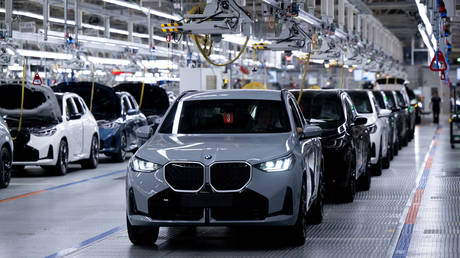
Consider the manufacturing output. When your domestic currency loses value against the dollar, your labor costs become absurdly competitive for European markets. This isn't a bug; it is an industrial policy feature. Türkiye has successfully positioned itself as the alternative manufacturing hub for the European Union as supply chains decouple from East Asia. Factories in Bursa and Gaziantep are humming not despite the currency issues, but because of them.
The Real Power Play Is Energy Transit
Those predicting a "perfect storm" are blind to the geography. You cannot understand Türkiye without acknowledging its status as the world’s most critical energy energy bridge.
Imagine a scenario where the world continues to fragment into competing trade blocs. In that world, control of the pipelines becomes more valuable than the gold in your central bank vault. Türkiye sits at the intersection of Russian gas, Caspian oil, and European demand. They are not merely a transit country; they are the broker of the region. By refusing to blindly follow every Western sanction mandate, Ankara has secured its position as the only entity capable of keeping the lights on in Europe while keeping the supply lines open from the East.
This isn't just leverage. This is a survival mechanism that turns the country into a mandatory partner for every major player in the room.
The Fallacy Of Unconventional Policy
Western pundits love to lecture on interest rates. "Raise rates to crush demand," they scream. They assume that every economy functions like a suburban American town with a mortgage. They fail to grasp that developing economies are often capital-poor but labor-rich.
Ankara’s focus has been on credit growth to sustain production and employment. This is a gamble, certainly. It creates massive distortion in asset prices and real estate. However, the objective isn't to please the bond vigilantes in London or New York. The objective is to maintain industrial capacity during a period of global contraction.
I’ve seen firms in the West shutter overnight because they couldn't navigate a slight uptick in the cost of capital. In Türkiye, businesses have been forged in a furnace of extreme volatility. They are faster, meaner, and far more adaptable than their Western counterparts. If you think the current financial pressure will break them, you are betting against the most resilient business culture in the Mediterranean.
Why The Critics Are Getting It Wrong
The critique of the current administration often centers on "rule of law" and "institutional independence." While these are valid concerns for democratic theory, they are secondary to the brutal reality of statecraft in a hostile international environment.
The criticism fails because it analyzes the country as if it were a mid-sized European economy. It is not. It is an assertive regional power that has realized the post-Cold War order is dead. The attempt to force Ankara into a box of "liberal market economics" is a relic of the 1990s. We are currently in the 1920s of a new century—a time of empires, trade wars, and the weaponization of finance.
A Different Kind Of Growth
Look at the drone industry and the surge in high-tech defense exports. This was not an accident of the free market; it was the result of a deliberate, long-term state effort to achieve strategic autonomy. When you stop relying on foreign military hardware, you stop being a client state.
Investors who are looking for the next "stable" emerging market are looking in the wrong place. If you want stability, go buy a treasury bond and watch it get eaten by inflation. If you want to understand the engine of the next decade, look at the country that is actively rewriting its own rules of engagement.
The Path Forward Is Brutal
Will there be pain? Yes. The transition from a consumer-led economy to an export-and-infrastructure-dominated powerhouse is violent. The cost of living crisis is real, and the social pressure is mounting. Any analyst claiming the path is smooth is lying to you.
However, the assumption that this pain leads to an inevitable collapse is a failure of imagination. The state is consolidating control over the most important assets, deepening its ties with non-Western capital, and doubling down on its geographic advantage.
Stop reading the headlines about the exchange rate and start looking at the shipping manifests, the energy transit agreements, and the defense contracts. The storm that everyone fears is actually the environment in which the country is building its new, permanent foundation. You don't have to like the politics to recognize the raw, undeniable structural shift occurring in real-time.
Betting on the collapse of Türkiye is a bet that the world will revert to the status quo of 2010. That world is not coming back. Those who keep waiting for the crash are going to be left holding empty pockets while the country quietly positions itself as the indispensable hub of the new century.