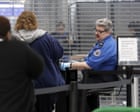
You walk up to the TSA travel document checker, pull out your driver's license, and hand it over. Have you ever noticed whether that officer is sitting or standing? If a new operational directive holds sway, you won't have a choice because you will only see standing guards. The Transportation Security Administration has floated directives pushing personnel to stand at podiums rather than sit during ID checks.
Management swears it looks more authoritative. It creates a stronger visual deterrent, they argue. But standing for eight-hour shifts while managing hundreds of restless, stressed travelers does nothing to catch threats. In fact, it drains the energy of the people tasked with spotting them.
Let's look past the glossy PR statements from federal agencies. Airport security is a high-stakes bottleneck. Millions of passengers funnel through checkpoints daily, hauling luggage, wrangling kids, and losing their minds over discarded water bottles. Meanwhile, security officers stare at hundreds of IDs an hour under brutal lighting. Forcing them onto their feet isn't an upgrade in national security. It's an outdated exercise in optics.
The Reality Of Standing All Day At The Podiums
Anyone who has worked retail or hospitality knows the truth about standing desks and mandatory standing policies. Standing still for long stretches causes fatigue, back pain, foot strain, and reduced concentration. When your lower back throbs, your focus narrows.
TSA officers are the first line of defense for domestic aviation. Their primary job is spotting fraudulent IDs, looking for behavioral anomalies, and catching forged documents under intense time pressure. That requires cognitive stamina, not military posture.
When management prioritizes a rigid stance over ergonomic comfort, mistakes happen. Fatigue breeds tunnel vision. An officer shifting weight from foot to foot because their heels ache is less likely to spot a subtle holographic mismatch on a fake passport. Security theater often masks itself as discipline. True operational safety means keeping staff alert, comfortable, and cognitively sharp. Forcing officers to stand for entire shifts achieves the exact opposite.
Why Optics Trump Practicality In Federal Bureaucracies
Why would an agency enforce a rule that makes an exhausting job harder? The answer lies in how bureaucracy operates.
Federal agencies live in constant fear of looking lax. If a politician walks past a security checkpoint and sees an officer sitting down, a complaint gets filed. Someone higher up panics. They worry about the perception of laziness, even if the seated officer is scanning documents twice as fast because they aren't distracted by physical pain.
This creates a top-heavy culture where surface-level compliance beats actual performance.
- The Visual Trap: Agencies love photos of crisp, standing guards because it projects strength in annual reports.
- The Human Cost: The officer standing at the podium absorbs physical wear and tear for zero security gain.
- The Public Misconception: Travelers often equate physical rigidity with competence, forgetting that mental agility matters more.
We reward the appearance of alertness while ignoring the physiological reality of exhaustion.
What Actually Improves Airport ID Checks
If the goal is genuinely secure air travel, forcing officers to stand is a distraction. Real improvements come from technology, training, and workflow design.
Credential Authentication Technology, or CAT units, have transformed ID checks across major airports. Instead of an officer squinting at a driver's license under a desk lamp, the machine scans the card, verifies it against secure databases, and matches the passenger's face to the ID photo in seconds.
When technology handles the heavy lifting of authentication, the human element shifts. Officers can focus on behavior observation and secondary checks. Standing or sitting matters very little when a computer screen verifies the identity. Yet agencies cling to old behavioral rules alongside new tech, creating friction between modern equipment and archaic management styles.
How Other Security Agencies Handle The Problem
Look at international airports in Europe or Asia. Border control agents routinely sit behind ergonomically designed desks. They process passengers efficiently, maintain eye contact, and remain alert through long shifts because their physical environment supports them.
No one boards a flight out of Amsterdam or Tokyo feeling unsafe because a border officer is sitting down. Travelers care about speed, accuracy, and politeness. They want lines moving and threats caught.
When American agencies mandate standing just to project authority, they borrow from a playbook designed for military parade grounds, not civilian infrastructure. Airports are high-volume transit hubs. Treating them like parade formations slows everything down and burns out the workforce.
What Passengers Should Expect Next
As these posture guidelines ripple through different airport hubs, you will likely notice officers standing straighter at the front of the line. Do not mistake that rigidity for enhanced safety. It is simply compliance with a memo from regional supervisors.
If you want to make air travel safer, advocate for better pay, reduced shift lengths, upgraded scanning hardware, and sensible rotation schedules that prevent mental burnout. Let the officers sit when they need to. A rested, comfortable security professional is infinitely more dangerous to a bad actor than an exhausted one standing at attention.
The next time you slide your ID across the podium, remember what it takes to stand there all day. It is an exhausting grind. Demanding that officers sacrifice their physical comfort for the sake of an outdated aesthetic isn't tough on security. It is just plain lazy management.