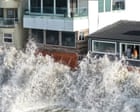
You don't notice a missing buoy until the storm hits your roof. By then, it's too late to fix the budget spreadsheet.
Right now, meteorologists and climate researchers are sounding the alarm over a dangerous blind spot. Federal budget cuts and workforce reductions championed by the Trump administration—specifically targeting the National Oceanic and Atmospheric Administration (NOAA) and the National Weather Service (NWS)—have stripped away the exact tools America needs to track a developing El Niño. Experts warn this isn't just a minor inconvenience for weekend weather apps. It's a setup for a cascading disaster across agriculture, insurance, energy grids, and emergency response.
Let's be clear about what's happening here. El Niño isn't some abstract academic theory. It's a massive, naturally occurring climate pattern driven by warming waters in the central and eastern tropical Pacific Ocean. When it flips on, it scrambles jet streams across the globe. For the United States, that usually means atmospheric rivers drowning California, devastating droughts baking the Pacific Northwest, warmer winters across the northern tier, and chaotic severe weather ripping through the Gulf Coast.
To see those shifts coming months in advance, forecasters rely on a delicate, expensive web of ocean buoys, weather balloons, satellites, and supercomputing models. Cut the funding, fire the specialists, and let the hardware rot? You're flying a jumbo jet into a hurricane with the radar turned off.
How Federal CutsGutted Our Early Warning System
Most people assume weather forecasts just happen automatically. You open your phone, check the little sun or rain icon, and grab an umbrella. Behind that screen sits an enormous federal infrastructure managed largely by NOAA.
During the Trump administration's push to shrink federal agencies—accelerated by aggressive cost-cutting initiatives and proposed reductions to climate research divisions—core observational networks took direct hits. Hiring freezes left critical forecasting offices understaffed. Research grants aimed at improving seasonal climate modeling were frozen, delayed, or eliminated altogether. Even basic maintenance on deep-ocean monitoring arrays faced severe budgetary friction.
Think about the Tropical Atmosphere Ocean (TAO) array. It's a network of roughly 70 moored buoys stretched across the equatorial Pacific. These floating sensors measure water temperatures below the surface, wind speeds, and humidity. They are literally the tripwires for El Niño.
When a buoy breaks loose or its sensors fail, someone has to pay for a research vessel to sail out into the middle of the Pacific and fix it. Those ships burn thousands of gallons of fuel a day. They require specialized crews. When budgets get slashed, those maintenance runs get postponed. Data gaps appear. Suddenly, the computer models that predict whether Texas will suffer a historic drought or face billion-dollar floods six months from now are running on guesswork instead of hard ocean telemetry.
And it's not just the buoys. Weather balloon launches across the U.S. have already seen reductions due to staffing shortages at local National Weather Service offices. Twice a day, these balloons gather upper-atmosphere data that feeds directly into global forecasting models. Lose those upper-air readings, and your accuracy drops fast.
The Cascade Effect Nobody Plans For
When climate scientists talk about a "cascade" of El Niño dangers, they aren't being dramatic. They're describing how one missed forecast triggers a chain reaction across the economy.
Start with water management. Reservoir operators in California and the Colorado River Basin don't wait for rain to fall before making decisions. They rely on seasonal outlooks from NOAA's Climate Prediction Center. If an incoming El Niño promises heavy winter snowpack and torrential rain, dam operators release water early to make room for flood control. If they get the timing or intensity wrong because forecast models degraded, two terrible things can happen. Either they dump too much water and trigger artificial shortages later, or they hold too much back and risk catastrophic dam overtopping when atmospheric rivers slam the coast.
Then look at the energy sector. Utility companies buy natural gas and electricity futures months ahead of peak winter and summer demand. An accurate El Niño forecast tells grid operators whether the Midwest will experience a mild winter—reducing heating demand—or if extreme weather events will knock out transmission lines in the South. Bad forecasts mean wildly mispriced energy, unexpected grid strain, and higher utility bills landing directly on your kitchen table.
Agriculture takes an even harder punch. Farmers in the Midwest, the Plains, and California make multi-million-dollar bets on seed varieties, irrigation schedules, and crop insurance based on seasonal climate projections. A strong El Niño shifts rainfall patterns in ways that can either rescue a parched harvest or rot crops in the field. When federal cuts degrade the precision of those seasonal outlooks, farmers are forced to gamble blind.
Why Private Weather Companies Can't Save Us
Whenever someone brings up cuts to NOAA or the National Weather Service, a predictable argument pops up. Why not let the private sector handle it? Companies like AccuWeather, The Weather Company, and various tech startups build slick apps and sell custom forecasts to businesses. Surely they can pick up the slack, right?
Wrong. Completely wrong.
Here is the dirty secret of the private weather industry. Almost every single private forecasting company in America builds its products on top of free, taxpayer-funded data collected by NOAA, NASA, and the military. Private companies don't own fleets of polar-orbiting weather satellites. They don't maintain 70 deep-sea buoys across the equatorial Pacific. They don't launch hundreds of weather balloons every morning across rural America.
They take raw government data, run it through proprietary algorithms, wrap it in a clean user interface, and sell it back to you with ads.
If the federal government stops collecting the baseline data—or stops funding the foundational supercomputing models like the Global Forecast System (GFS)—private companies have nothing to ingest. You can't polish data that was never collected. Gutting public science doesn't unleash private innovation. It starves the entire ecosystem of raw material.
The Hidden Cost of Losing Institutional Knowledge
Hardware can eventually be replaced if Congress panics and throws emergency money at the problem later. Human expertise isn't that simple.
Federal scientific agencies operate on decades of accumulated institutional memory. Predicting how a specific El Niño flavor—say, an Eastern Pacific event versus a Central Pacific "Modoki" event—will interact with Arctic sea ice loss and local topography takes seasoned researchers who have studied these patterns for twenty or thirty years.
When budget cuts, hostile political rhetoric, and abrupt reorganizations push senior meteorologists, oceanographers, and data scientists into early retirement or private consulting, that brain trust evaporates. You can't hire a fresh graduate off the street and expect them to calibrate coupled ocean-atmosphere models overnight.
I've watched regional emergency managers deal with the downstream reality of understaffed forecast offices. During severe weather outbreaks, local NWS meteorologists aren't just staring at radar screens. They're on direct phone calls with county sheriffs, hospital directors, and school superintendents, translating raw probabilities into actionable life-safety advice. When those offices are stretched thin, that direct, high-trust communication breaks down. People get warnings later. Evacuations start slower. Property damage climbs.
What Makes Modern El Niño Events Even Trickier
To make matters worse, we aren't forecasting the El Niño of the 1980s or 1990s anymore.
Global ocean temperatures have broken records repeatedly over the last few years. Background warming changes the baseline of the Pacific Ocean. When an El Niño develops on top of already overheated oceans, its behavior becomes harder to predict using historical analogs alone. Atmosphere-ocean interactions get punchier. Rainfall extremes intensify because warmer air holds roughly seven percent more moisture per degree Celsius of warming.
That means our forecasting models need more high-resolution data and more computing power just to maintain yesterday's level of accuracy. Cutting science funding right now is like trying to drive faster on an icy road while removing your headlights.
Even the insurance industry—hardly a bastion of liberal activism—is terrified of this trend. Reinsurers rely heavily on public climate data to model catastrophe risk. When uncertainty spikes because observational networks are degraded, insurers don't just shrug and hope for the best. They raise premiums across the board or pull out of high-risk states entirely. Homeowners in Florida, Louisiana, Texas, and California are already feeling that squeeze.
Debunking the "Waste and Fraud" Myth
Defenders of these budget cuts love to frame NOAA and federal climate research as bloated bureaucracies wasting taxpayer money on "woke" climate agendas. It makes for a great soundbite on cable news. It falls apart the second you look at the return on investment.
According to multiple economic assessments, including data from NOAA and independent policy institutes, the economic value of accurate weather and climate forecasting runs into the tens of billions of dollars annually, against a total agency budget of roughly six billion dollars. Every dollar spent on improving seasonal forecasts saves multiples in avoided disaster recovery, optimized agricultural yields, and protected infrastructure.
When a single Category 4 hurricane or a multi-state El Niño flood event can easily rack up fifty billion dollars in damages, shaving a few hundred million dollars off the agencies that predict those disasters isn't fiscal conservatism. It's financial self-sabotage.
Practical Steps You Should Take Right Now
You can't single-handedly restore NOAA's appropriation bills tonight, and you definitely shouldn't wait for Washington to sort out its political fights before the next Pacific warming cycle locks in. Since federal forecasting margins are thinner than they should be, you need to build your own resilience buffer.
Upgrade how you track seasonal weather
Stop relying exclusively on basic smartphone weather apps that only show a seven-day outlook. Bookmark the NOAA Climate Prediction Center (CPC) directly at cpc.ncep.noaa.gov. Check their monthly ENSO Diagnostic Discussion—it's written in plain English alongside technical summaries and gives you the raw probability of El Niño or La Niña conditions months ahead of mainstream news coverage.
Audit your property and insurance before peak season
If you live in areas historically hammered by El Niño—the California coast, the Gulf states, or the Southeast—review your homeowner's policy right now. Standard policies almost never cover flood damage, and waiting until a strong El Niño is officially declared often triggers insurer moratoriums on new coverage. Look into the National Flood Insurance Program (NFIP) or private flood alternatives while skies are still clear.
Support local and state-level monitoring networks
Because federal gaps are widening, state climate offices and university-run mesonet systems (dense networks of local weather stations) are becoming vital backups. Pay attention to your state climatologist's seasonal briefings, especially if you manage land, run a construction business, or oversee local logistics.
Push back against false budget narratives
If you run a business that depends on predictable weather—agriculture, shipping, outdoor recreation, energy, or real estate—make noise with your congressional representatives. Lawmakers ignore abstract complaints from academics, but they listen fast when local business owners explain how degraded NOAA forecasts directly threaten local payrolls and supply chains.
The ocean doesn't care about partisan budget battles in Washington. Warm water is going to pool in the Pacific, the jet stream is going to bend, and billion-dollar storms are going to test American infrastructure whether our sensors are online or not. Ignoring the warning system doesn't stop the storm—it just guarantees we take the hit blindfolded.