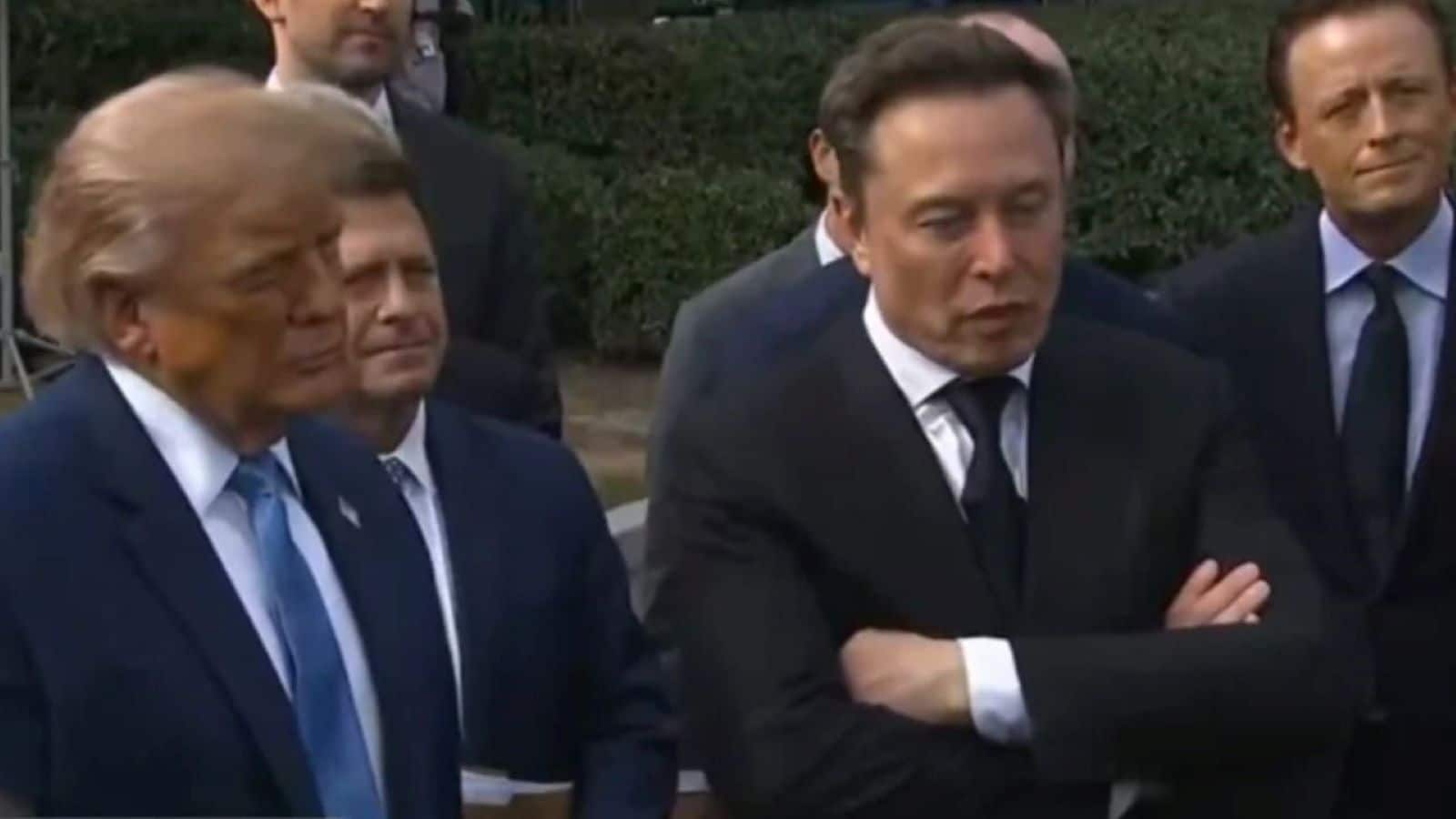
Mainstream foreign policy pundits are currently hyperventilating over a single headline. Donald Trump thinks he will sit down with Xi Jinping and Vladimir Putin at the Asia-Pacific Economic Cooperation (APEC) summit in China.
Wire services treat this like the geopolitical equivalent of a blockbuster movie premiere. The lazy consensus in Washington, Brussels, and Beijing is entirely predictable. Half the commentators panic that a three-way handshake signals the death of Western alliances and a grand bargain written on the back of a cocktail napkin. The other half—mostly transactional optimists and Wall Street macro-tourists—cheer the prospect of "adults in the room" finally hashing out tariffs, Ukraine, and semiconductor supply chains over state banquets. You might also find this connected article useful: Inside the Democratic Subpoena Blitz Targeting Elon Musk and Stephen Miller.
Both camps are dead wrong.
They are analyzing a 21st-century power struggle through the lens of 1972 Nixonian diplomacy. They assume that putting three strongmen in a room produces either a catastrophic surrender or a historic breakthrough. Having spent two decades advising institutional capital and sovereign risk desks on how geopolitical theater actually translates into hard policy, I can tell you what happens when you put three maximalist leaders in a room without a pre-baked bureaucratic framework. As highlighted in recent articles by The Guardian, the effects are significant.
Nothing gets solved. Everything gets worse.
A trilateral encounter between Trump, Xi, and Putin at APEC will not stabilize global markets or end regional wars. It will expose the fatal flaw of personalized diplomacy, paralyze mid-level negotiators for a year, and accelerate the very economic decoupling it is supposed to prevent.
The Myth of the Strongman Shortcut
The standard diplomatic playbook—codified by figures like Henry Kissinger and analyzed relentlessly by institutions like the Council on Foreign Relations—relies on a strict inversion of what we are seeing today. Historically, summits are not where deals are made. Summits are where pre-negotiated deals are signed.
Sherpas, deputy ministers, and trade representatives spend eighteen months bleeding over every comma in a bilateral communiqué before a head of state ever steps off a plane. The handshake at the podium is pure theater meant to ratify months of grinding bureaucratic compromise.
Trump, Xi, and Putin operate on the exact opposite model. Each man has systematically hollowed out or bypassed his own traditional foreign policy apparatus in favor of centralized, top-down decision-making.
- Washington operates on executive instinct, where tariff rates and security guarantees are treated as live-fire negotiating chips rather than settled treaty obligations.
- Beijing has consolidated power inside the Central Foreign Affairs Commission, leaving the Ministry of Foreign Affairs to act largely as a messaging echo chamber rather than an autonomous policy shop.
- Moscow views international summits not as problem-solving venues, but as status-validation exercises designed to prove that Western isolation has failed.
When you strip away the preparatory bureaucracy and rely purely on leader-to-leader chemistry, you remove the shock absorbers of international relations. If three leaders sit down at APEC without a pre-agreed text, every word becomes a live grenade. Nobody can afford to look weak in front of their domestic base, which means nobody can offer the quiet, technical concessions required to actually move goods across borders or silence artillery.
I have watched global supply chain executives burn hundreds of millions of dollars on factory relocations based on the optimistic readouts of past leader-to-leader summits. In 2018 and 2019, every time Trump and Xi smiled for the cameras at a G20 summit, corporate boards paused their diversification plans out of Vietnam and Mexico, convinced a comprehensive trade truce was weeks away. Within ninety days, the truce collapsed, tariffs spiked higher than before, and those companies were caught flat-footed with stranded inventory.
The Structural Trap of the APEC Venue
To understand why this specific meeting is a trap, you have to look at the venue itself. APEC is not the United Nations Security Council, nor is it NATO. Founded in 1989 during the high-water mark of globalization, APEC is a consensus-based forum built around voluntary, non-binding commitments to free trade and regional economic integration.
Hosting it in China flips the script entirely.
In diplomacy, the host controls the optics, the seating chart, the bilateral pull-asides, and the narrative framing. By hosting APEC, Xi Jinping gets to stand at the center of the Pacific Rim as the indispensable convener of global commerce. If Trump and Putin both show up on Chinese soil, Beijing achieves a massive visual victory before a single word is spoken: the image of the American president and the Russian president traveling to China's court to seek audience and stabilize their respective crises.
Think about the asymmetry of incentives in that room:
| Leader | Primary Domestic Imperative | What They Need from APEC | Why They Cannot Concede |
|---|---|---|---|
| Donald Trump | Prove unilateral leverage works; protect American manufacturing and border security. | Immediate, quantifiable wins (soybean purchases, fentanyl crackdowns, ceasefire optics). | Any softening on tariffs or NATO without massive, verifiable concessions looks like capitulation at home. |
| Xi Jinping | Stabilize a slowing domestic economy; break the US-led tech blockade. | Tariff relief, access to high-end semiconductors, and non-interference in Taiwan. | Yielding to American pressure on industrial subsidies threatens the Chinese Communist Party's core growth model. |
| Vladimir Putin | Outlast Western sanctions; lock in territorial gains in Eastern Europe. | Legitimacy, sanctions relief, and fissures between Washington and European capitals. | Returning any occupied territory or accepting Western security guarantees for Kyiv is existential suicide in Moscow. |
Look at that matrix. There is zero overlap in their minimum viable outcomes.
Trump needs immediate, flashy deliverables he can sell at a rally. Xi needs long-term structural relief from American export controls and tariffs without dismantling China's state-backed manufacturing machine. Putin needs the West to fracture so he can dictate terms in Europe.
You cannot triangulate those three positions into a coherent agreement over a two-day economic forum. The math does not work.
Dismantling the Grand Bargain Delusion
Whenever Trump, Xi, and Putin are mentioned in the same breath, a specific breed of armchair strategist immediately starts drawing up maps of a "New Yalta." The theory goes that the three leaders will carve the world into tidy spheres of influence: Putin gets a frozen conflict in Ukraine, Xi gets a free hand in the South China Sea and economic breathing room, and Trump gets a massive trade purchase agreement and a declaration of peace.
This is pure fantasy, and it misunderstands how modern power actually functions.
First, middle powers are no longer passive pawns. In 1945, Winston Churchill, Franklin Roosevelt, and Joseph Stalin could draw lines across Europe because Germany and Japan were in rubble and the rest of the world was exhausted. Today, countries like Japan, South Korea, Poland, India, and Australia possess massive economies, advanced militaries, and independent agency. Even if Trump and Xi shook hands on a sphere-of-influence deal at APEC, Tokyo and Warsaw would not simply pack up their defense budgets and go home. They would accelerate their own militarization—potentially including nuclear proliferation—creating a far more chaotic security environment for Washington.
Second, Putin and Xi are not interchangeable parts of a unified anti-Western hive mind. Their partnership is a marriage of convenience built on shared resentment of American hegemony, not shared long-term interests. Beijing views Russia as a discounted gas station and a useful distraction that keeps Washington bogged down in Europe. Moscow deeply resents its growing status as China's junior economic partner, particularly as Chinese influence expands across Central Asia—Russia's traditional backyard.
If Trump tries to play "reverse Nixon" by peeling Putin away from Xi during an APEC sideline meeting, Xi will immediately recognize the maneuver and sabotage any trade concessions Trump wants. Conversely, if Trump cuts a bilateral economic deal with Xi, Moscow loses its primary diplomatic leverage and has every incentive to escalate kinetically in Europe to remind Washington that it cannot be ignored.
Imagine a scenario where the three leaders actually issue a joint statement on "global stability" at the close of the summit. Within forty-eight hours, lower-level officials in all three capitals would begin issuing conflicting interpretations of what the text actually meant. Washington would claim Beijing agreed to halt dual-use exports to Russia; Beijing would insist it only reaffirmed existing export laws; Moscow would declare that the West had finally accepted the "new territorial realities" in Ukraine. Markets would rally on Monday morning and crater by Thursday afternoon.
What Everyone Is Getting Wrong About the Stakes
If you are trying to figure out what a three-way summit means for your portfolio, your supply chain, or your understanding of global politics, you are asking the wrong question.
Stop asking: "Will Trump, Xi, and Putin make a deal?"
Start asking: "What happens to the global bureaucracy when leaders bypass it entirely?"
The real danger of an unscripted APEC encounter is not a secret treaty. It is institutional paralysis.
Right now, thousands of mid-level diplomats, trade lawyers, central bankers, and military attachés across the Pacific Rim are trying to manage friction points—from maritime collisions in the Second Thomas Shoal to currency volatility in the yen and yuan. When heads of state signal that they are going to handle everything personally at an upcoming summit, every single working group freezes.
Why would a Chinese vice minister compromise on intellectual property rules in October if he thinks Xi might trade that exact issue away to Trump in November? Why would a U.S. Trade Representative official finalize a tariff exclusion list if the White House might blow up the entire schedule over a single conversation with Putin?
Everything stalls. Problems fester. Minor tactical disputes that should be resolved at the deputy level get kicked upstairs to the leaders, turning routine friction into existential crises.
The Brutal Truth About Summit Diplomacy
There is a legitimate counterargument to my thesis, and it deserves to be taken seriously. Proponents of high-stakes leader diplomacy—scholars like Graham Allison, who has written extensively on the "Thucydides Trap" between rising and ruling powers—argue that direct communication at the very top is the only way to prevent catastrophic miscalculation. When nuclear-armed rivals stop talking, the risk of an accidental war skyrockets. From this perspective, even a messy, inconclusive meeting between Trump, Xi, and Putin is infinitely better than radio silence.
They are right about the danger of silence. Military-to-military hotlines and direct leader communication are vital circuit breakers during a shooting crisis.
Where they get it wrong is confusing crisis communication with summitry.
Crisis communication happens quietly, behind closed doors, with zero cameras and zero expectations of a deliverable. Summitry happens under blinding floodlights, with thousands of journalists demanding winners and losers. Putting three hyper-competitive leaders under those floodlights when their core interests are fundamentally irreconcilable does not reduce the risk of miscalculation—it weaponizes public ego. If one leader feels humiliated or outmaneuvered in front of the global press corps at APEC, they will be forced to escalate once they return home to prove their strength.
How to Actually Read the Room
If this meeting happens, ignore the press conferences. Ignore the staged handshakes, the bespoke suits, and the breathless cable news panels declaring a "new era" of great power cooperation.
Watch the plumbing instead. If you want to know whether anything real happened behind closed doors at APEC, look at four hard indicators in the thirty days following the summit:
- The Federal Register and Ministry of Commerce Bulletins: Did Washington actually publish notices suspending specific tariff lines, or did it just announce a "review period"? Did Beijing formally remove American defense and tech firms from its Unreliable Entity List? Paperwork is reality; press releases are noise.
- Dual-Use Export Flows: Track customs data on machine tools, microelectronics, and nitrocellulose moving across the Sino-Russian border. If Xi actually agreed to rein in Russia's war machine to appease Trump, those numbers will drop within a month. If they hold steady, the summit was pure theater.
- Military Intercepts in the Taiwan Strait: Watch the daily sortie counts published by Taiwan's Ministry of National Defense. If PLA Air Force incursions across the median line drop significantly for three consecutive weeks, a genuine de-escalation understanding was reached.
- Treasury Yields and the Offshore Yuan (CNH): Currency traders do not care about political spin. If the offshore yuan strengthens sharply and holds its gains without central bank intervention, institutional money believes tariff risk has genuinely receded.
Until you see movement in those four metrics, treat every optimistic headline coming out of the APEC summit as a head fake.
Real geopolitics is not decided by three men smiling for cameras in a convention center. It is decided by factories, shipping lanes, artillery shells, and semiconductor fabs. And right now, every single one of those structural realities is still pointing toward collision.