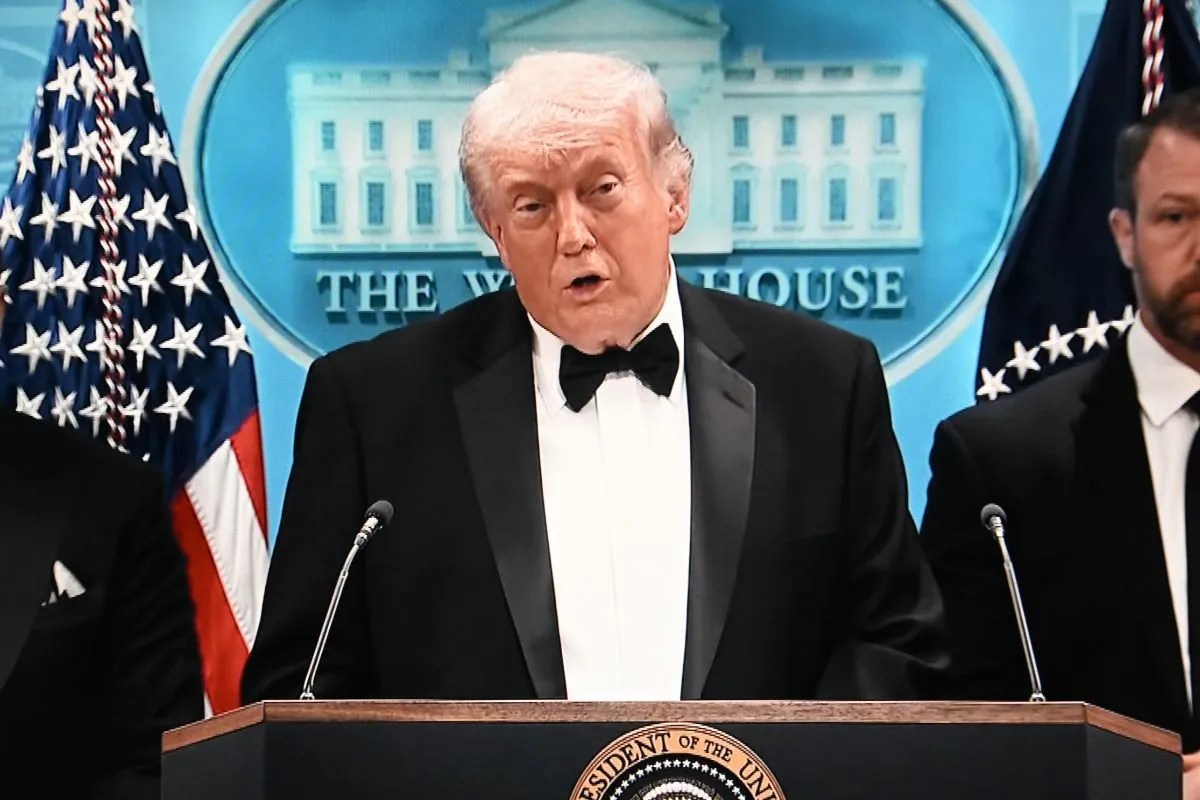
Donald Trump just drew a massive line in the sand. His recent warning to Iranian officials about the Strait of Hormuz isn't just standard political posturing. It's a direct threat that highlights how fragile global energy security really is. When Trump states that closing the strait means no country survives the economic fallout, he's targeting the absolute throat of global trade.
You've probably heard politicians talk about trade choke points before. Most of it sounds like distant academic chatter. This is different. The Strait of Hormuz is a narrow strip of water separating Iran from Oman and the United Arab Emirates. It's the world's most critical oil artery. If it shuts down, the global economy hits a brick wall. Trump knows this, Iran knows this, and the entire world is watching the escalating rhetoric with genuine anxiety.
The Reality of the Strait of Hormuz Bottleneck
To understand why this situation is so explosive, look at the numbers. About a fifth of the world's total petroleum consumption passes through this tiny waterway every single day. We're talking more than 20 million barrels of crude oil, condensate, and petroleum products moving daily from Persian Gulf producers to markets across the globe.
Think about your daily life. The gas in your car, the plastic in your tech, the shipping lanes keeping retail shelves full. They all rely heavily on this single geographical bottleneck. At its narrowest point, the shipping lane is only two miles wide in either direction. That makes commercial tankers incredibly vulnerable to naval mines, drone strikes, and direct seizures by the Iranian Revolutionary Guard Corps.
Iran has used this geographic leverage as a political shield for decades. Whenever Western sanctions tighten, Tehran threatens to choke off the strait. It's their ultimate insurance policy. They want the world to know that if their economy suffers, everyone else will bleed too. Trump's latest warning flips that script entirely by making it clear that the US views any attempt to block the waterway as an act of global economic warfare.
Trump Direct Warning and Why It Matters Now
Trump's rhetoric has always been blunt, but this specific warning hits differently. He didn't parse words or hide behind diplomatic vagueness. By telling Iranian officials that closing the strait would result in the collapse of global stability, he's setting a clear military trigger. He's telling Tehran that the moment they block those shipping lanes, diplomatic options vanish from the table.
This stance shifts the entire geopolitical calculation. For years, international responses to Iranian provocations in the Gulf have been measured. Tankers get attacked, statements are issued, and sanctions get tweaked. Trump is signalling a complete departure from that cautious playbook. The message is simple. Don't play games with global energy supply lines unless you're ready for total conflict.
Critics argue this kind of rhetoric escalates an already volatile situation. They aren't entirely wrong. When two heavily armed sides refuse to blink, mistakes happen. A miscalculated naval maneuver or an overeager drone operator in the Persian Gulf could spark a hot war in minutes. But supporters argue that clear deterrence is the only language the Iranian leadership genuinely respects.
What Happens to Global Oil If the Strait Closes
Let's look at the immediate economic reality if Iran actually pulls the trigger. Crude prices wouldn't just rise. They'd skyrocket instantly. Financial analysts have long estimated that a sustained closure of the Strait of Hormuz could send oil prices past 150 or even 200 dollars a barrel within days.
The economic shockwave would hit Asian markets first. Countries like China, Japan, India, and South Korea rely heavily on crude coming directly out of the Persian Gulf. They don't have immediate, scalable alternatives. If their energy supplies get cut, factories slow down, supply chains fracture, and consumer prices everywhere spiral out of control.
Western nations wouldn't escape the damage either. Even if the US produces a significant amount of its own domestic oil, energy markets are interconnected globally. High oil prices anywhere mean high gas prices everywhere. Inflation, which global central banks have spent years trying to tame, would come roaring back with a vengeance. It's an economic nightmare scenario that no world leader can afford to ignore.
The Military Calculus and Why Iran Won't Actually Do It
Despite the aggressive posturing from Tehran, actually closing the strait is a suicide mission for the Iranian regime. The US Fifth Fleet is permanently stationed in Bahrain for this exact reason. Its primary mission is keeping those shipping lanes open and secure.
Iran lacks the conventional naval power to match the US military in an open conflict. Instead, they rely on asymmetric warfare. They use fast attack boats, thousands of naval mines, anti-ship missiles hidden along their rugged coastline, and swarms of suicide drones. They could absolutely cause severe damage in the opening days of a conflict. They could sink commercial vessels and temporarily halt shipping traffic.
But they can't hold it. The military response from the US and its international allies would be swift and devastating. Iran's naval capabilities, air defense systems, and economic infrastructure would be targeted directly. Tehran's leadership knows this. Their threats are designed to create leverage, not to start a war they know they can't win. They want the threat of chaos to force the West to back down on economic sanctions.
The Ripple Effects on Global Energy Security
The ongoing tension forces global powers to reconsider their long-term energy strategies. Relying on a single, highly volatile waterway for a massive portion of the world's energy is a massive strategic vulnerability.
Some nations are actively looking for bypass options. Saudi Arabia and the United Arab Emirates have built pipelines to move crude oil away from the Persian Gulf directly to the Red Sea and the Gulf of Oman. These pipelines offer an alternative route, but their capacity is nowhere near enough to handle the sheer volume of oil that currently moves through Hormuz. They're a band-aid on a gaping wound.
This reality keeps the power balance firmly centered around the strait. Trump's aggressive stance serves as a reminder to global markets that peace in the Middle East isn't just about regional politics. It's about global survival. Businesses and investors must constantly price in the risk of sudden geopolitical disruption.
Navigating the Geopolitical Uncertainty
If you're trying to figure out where this leads, look closely at the actions rather than just the fiery speeches. Watch the movement of naval assets in the region. Track the insurance premiums for commercial oil tankers operating in the Persian Gulf. When those insurance rates spike, it means the maritime industry expects real trouble.
Don't expect the rhetoric from either Washington or Tehran to cool down anytime soon. Both sides see strategic value in projecting absolute strength. The key is watching whether this verbal warfare translates into actual kinetic action on the water. For now, the global economy remains tethered to a narrow two-mile shipping lane and the volatile politics of the men who control it. Maintain a close watch on regional diplomatic channels, monitor global energy inventory reports, and prepare for continued market volatility as this geopolitical chess match plays out.