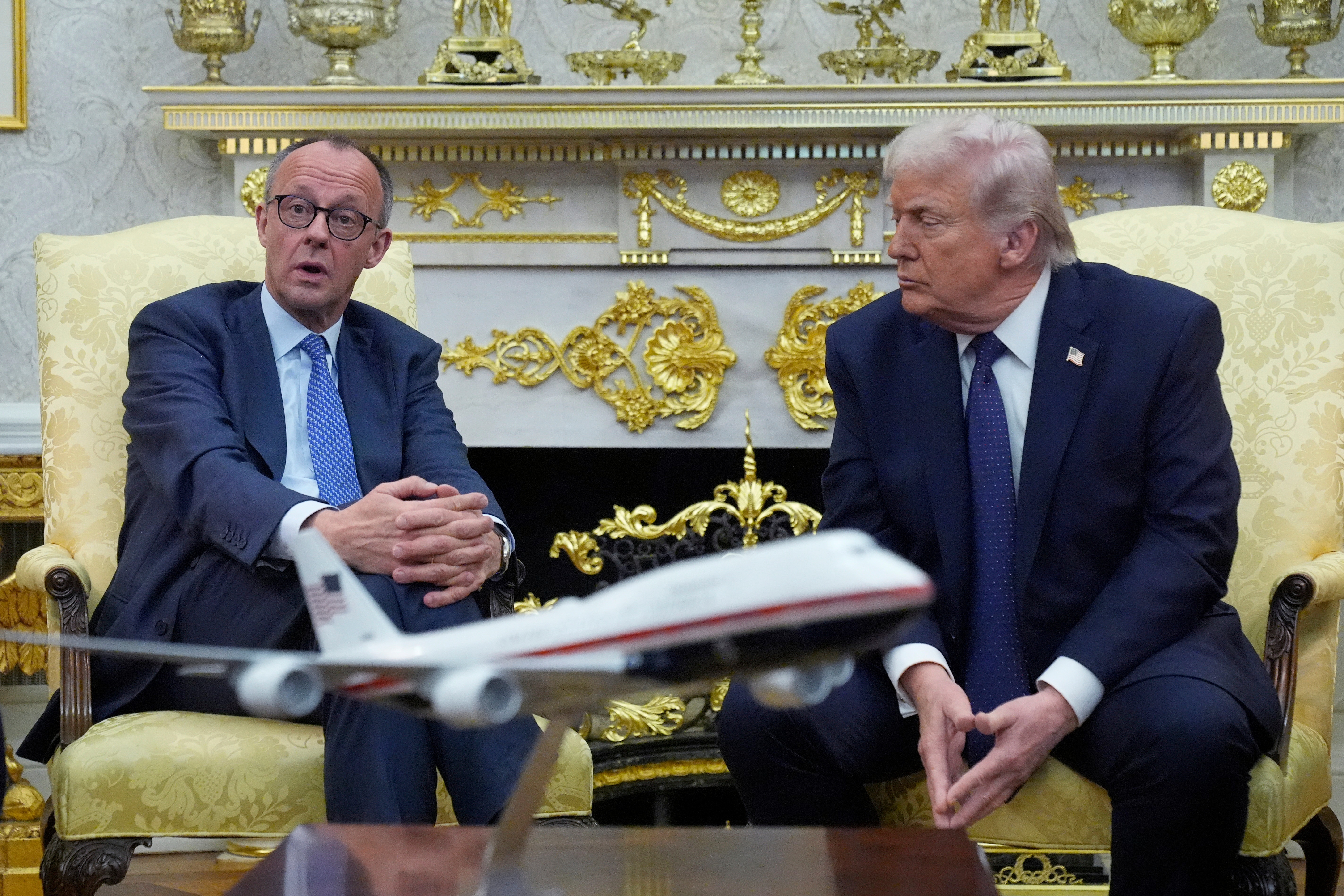
Donald Trump is back at it with Germany. This isn't just another social media post or a passing comment at a rally. He’s explicitly weighing a reduction of the American military presence in Germany, and the timing isn’t an accident. This latest friction comes right in the middle of a heated feud over how to handle Iran, and honestly, it’s a playbook we’ve seen before. If you’re wondering why the U.S. has over 36,000 troops sitting in the middle of Europe decades after the Cold War ended, you aren't alone. But pulling them out isn't as simple as just booking a few flights home.
The current spat is personal. German Chancellor Friedrich Merz recently suggested that the U.S. is being "humiliated" by Iran and criticized Washington’s lack of a clear strategy. Trump didn't take that sitting down. He fired back on Truth Social, claiming Merz "doesn’t know what he’s talking about" and hinted that the U.S. is reviewing its troop levels in Germany with a decision coming soon. It’s a classic leverage play. But underneath the name-calling, there are massive implications for global security and your wallet. Discover more on a similar subject: this related article.
The real cost of keeping troops in Germany
One of the biggest misconceptions is that stationing troops in Germany is a massive drain on the U.S. Treasury compared to keeping them at home. It’s actually not that straightforward. Germany isn't just a host; they’re a partner that pays a significant portion of the bills.
Germany covers roughly $1 billion every year for things like base construction, utilities, and local labor. When you factor in those contributions, the net cost of having a soldier in Germany is almost identical to having them in South Carolina or Texas. In fact, bringing them home can be more expensive in the short term. You have to build new barracks, expand domestic facilities, and reorganize entire command structures. More analysis by TIME highlights related perspectives on this issue.
Then there’s the "rotational" argument. Some people think we should just rotate troops in and out instead of basing them there permanently. The data shows otherwise. Rotating an Armored Brigade Combat Team (ABCT) through Europe costs about $70 million more per year than just leaving them there. Rotations are hard on families, they're hard on equipment, and you lose that local expertise that only comes from living in the community.
Why the Iran feud changed the math
The U.S.-Israel war against Iran has pushed the NATO alliance to a breaking point. Trump wants help, and he isn't getting it. Germany and other European allies have been hesitant to jump into a war that has already choked off about 20% of the world’s oil supply by closing the Strait of Hormuz.
Merz is worried about energy prices and economic collapse in Europe. Trump is worried about winning a war and keeping Iran from getting a nuclear weapon. When Merz calls the U.S. strategy a failure, Trump sees it as a betrayal from an ally that the U.S. is "protecting" for free. It’s the "delinquent ally" narrative all over again.
Key facilities at stake
If Trump actually follows through, he isn't just moving soldiers. He’s dismantling a logistical backbone that the U.S. uses for almost everything in the Eastern Hemisphere.
- Ramstein Air Base: This is the heart of U.S. air operations. It’s the gateway to the Middle East and Africa.
- Landstuhl Regional Medical Center: The largest American hospital outside the U.S. If a soldier gets hurt in a conflict anywhere in that region, they go here first.
- AFRICOM and EUCOM: Both headquarters are in Stuttgart. Moving these would be a logistical nightmare that would take years, not months.
What this means for European security
If the U.S. pulls back, Russia is the obvious winner. The threat of withdrawal makes European countries nervous, which sometimes makes them spend more on their own defense. That’s what Trump wants. But it also makes them look for "strategic autonomy," basically meaning they stop relying on the U.S. and start doing their own thing.
That might sound good if you’re tired of the U.S. being the world’s policeman. But a fractured NATO is a weak NATO. When allies don't trust each other, the risk of miscalculation by adversaries goes up. We’re already seeing public confidence in the alliance drop in European polls every time a withdrawal is threatened.
The path forward
Don't expect a mass exodus tomorrow. A 2023 law actually prevents the president from fully withdrawing from NATO without Congressional approval. However, reducing troop numbers is a power the executive branch largely controls. We’ve been here before in 2020 when Trump ordered 9,500 troops out, only for the Biden administration to freeze that move in 2021.
If you’re watching this play out, keep an eye on the Strait of Hormuz. If oil prices keep climbing and the Iran conflict drags on, the pressure on the U.S.-Germany relationship will only intensify.
If you want to stay ahead of how this affects your investments or travel plans, start looking at European defense stocks and energy sector volatility. The "security umbrella" isn't as solid as it used to be, and the markets are starting to price in that uncertainty. Check your exposure to international funds that are heavy on German industrials—they're the first to feel the heat when these diplomatic feuds turn into policy shifts.