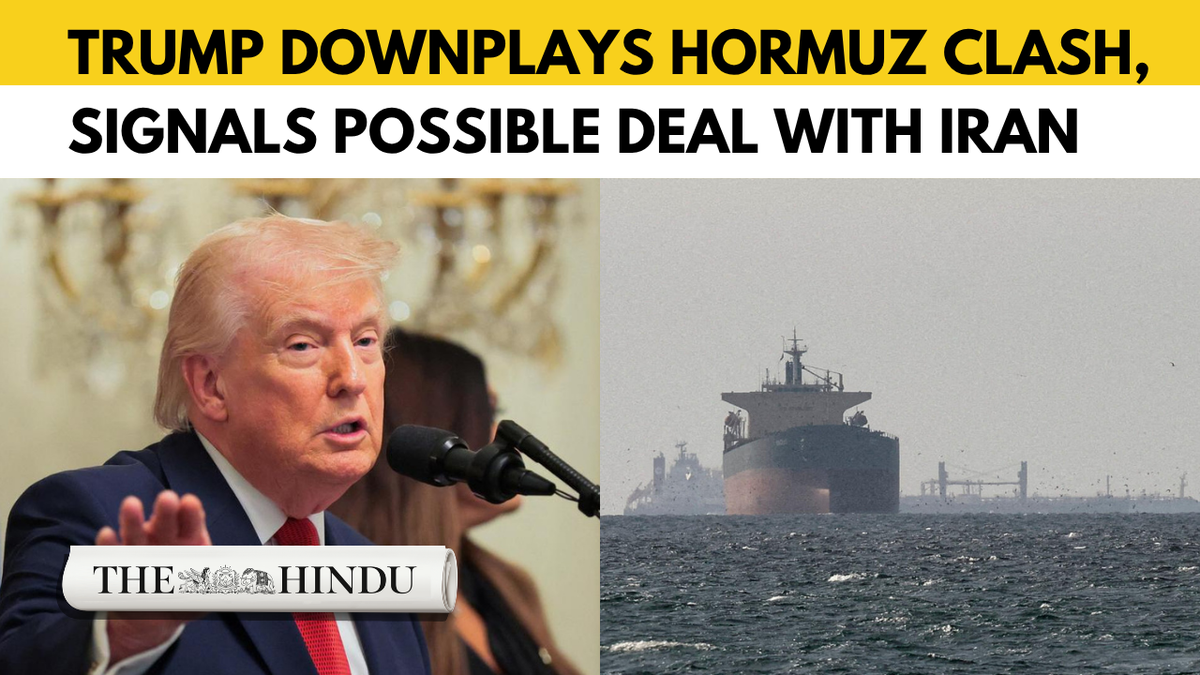
Donald Trump says things are moving fast. He’s telling anyone who will listen that a "satisfactory" deal with Iran could be signed within a week. But if you look at the Strait of Hormuz right now, you wouldn't see a peace summit. You’d see a powder keg. Just yesterday, the US and Iran traded fire in what the President called a "love tap," even as he insists the diplomatic gears are turning behind the scenes. It's a classic case of the "Trump Doctrine" in action: talk peace, hit hard, and keep everyone guessing.
The reality on the water is messy. The month-long ceasefire is technically still in effect, but it’s screaming for air. After Iranian forces allegedly targeted US destroyers transiting the strait, the American military responded with "self-defense" strikes. It’s the most serious tremor we’ve seen in weeks. Yet, Trump remains publicly bullish, claiming Iran wants a deal "badly." He’s even paused "Project Freedom"—the high-stakes naval mission meant to forcibly reopen the strait—to give the negotiators in Pakistan more room to breathe.
Is this genuine progress or just a very dangerous game of chicken?
The Disconnect Between Washington and the Strait
You've got to appreciate the irony. While Secretary of State Marco Rubio and the White House team are drafting memorandums of understanding, the Pentagon is busy documenting 228 damaged structures at US bases from previous Iranian strikes. The gap between the diplomatic talk and the military reality is wide enough to sail an aircraft carrier through.
The Strait of Hormuz remains effectively choked. Only about 5% of the usual traffic is moving, mostly ships from countries like China and Pakistan that have made their own side deals with Tehran. For everyone else, insurance costs are astronomical and the risk of hitting a mine or a drone is too high. Trump’s strategy seems to be a "counter-blockade," squeezing Iranian ports until the regime breaks. He’s betting that the economic pain will force a signature before the military skirmishes spiral into a full-blown re-ignition of the war.
What Most People Get Wrong About Project Freedom
When Trump announced "Project Freedom," critics called it an invitation to a world war. The idea was simple: use a US-led naval "defensive umbrella" to escort commercial tankers through the strait. It lasted about 24 hours. Why? Because the administration realized that forcing the issue militarily might kill the very deal they’re trying to brag about.
But don't mistake the pause for a retreat. It’s a carrot on a very short stick. By pulling back the naval mission, Trump is telling the Iranian leadership, "I’m giving you a chance, but the bombers are still fueled up." He even posted on social media that if they don’t agree to the terms, "the bombing starts." It’s not subtle. It’s aggressive, opinionated diplomacy that ignores the traditional State Department playbook in favor of a high-pressure sales tactic.
The Pakistan Connection and the One Page Deal
Right now, Pakistan is the middleman. They’re hopeful for a "durable peace," and there’s talk of a second round of talks hosted in Islamabad next week. What’s actually on the table? Reports suggest it’s a one-page framework. Trump wants two things:
- A permanent end to the nuclear program (no "sunset clauses").
- The immediate, unrestricted reopening of the Strait of Hormuz.
Iran, led by a new Supreme Leader following the chaotic events of February, is looking for a way to stop the bleeding without looking like they’ve surrendered. They’ve handed over their own "peace offer," which Trump says isn't "satisfactory" yet. It’s a grind. Both sides are claiming the situation is "back to normal" after every exchange of fire, mostly because neither side can afford the alternative right now.
Why Oil Markets Aren't Buying the Hype
If the deal were as close as Trump says, you’d expect oil prices to be plummeting. They aren't. Brent crude is still hovering around $101 a barrel, spiking every time a "love tap" occurs in the Gulf. Traders have seen this movie before. They know that a ceasefire held together by social media threats and Pakistani mediators is fragile.
The UAE is vowing "self-defense" after missile strikes on their infrastructure, and France is moving its own carrier group toward the Red Sea. This doesn't look like a region preparing for a grand bargain. It looks like a region waiting for the next spark.
Trump is right about one thing: Iran is hurting. Their naval strength is gutted, and the blockade is working. But "hurting" doesn't always lead to "signing." Sometimes it leads to desperate, asymmetric strikes that make a deal impossible for any US president to justify to Congress.
If you’re watching this play out, don't focus on the daily tweets or the "great progress" headlines. Watch the shipping lanes. Until the first Western-insured oil tanker moves through the Strait of Hormuz without a military escort, the talk is just talk.
Watch the following indicators to see if this is real:
- Look for the official announcement of a "second round" of talks in Islamabad. If that doesn't happen by mid-week, the "one week" deadline is dead.
- Keep an eye on the US Navy's position. If "Project Freedom" assets move back toward the strait, the diplomacy has failed.
- Watch the price of Brent crude; a drop below $90 would signal that the big players finally believe a deal is actually on paper.
The next 72 hours will tell us if we’re looking at a historic peace or the start of the next phase of the conflict.