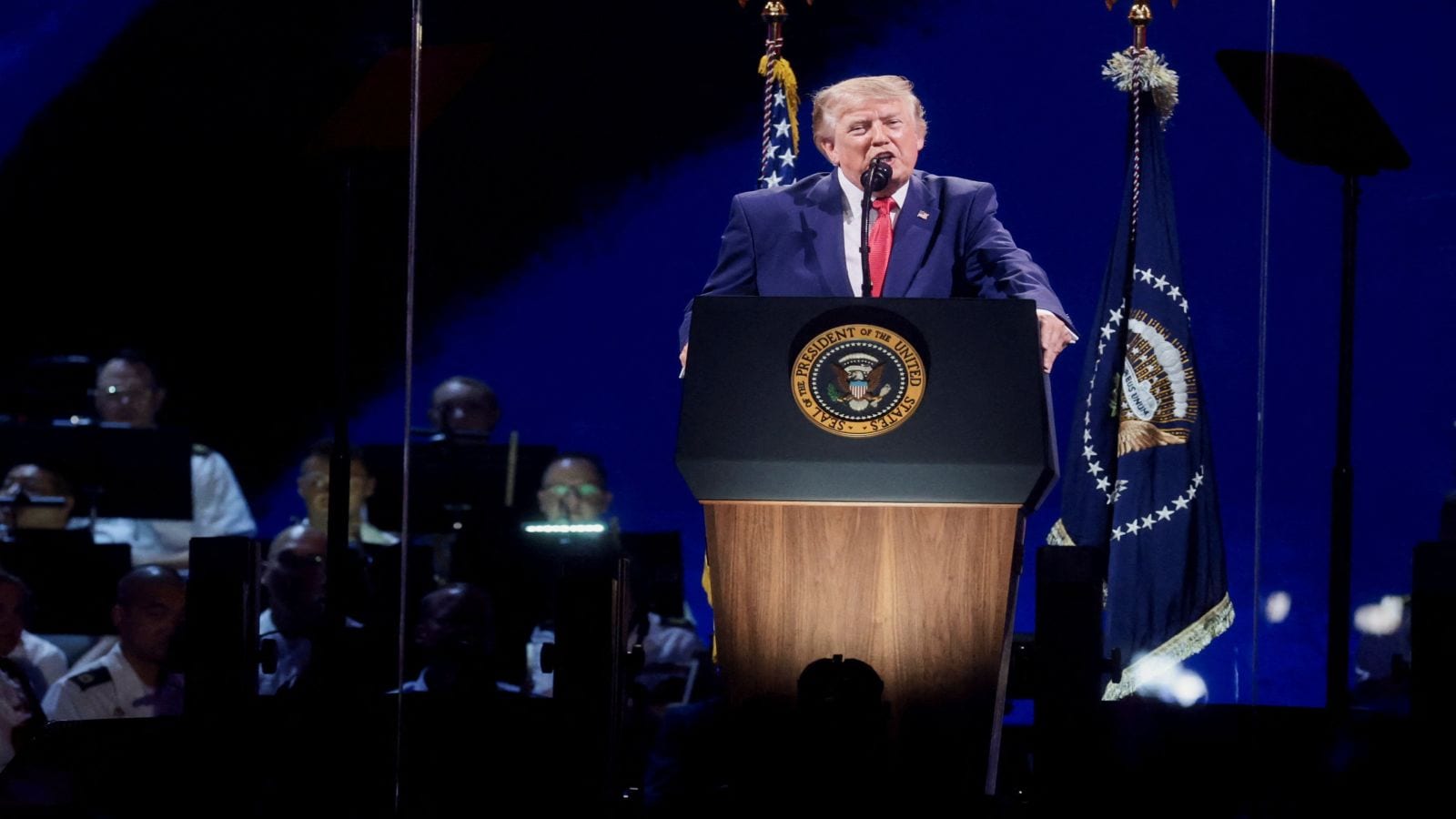
Donald Trump wants to redraw the global map, and he's using the latest NATO summit to remind everyone of it. Standing next to Turkish President Recep Tayyip Erdogan in Ankara, Trump openly declared that Greenland should be controlled by the United States, not Denmark. It's a statement that immediately sent a chill through European diplomats, but for anyone paying attention to his second term, it's just the latest chapter in an ongoing territorial obsession.
This isn't just standard political theater. The tension over this massive, ice-covered Arctic island has steadily escalated into a genuine diplomatic crisis, complete with tariff threats, military posturing, and fractured alliances. Trump thinks Denmark is failing to protect the territory, and he's making it clear that European security guarantees might depend on whether Copenhagen is willing to hand over the keys.
The Core of the Argument
Trump's logic is pretty straightforward, if incredibly aggressive. He argues that Greenland is an essential asset for US national security that Denmark simply can't defend. According to Trump, the island is effectively surrounded by Russian and Chinese vessels, and Denmark doesn't have the financial or military juice to do anything about it.
"Denmark doesn't spend money to really help Greenland, but it's an important part for the United States," Trump told reporters, complaining that the dispute has severely damaged his relationship with NATO.
He didn't stop there. He tied the entire American military presence in Europe to the issue, suggesting that if European allies won't cooperate with Washington's strategic needs, the US might just pack up and leave. He explicitly threatened that the US could remove all of its soldiers out of Europe, telling allies they "better be careful."
Danish Prime Minister Mette Frederiksen was quick to fire back, reiterating that Greenland is absolutely not for sale and expecting allies to respect Danish sovereignty. It's a standoff we've seen before, but the stakes are much higher now.
Why the Arctic is a Massive Deal Right Now
To understand why the White House won't drop this, you have to look at how fast the Arctic is changing. Melting sea ice is opening up brand-new shipping lanes and revealing massive, untouched deposits of critical minerals. Everyone wants a piece of it, especially Beijing and Moscow.
The US already has a major footprint on the island via the Pituffik Space Base, which handles vital missile warning and space surveillance operations. But a basic military lease isn't enough for the current administration. They want total sovereignty.
The strategic location of Greenland makes it a natural shield for North America. If Russia or China ever managed to establish a serious foothold there, the Pentagon's defense strategy would look incredibly vulnerable. Trump sees a massive gap in Western defense capabilities and wants to fill it by simply absorbing the territory.
The Toll on the NATO Alliance
This ongoing pressure campaign has pushed Washington's relationship with its oldest European allies to a breaking point. Earlier this year, Trump threatened a 25% import tax on goods from several European nations unless Denmark relented. In response, European leaders threatened to tank a major trade agreement and even floated the idea of placing sanctions on the US.
The situation on the ground in Greenland has gotten incredibly tense. Denmark recently deployed hundreds of elite combat soldiers trained in Arctic warfare to the island to signal that they won't back down. Meanwhile, a coalition of European nations launched Operation Arctic Endurance, a joint military reconnaissance mission designed to reinforce the region against outside pressure.
Inside the US, the policy faces heavy pushback from both sides of the aisle. Bipartisan congressional delegations have traveled to Copenhagen to reassure the Danes that America still respects their borders. Yet, the White House continues to push the issue on the global stage, using every international summit as leverage.
What Happens Next
The path forward looks incredibly messy. Greenland's local government has made it clear that they want eventual independence, not a transfer of ownership to Washington. Local protests in the capital city of Nuuk have seen crowds chanting "no means no" outside the American consulate.
If the administration wants to secure its northern flank, trying to bully a founding NATO ally into selling territory isn't working. A smarter strategy would involve leaning heavily into the existing 1951 defense treaty, boosting joint surveillance capabilities, and acting as the primary economic partner for Greenland as it navigates its own path toward autonomy.
For now, the administration shows zero signs of backing down from the hardline approach. Expect the White House to keep using economic leverage, specifically the threat of looming tariffs against Denmark and the UK, to force a renegotiation of Arctic defense terms. If you're watching global markets or international defense policy, keeping an eye on Arctic trade routes and US-Danish diplomatic channels over the next few months is going to be critical. The battle for the Arctic is no longer a hypothetical future scenario; it's happening right now in real time.