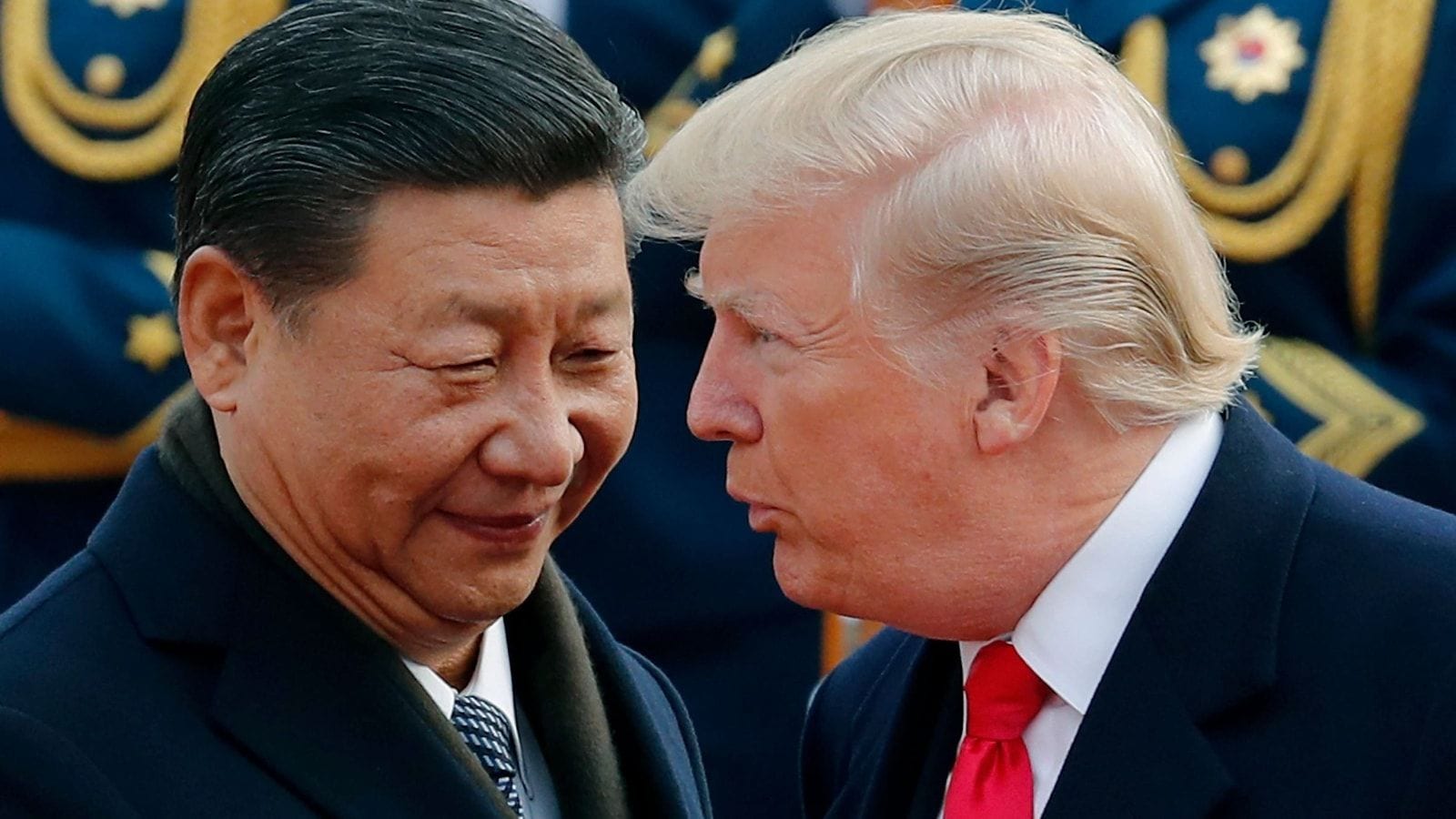
Donald Trump just got back from Beijing talking up big progress, but behind closed doors, his own staff are sweating.
The glittering reception at the Zhongnanhai leadership compound looked fine on television. But the real meat of the meeting left several of Trump’s closest advisers deeply shaken. They came away convinced that Chinese President Xi Jinping is gearing up for a direct move against Taiwan within the next five years.
This isn't typical Washington saber-rattling. It is a fundamental shift in how Beijing views the American position. According to leaked accounts first published by Axios, one senior adviser noted that Xi did not act like a leader trying to manage a rising power. Instead, he treated China as America’s absolute equal and made one thing unmistakable: Taiwan belongs to Beijing.
For the global economy, tech companies, and everyday consumers, the timeline just shortened dramatically.
The Five Year Window for Taiwan
The core of the anxiety is a ticking clock. Trump’s team realizes that China wants to force unification before America can insulate its economy.
Right now, the global tech industry depends entirely on advanced semiconductors. If a conflict breaks out tomorrow, Western tech infrastructure collapses. A five-year horizon means Beijing might strike before US domestic chip manufacturing facilities are fully built and independent.
"There's no way we can be ready economically," one adviser admitted. "The chip supply chain won't be anywhere close to self-sufficiency. For CEOs, and really the economy as a whole, there's no more pressing issue."
Xi used the closed-door sessions to issue explicit warnings. He told Trump that mishandling Taiwan would put the US-China relationship in great jeopardy, threatening clashes and conflicts. This bold stance shows Beijing thinks the balance of power has fundamentally changed.
The Semiconductor Nightmare
Let's look at the actual numbers to understand why this matters.
Taiwan Semiconductor Manufacturing Company (TSMC) fabricates the vast majority of the world's most advanced processors. These aren't just for smartphones. They are the physical brains driving the artificial intelligence boom, military hardware, data centers, and automotive systems.
The US passed the CHIPS Act to bring manufacturing home, but factories take years to build. Equipment must be calibrated. Engineers must be trained. If China blockades or invades Taiwan by 2031, American companies lose access before local factories can fill the void.
Trump, Xi, and the Leverage Game
While his staff panicked, Trump took a characteristically transactional approach.
In a Fox News interview right after his trip, Trump revealed he is delaying a long-awaited $14 billion arms sale package to Taipei. Why? He is using it as a chip to negotiate with Beijing.
"I'm holding that in abeyance, and it depends on China," Trump said. "It's a very good negotiating chip for us, frankly. It's a lot of weapons."
This public stance has triggered massive anxiety in Taipei. For decades, US policy relied on strategic ambiguity—keeping Beijing guessing whether American troops would defend Taiwan. Trump's business-first framing changes the calculus. He openly questioned the logistics of a war, asking why the US should fly 9,500 miles to fight when he just wants everyone to calm down.
Taipei Responds Direct to the Drama
Taiwanese President Lai Ching-te did not wait around to see if his country would become a bargaining chip. He took to Facebook with a sharp response aimed directly at Washington and Beijing.
Lai made it clear that Taiwan will not be sacrificed or traded. He reminded the White House that arms sales are part of Washington’s legal commitments under the Taiwan Relations Act. While Lai thanked the US for its continued public emphasis on peace, his message was a clear warning that Taipei will not sit quietly if American protection becomes a commodity.
What This Means for Businesses and Investors
If you run an organization relying on global logistics, hardware, or cloud infrastructure, treating Taiwan as a distant political issue is a mistake. The next five years require concrete risk management.
First, audit your physical supply chain. Companies need to map exactly where their components come from. If your vendors rely on Taiwanese fabrication, you need secondary sourcing strategies now, not when a crisis hits.
Second, prepare for digital infrastructure shocks. Cloud providers and AI data centers are highly concentrated. A conflict across the Taiwan Strait will immediately bottleneck computing power, spike costs, and delay hardware replacement cycles for years.
Diversify your operations out of the immediate geographic choke zone. Build partnerships with European, Japanese, or domestic American suppliers even if it costs more upfront. The premium you pay now is insurance against a total operational shutdown later.