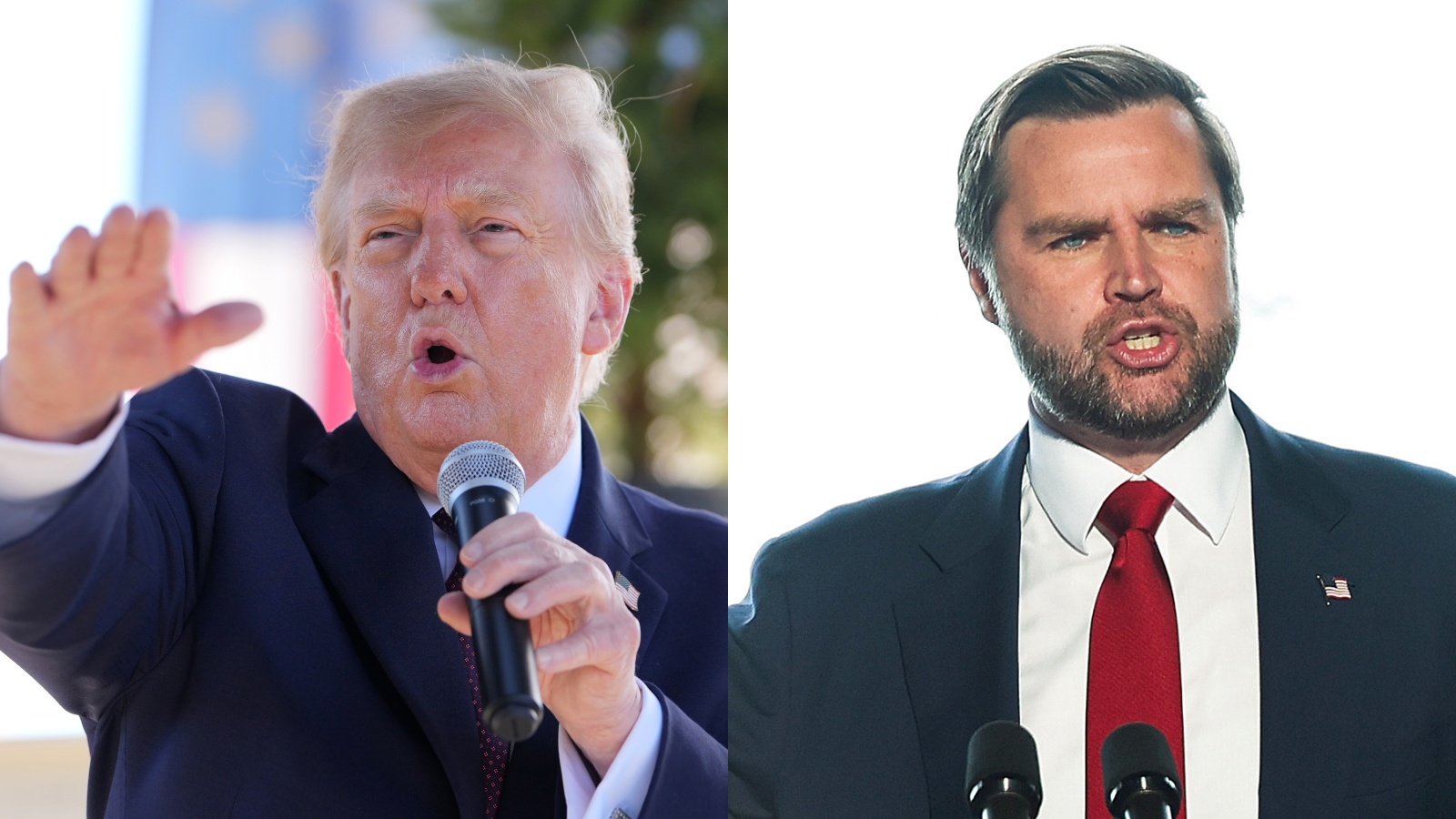
Political reporters love a soap opera. Whenever Donald Trump shrugs off a question about JD Vance running for president in 2028, the beltway press corps immediately fires up the palace-intrigue machine. They see hesitation. They see a rift. They see a lame-duck president losing faith in his hand-picked successor right as the midterm dust settles.
They are completely missing the board.
Treating Trump’s non-committal shrug as genuine indecision is the laziest consensus in Washington. If you have spent any time watching how executive power actually operates—not in civics textbooks, but in high-stakes boardrooms and war rooms—you recognize this move immediately. It is standard-issue leverage management. You never crown an heir two years before the primary even begins, especially when you still have two full years left in the Oval Office.
The Myth of the Anointed Successor
The mainstream coverage operates on a broken premise: that a sitting two-term president wants to smoothly transition power to his vice president.
History says otherwise. Modern presidents almost always have a toxic, complicated relationship with their number twos once the second term hits its midpoint. Look at the historical record. Dwight Eisenhower famously told reporters in 1960 that if they gave him a week, he might think of one major idea Richard Nixon had contributed to his administration. Lyndon Johnson treated Hubert Humphrey like a hostage during the 1968 cycle. Even Barack Obama quietly favored Hillary Clinton over Joe Biden in 2016, nudging his own vice president to the sidelines because he doubted Biden’s viability.
Why does this happen? Because the moment a president officially anoints a successor, the sitting president becomes irrelevant.
Washington is a transactional town. Donors, lobbyists, cabinet secretaries, and ambitious senators are constantly calculating where the future power sits. The second Donald Trump says, "JD Vance is my guy for 2028," every major donor in the Republican Party stops taking calls from the White House political shop and starts booking flights to Ohio. Cabinet members start ignoring the West Wing's agenda to audition for roles in a prospective Vance administration.
I have watched this exact dynamic destroy corporate mergers and sink political campaigns from the inside. You hand over the crown too early, and your own staff stops listening to you by Tuesday. Trump understands this instinctively. Keeping Vance in limbo keeps every single donor, ambitious governor, and potential 2028 rival—from Ron DeSantis to Marco Rubio to Nikki Haley—dependent on Trump’s good graces.
What the Midterm Reality Actually Dictates
To understand why Trump is playing coy right now, you have to look at the structural reality of midterm elections. Historically, the party holding the White House gets hammered in the midterms. Since World War II, the president's party has lost an average of 26 House seats in midterm cycles.
When a party takes a bruising in November, the media demands a scapegoat. Pundits immediately start asking whether the administration's brand is damaged goods for the next presidential cycle. By refusing to lock in Vance as the inevitable 2028 nominee, Trump insulates himself from midterm blowback while simultaneously testing Vance’s political mettle.
Let’s break down the mechanics of how Trump uses ambiguity as a stress test:
- The Loyalty Filter: Trump does not reward titles; he rewards utility. By keeping the 2028 endorsement on the shelf, he forces Vance to spend the next two years proving he can carry the populist banner without training wheels.
- The Donor Auction: As long as the 2028 nomination is officially "open," mega-donors have to keep writing checks to Trump-aligned PACs just to stay in the room. The moment a nominee is chosen, that money routes directly to the new candidate's campaign committee, where Trump has zero legal control over how it gets spent.
- The Ego Buffer: Trump has spent a decade as the undisputed center of gravity in American politics. Sharing the spotlight with an officially sanctioned successor diminishes his daily media dominance.
Imagine a scenario where Trump endorsed Vance the day after the midterms. Within forty-eight hours, every Sunday morning talk show would shift its framing from "What will Trump do next?" to "How will Vance build his coalition?" Trump would never willingly surrender that oxygen.
Dismantling the "People Also Ask" Fallacies
When voters and political junkies search for news about the 2028 GOP primary, they are fed a steady diet of flawed questions driven by cable news narratives. Let’s tear down the biggest ones.
Does Trump actually dislike JD Vance?
This is pure projection by critics who want to see the administration implode. You do not put someone in the number two spot, dispatch them to hostile media networks weekly, and trust them with your core populist messaging if you hate them. Trump’s hesitation isn't personal animus; it is pure business. In Trump's world, everyone is on a one-day contract. You are only as good as your last news cycle.
Will JD Vance automatically win the 2028 Republican nomination?
No. The idea of "inevitability" in modern primaries is a fairy tale. Ask Hillary Clinton in 2008. Ask Jeb Bush in 2016. Being the Vice President gives Vance massive name recognition and access to an existing donor network, which political scientists call the "invisible primary" advantage. However, vice presidents also inherit every single unpopular decision, economic hiccup, and foreign policy headache of the administration they served. Vance has to run on the administration's record without having the unilateral power to shape it.
Could Trump try to run again in 2028?
Stop taking bait. The 22nd Amendment is crystal clear: "No person shall be elected to the office of the President more than twice." Amending the Constitution requires a two-thirds vote in both chambers of Congress and ratification by three-fourths of the states. That is mathematically impossible in a polarized country. When Trump jokes about a third term or stays vague about 2028, he is trolling the press to keep himself in the headlines and to prevent the lame-duck label from sticking. Falling for it makes you look amateurish.
The Structural Trap Every Vice President Faces
If you want to understand Vance’s real problem, stop looking at Trump’s quotes and start looking at the structural trap of the vice presidency itself.
Political science literature—specifically the work of scholars like Joel Goldstein, who literally wrote the book on the modern vice presidency—shows that the office is a paradox. To be a successful vice president, you must be completely submissive to the president’s agenda, ego, and messaging. You cannot outshine the boss. You cannot take credit for wins, and you must absorb blame for losses.
Yet, to win a presidential primary, you have to project alpha-level dominance, independent vision, and executive command.
Look at the track record of sitting vice presidents trying to win the presidency directly after a two-term president:
- Richard Nixon (1960): Lost a razor-thin race to John F. Kennedy, largely because Eisenhower refused to actively campaign for him until the very end and famously undercut him in press conferences.
- Hubert Humphrey (1968): Crushed by the weight of Lyndon Johnson’s Vietnam War policies, unable to break free until it was too late.
- George H.W. Bush (1988): The lone modern exception, who managed to win after Ronald Reagan’s two terms—and even Bush had to spend months fighting off the "wimp factor" label because he had spent eight years playing loyal subordinate to Reagan.
- Al Gore (2000): So terrified of Bill Clinton’s personal scandals that he distanced himself from a booming economy, costing himself the election in Florida.
Vance is walking that exact tightrope right now. If he acts too eager for 2028, Trump will kneecap him in public to remind everyone who is in charge. If he acts too passive, ambitious rivals like Ron DeSantis or Tom Cotton will eat his lunch in Iowa and New Hampshire.
The Real Threat to Vance Isn't Trump
The mainstream media thinks Trump’s hesitation is Vance’s biggest obstacle. They are wrong. Vance’s biggest obstacle is the coalition itself.
Donald Trump’s political movement is built on a unique, volatile blend of economic populism, cultural nationalism, and personal charisma. Many voters who show up for Trump do not consider themselves traditional Republicans. They are low-propensity voters who are loyal to a specific man, not a party apparatus or a philosophical white paper.
Vance is an intellectual populist. He speaks the language of industrial policy, antitrust enforcement, and family-centric conservatism with Yale Law precision. That plays brilliantly on podcasts and in long-form interviews. Whether it translates into millions of working-class voters turning out in Pennsylvania, Michigan, and Wisconsin when Trump’s name is not on the ballot is a massive, unproven gamble.
Trump knows this. He has spent years mocking traditional politicians who lack crowd appeal. When Trump says he isn't sure about 2028, he is quietly acknowledging a brutal truth: nobody knows if MAGA is transferable.
Of course, this contrarian reading has a major blind spot. By withholding his endorsement and encouraging a free-for-all primary in 2028, Trump risks fracturing his own movement into warring factions. A bloody, protracted primary between Vance, DeSantis, and a dozen other hopefuls could drain hundreds of millions of dollars and leave the eventual nominee battered before the general election even starts. Trump might be maximizing his short-term relevance at the expense of his long-term ideological legacy.
How to Read the 2028 Chessboard Without Getting Played
If you want to actually understand what is happening in Republican politics over the next twenty-four months, stop reading articles that analyze Trump’s body language or dissect single adjectives from tarmac press gaggles.
Watch the money and the staffing. That is the only real signal in Washington.
- Track the Super PAC transfers: Watch where the major GOP mega-donors put their money in early 2027. If they are funding Vance-aligned policy groups, the primary is already over regardless of what Trump says on camera.
- Watch the mid-level operatives: Campaign managers and digital directors are mercenaries. They go where the paycheck is longest. If top-tier Trump campaign staffers start quietly taking jobs in Ohio or joining Vance’s political action committee, the transition is happening behind closed doors.
- Ignore the primary polling until late 2027: Early primary polls are nothing more than name-recognition tests. At this stage, polling numbers measure who was on television last night, not who will win delegates in 2028.
Donald Trump is not confused about JD Vance. He is not having second thoughts, and he is not accidentally leaking secrets to reporters on Air Force One. He is doing what he has done for forty years in real estate, television, and politics: keeping every option open, keeping every subordinate hungry, and making sure nobody forgets who owns the building.
Stop reading his hesitation as weakness. Start recognizing it as the only thing keeping him relevant until January 2029.