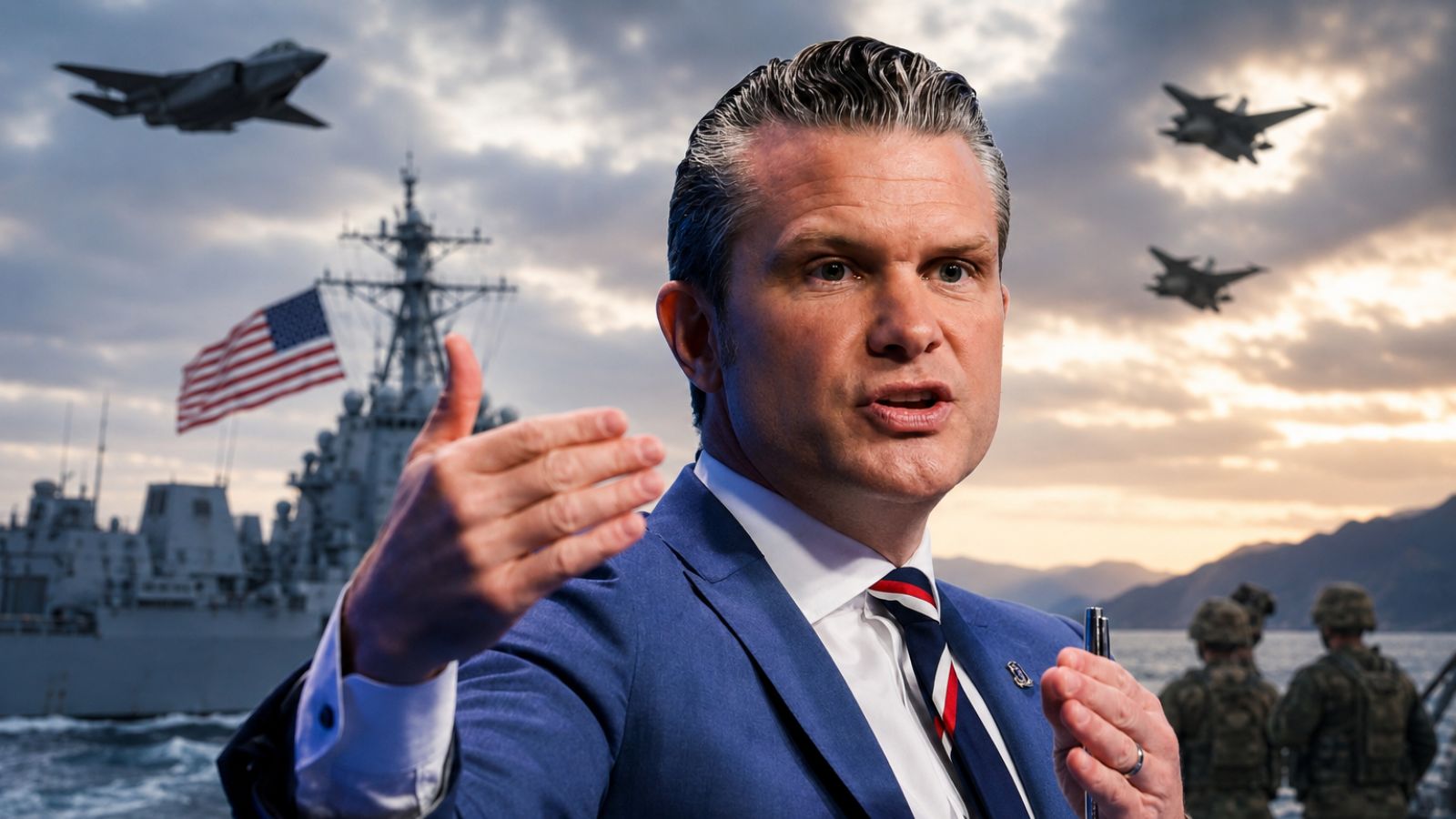
The Pentagon wants you to know that the era of free defense rides is over. If you want American weapons, you have to spend your own money first. That was the unmistakable message running through Singapore as US Secretary of War Pete Hegseth took the stage at the Shangri-La Dialogue. While Washington watches China build up its navy at a historic pace, the US is fundamentally rewriting its strategy for the Indo-Pacific. It's no longer about American forces holding the line alone. It's about finding capable partners willing to split the bill and build their own hardware.
That's exactly why India stole the spotlight. Hegseth didn't mince words, calling India a "critical anchor" to hold the line in South Asia. He praised New Delhi for modernizing its military and building out serious industrial muscle. For an administration obsessed with trade deficits and burden-sharing, a powerful, self-reliant India isn't a threat to American influence. It's the ultimate asset. If you liked this piece, you should look at: this related article.
The No Freeloading Doctrine Shapes the Pacific
Let's look at the numbers because they reveal the scale of this policy shift. The White House is injecting a massive $1.5 trillion into its own defense budget this year. But in return, Hegseth laid down a blunt mandate for allies: invest 3.5% of your GDP into defense, or risk losing priority status.
For decades, Asian and European partners let their military capabilities slide, relying entirely on American hardware. Washington is putting an end to that. Hegseth explicitly warned that countries refusing to carry their own weight will face a distinct shift in how the US does business. For another perspective on this development, check out the latest update from TIME.
US Defense Strategy: Spend 3.5% of GDP or move to the back of the line for arms sales.
This isn't just tough talk. It's a structured policy change. The Pentagon is creating a priority queue. Nations that step up get expedited arms sales, deep industrial cooperation, and advanced intelligence sharing. The rest get left behind.
Why New Delhi Fits the Trump Blueprint
India stands out in this new strategic reality because it's already doing what Washington expects. New Delhi isn't looking for a protectorate status; it acts strictly in its own national self-interest. Hegseth highlighted that a powerful India, focused on its own security, naturally balances out Beijing's ambitions across the Indian Ocean.
The alliance is moving far beyond simple arms purchases. The US and India are deep into co-production initiatives, like joint manufacturing for Javelin anti-tank guided munitions. This serves two vital purposes:
- It builds up India’s domestic defense capabilities.
- It protects supply chains from sudden shocks if global shipping lanes face disruption.
Furthermore, India is actively building the heavy industrial and logistics capacity needed to sustain high-end, long-term military operations. Crucially for the Pentagon, this includes logistics networks capable of repairing and maintaining US Navy vessels operating forward in the theater. Instead of sailing thousands of miles back to American bases for maintenance, US warships can utilize Indian shipyards, keeping more hulls in the water near the geopolitical center of gravity.
Balancing Beijing While Managing the Iran Crisis
The tough talk on defense spending comes at a complicated time for American foreign policy. Critics wonder if Washington can actually handle multiple flashpoints at once. While Hegseth was speaking in Singapore, President Donald Trump was holding an urgent Situation Room meeting to debate extending the fragile ceasefire with Iran.
Hegseth dismissed any talk of American distraction, insisting the military can handle two major theaters at once by super-charging its industrial base to build two to four times the volume of munitions quickly. Interestingly, the rhetoric surrounding China at the summit was notably more measured than in previous years. Hegseth admitted that military-to-military communications with Beijing are the best they’ve been in a long time.
Yet, the fundamental concern hasn't changed. The US remains committed to preventing any single state from imposing hegemony in the Pacific. By building a network of self-sufficient partners like India, Washington aims to establish a durable balance of power without overextending its own domestic resources.
What This Means for Global Defense Contracts
If you’re tracking where global defense money is moving, the takeaway from this summit is crystal clear. The traditional model of purchasing finished American military hardware off the shelf is rapidly fading.
Future defense contracts will prioritize deep industrial integration. If your country wants access to top-tier American technology, your local defense firms need to integrate directly into the production line. Western defense firms are shifting from exporters to co-manufacturers, anchoring their long-term supply chains in resilient hubs like India.
Keep an eye on the 3.5% GDP spending benchmark. As regional governments adjust their national budgets to meet Washington's expectations, expect a massive surge in sovereign defense spending across the Indo-Pacific. The nations that build their own industrial muscle will secure the strongest partnerships in this shifting security environment.