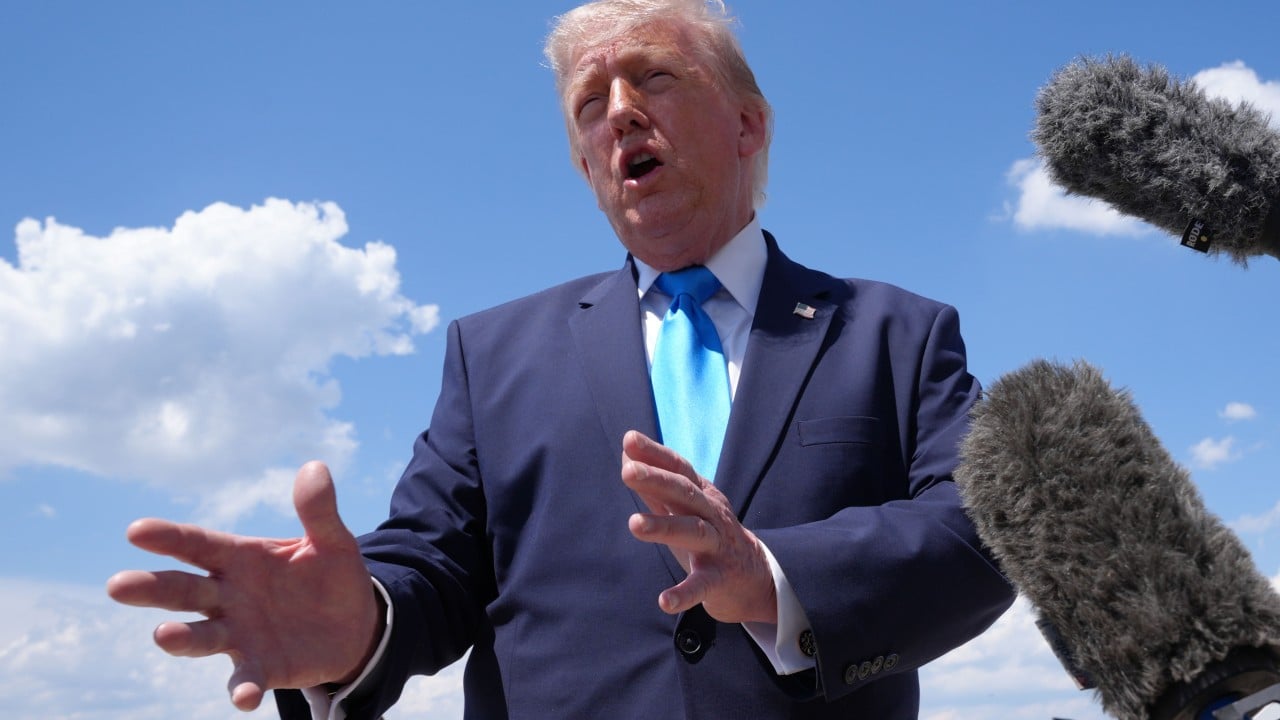
Donald Trump just tossed a diplomatic grenade into the delicate machinery of U.S.-China relations, and the shrapnel is flying straight toward Taipei. Standing at Joint Base Andrews before boarding Air Force One, Trump shrugged off decades of diplomatic protocol by declaring he is perfectly willing to speak directly with Taiwanese President Lai Ching-te.
"I'll speak to him," Trump told reporters, adding that he speaks to everybody and has the situation "very well in hand." He then capped it off by referring to the self-governed democratic island as the "Taiwan problem."
Beijing wasted no time firing back. The Chinese foreign ministry issued a sharp warning, stating its opposition to official American exchanges with Taiwan remains "consistent, clear and firm." It is a classic rhetorical dance, but the music is getting faster and much more erratic.
If a direct phone call between Trump and Lai actually happens, it would break a diplomatic freeze that has held since 1979, when Washington officially switched recognition from Taipei to Beijing. But while some in Taiwan might initially view this as a win for visibility, a closer look at Trump's recent behavior shows Taipei has plenty of reasons to worry.
The Master of the Deal Meets Cross-Strait Friction
This isn't just about a potential phone call. The timing here is critical. Trump just wrapped up a high-stakes state visit to Beijing where he spent quality time with Chinese leader Xi Jinping. During that summit, Xi reportedly looked Trump in the eye and warned him that Taiwan is a "very dangerous situation" if mishandled.
Instead of coming out of that meeting echoing traditional Washington talking points about preserving democracy and honoring the Taiwan Relations Act, Trump walked away viewing the island through a purely transactional lens. In a Fox News interview right after his China trip, Trump openly described arms sales to Taiwan as a "very good negotiating chip."
Think about what that actually means. For decades, U.S. support for Taiwan was framed around shared democratic values and maintaining security in the Indo-Pacific. Now, Trump is treating the island's defense as leverage for his next trade deal with Beijing.
"It's very important to look at how he describes Taiwan: 'the Taiwan problem,'" notes William Yang, a senior analyst for Northeast Asia at the International Crisis Group. "The call could go in many different directions, but for Trump to first reiterate his meeting with Xi was 'very good'… followed by calling Taiwan a 'problem,' it should probably warrant more caution rather than optimism."
Why Taipei is Smiling Through the Panic
Publicly, Taiwan is putting on a brave face. President Lai Ching-te, marking his second anniversary in office, said he would welcome a direct conversation. Lai emphasized that Taiwan wants to maintain the status quo and build "peace through strength." The Taiwanese Presidential Office quickly issued statements thanking Trump for his historical support and pointing out that China is the sole destabilizing factor in the region.
But behind closed doors in Taipei, the anxiety is palpable. Trump's rhetoric isn't just unorthodox; it frequently mimics Beijing's own framing.
Look at the specific grievances Trump has been airing:
- The 9,500-mile problem: Trump openly questioned why American troops should defend an island halfway across the world. "We're supposed to travel 9,500 miles to fight a war," Trump said. "I'm not looking for that."
- The semiconductor grievance: He revived his complaint that Taiwan "stole" the cutting-edge semiconductor industry from the U.S., demanding that Taiwanese chip manufacturing rush over to Arizona instead.
- The $14 billion holdup: A massive, Congress-approved arms package for Taiwan is currently sitting on the table. Trump explicitly tied his willingness to speak with Lai to his upcoming decision on whether to sign off on those weapons.
When the leader of your primary security guarantor calls you a "problem," questions your defense, and treats your military aid like a retail transaction, you don't have a reliable ally. You have a volatile business partner.
The Reality of Strategic Ambiguity
The U.S. has long operated under "strategic ambiguity"—acknowledging Beijing’s claim over Taiwan without endorsing it, while simultaneously supplying Taipei with defensive weapons. It is an intentional gray zone designed to prevent China from invading and stop Taiwan from declaring formal independence.
Trump thrives on breaking gray zones. He loves the spectacle. Back in 2016, as President-elect, he shocked the world by taking a congratulatory phone call from then-Taiwanese President Tsai Ing-wen. Beijing threw a fit, but the sky didn't fall.
This time is different. In 2016, Trump was an outsider testing the boundaries. Now, he's back in power with a defined agenda, a deeply personalized foreign policy, and a much stronger relationship with Xi Jinping. Beijing's military capability is also vastly superior to what it was a decade ago.
Many geopolitical analysts are highly skeptical that the Trump-Lai call will even happen. The blowback from China would be immense, likely involving massive military drills around the Taiwan Strait that could disrupt global shipping lanes and tech supply chains. Trump might just be using the threat of the call to squeeze concessions out of Xi on tariffs or currency manipulation.
What Happens Next
Taipei cannot afford to sit back and guess what Trump's next post on social media will be. If you are tracking the stability of the global tech economy, keep your eyes on two specific indicators over the coming weeks.
First, watch the $14 billion arms sale. If Trump delays or trims the package, it signals that he is actively using Taiwan's security as a bargaining chip with Beijing. Taiwan will need to accelerate its own domestic defense spending and diversify its security partnerships with nations like Japan and Australia.
Second, watch the movement of advanced chip production. Trump wants those factories on American soil. Taiwan Semiconductor Manufacturing Company (TSMC) will face immense pressure to fast-track its U.S. expansion plans to stay in Trump's good graces, even if it hurts Taipei’s "silicon shield" strategy at home.
The era of relying on predictable American diplomatic norms is over. For Taiwan, survival now means learning how to play a high-stakes game where the rules change daily.