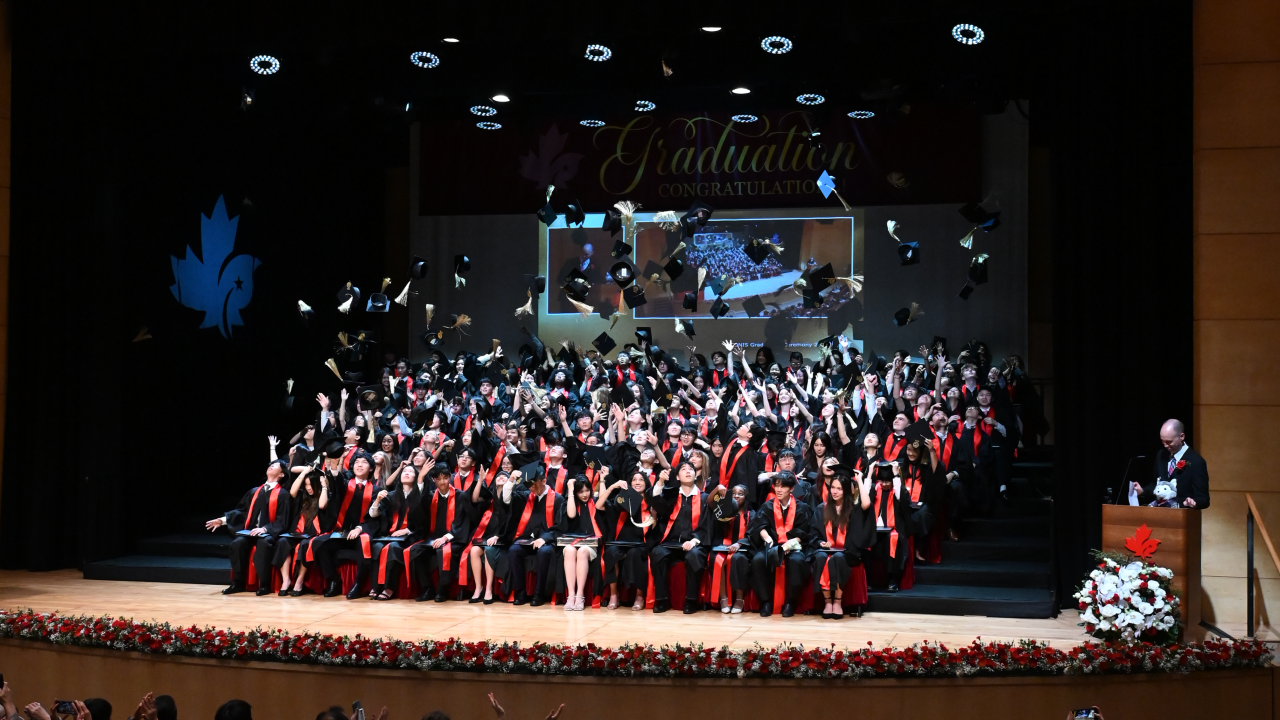
Expats and local elites in Hong Kong pay more than HK$250,000 annually in tuition alone to secure a seat at elite international schools. The Canadian International School of Hong Kong (CDNIS) sits near the top of this hyper-competitive pyramid, promising a dual-diploma pathway straight to Ivy League and Oxbridge lecture halls. But as the global economy shifts and Western universities recalculate their diversity metrics, the old playbook for elite schooling is fracturing. Parents are paying premium prices for a legacy brand, while the actual mechanics of securing a global future have grown far more volatile than the glossy brochures let on.
Beneath the marketing narratives of global citizenship lies a high-stakes pipeline driven by anxiety, corporate debentures, and changing macroeconomic pressures.
The Dual Curriculum Illusion
International schools frequently market the combination of the International Baccalaureate (IB) and regional diplomas as the ultimate academic edge. At CDNIS, students pursue both the IB Diploma and the Ontario Secondary School Diploma. On paper, this dual-track system looks like a formidable insurance policy. If a student stumbles in the notoriously rigid IB exams, they still possess a high-GPA Canadian credential to present to admissions officers.
The reality on the ground is less miraculous. Combining two distinct curriculum frameworks creates an intense administrative and psychological burden for teenagers. Students are not magically learning twice as fast; they are navigating two separate sets of assessment criteria simultaneously.
University admissions offices in the United States and the United Kingdom are fully aware of this overlap. A Stanford or Oxford admissions officer does not look at a dual-diploma applicant and see a double genius. They look for specific indicators of rigor. If a student achieves a high score in IB Higher Level Mathematics, the accompanying Canadian credit is viewed as redundant. The strategy does not multiply a student's chances of admission. It simply doubles the bureaucratic hoops they must jump through during their high school years.
Capital Flight and the Debenture Trap
To understand the power dynamics of Hong Kong international schools, one must look at the balance sheet rather than the classroom. Elite education in the city operates on a foundational layer of corporate and personal debentures. These non-interest-bearing loans are effectively forced investments required to secure a priority spot in the admissions queue.
At major institutions, these debentures can range from hundreds of thousands to several million Hong Kong dollars on the secondary market. For decades, multinational corporations swallowed these costs as part of the standard expat compensation package designed to lure top-tier executive talent to Asia.
That corporate safety net is vanishing. A distinct shift in Hong Kong’s corporate makeup has altered the school ecosystem. Western multinationals have scaled back their footprints, replaced increasingly by mainland Chinese firms and localized talent pools. Mainstream corporate packages rarely include multi-million dollar school debentures anymore.
This leaves self-funding families to bear the financial brunt. Parents treat these debentures as assets that will appreciate or at least return their principal upon graduation. However, if a school’s reputational capital dips, or if an economic downturn triggers a sudden exodus of families, the liquidity of these debentures evaporates. Families find their capital locked up in institutional brick and mortar precisely when they might need that liquidity to pivot to alternative markets.
The Shifting Geography of Higher Education
For twenty years, the path from a top-tier Hong Kong international academy led directly to the American Northeast or the British golden triangle. That trajectory is no longer a given. The geopolitical relationship between China and the West has introduced unprecedented friction into the student visa process and post-graduate employment options.
Furthermore, Western universities face intense internal pressure to prioritize domestic diversity and socio-economic equity. The quota for affluent international applicants from traditional Asian hubs is narrowing. An applicant from a high-priced Hong Kong academy is evaluated against a hyper-selective pool of peers who all boast similar test scores, identical extracurricular portfolios, and polished essays guided by expensive consultants.
The Rise of Regional Alternatives
Faced with tightening margins in the West, wealthy families are quietly reassessing their targets. Elite institutions in Singapore, Japan, and even domestic programs within Mainland China are gaining traction.
- Singaporean Universities: National University of Singapore and Nanyang Technological University consistently outrank many mid-tier Ivy League options in global STEM rankings, offering clear pathways to regional corporate headquarters.
- The European Option: English-taught programs in the Netherlands and Germany provide high-quality education at a fraction of Anglo-American tuition rates, bypassing the chaotic visa lotteries of the US.
- Domestic Elite Programs: Joint-venture campuses like Duke Kunshan or NYU Shanghai allow students to maintain global networks without completely disconnecting from the economic realities of the Asian continent.
This geographic diversification exposes a critical flaw in the traditional international school model. If the ultimate destination is no longer exclusively North American or British higher education, the premium paid for specific regional Western curricula becomes harder to justify.
The Human Toll of the Pressure Cooker
The mental health toll within Hong Kong's elite school circuit is an open secret that administrators rarely address publicly. The culture is defined by an accumulation of hyper-performance metrics. It is not enough to maintain a high GPA. Students must simultaneously anchor varsity sports teams, log hundreds of hours of community service, and found non-profit organizations or tech startups before their seventeenth birthday.
This systemic over-scheduling breeds a specific brand of superficial excellence. When every action is calculated for its admissions utility, genuine curiosity dies. Students learn to view their formative years through the lens of portfolio optimization. The constant comparison within tight-knit expat and local tycoon communities creates an environment of profound alienation.
When a student’s entire self-worth is tethered to an institutional acceptance letter, any deviation from perfection feels like total failure. The counseling offices of these schools are perennially overbooked, dealing with the fallout of chronic sleep deprivation, anxiety disorders, and burnout before these individuals even set foot on a university campus.
Re-evaluating the True Return on Investment
The assumption that an expensive international schooling network guarantees lifelong privilege requires a cold, analytical reassessment. The modern global economy values adaptability, deep technical capability, and cross-cultural resilience over mere institutional pedigree.
A student who excels in a less-publicized, highly rigorous local or mid-tier international environment often develops a grit that their coddled peers lack. Buying your way into a network via an expensive debenture and a dual-curriculum pipeline does not build character. It buys a temporary shield against economic reality. As global education markets decouple and traditional pathways narrow, families must decide whether they are investing in their child's actual capability, or simply purchasing a very expensive, increasingly fragile status symbol.



