The water of the San Francisco Bay is a masterclass in deception. To a tourist standing on the sun-drenched boards of Fisherman’s Wharf, it looks like a painted postcard—a glittering, sapphire playground framed by the majestic sweep of the Golden Gate. But those who live by its tides know the truth. The Bay is a wild, cold beast. Under the surface, the water is a freezing trap, fueled by brutal currents that rush through the narrow strait with the force of an alpine river.
On a bright Tuesday afternoon, a family stepped onto a three-deck pontoon boat named Volare. They had traveled from Stockton, carrying with them the heavy, quiet grief of a memorial service. They were there to honor a life. Instead, they found themselves fighting for their own.
It was 3:30 p.m. on July 14, 2026. Within minutes, their vessel would lie at the bottom of the ocean floor, 120 feet beneath the waves, leaving behind a frantic rescue operation, a shattered family, and a sobering reminder of the sea’s unforgiving nature.
A Vessel Out of Its Depth
To understand why the tragedy unfolded so quickly, we have to look at the boat itself. The Volare was a massive, three-tiered pontoon boat. Think of a pontoon boat as a floating patio—perfect for flat, glassy lakes, quiet delta channels, and lazy summer afternoons. They are designed for leisure, not for combatting the open sea.
To seasoned local mariners, taking a multi-level pontoon boat into the central San Francisco Bay is the nautical equivalent of driving a golf cart onto a high-speed freeway. Steve Jones, a local boating expert with decades of experience on these waters, put it bluntly: they are simply not built for this.
As the Volare moved past the St. Francis Yacht Club and pushed toward Alcatraz Island, the conditions began to shift. The afternoon winds kicked up, creating a relentless, broadside chop. Whitecaps began to slam against the aluminum pontoons.
Unlike deep-hulled yachts designed to slice through the waves and shed water, a pontoon boat acts like a flat surface. When heavy waves hit, they don't roll off; they wash over. If the water gets trapped on the deck, or if the boat tilts too far, the center of gravity shifts. On a three-deck vessel, that towering height acts like a sail in the wind, catching the gusts and magnifying every roll.
Roughly 600 yards from the cold, concrete cliffs of Alcatraz, the Volare began to take on water.
The Cold Reality of the Bay
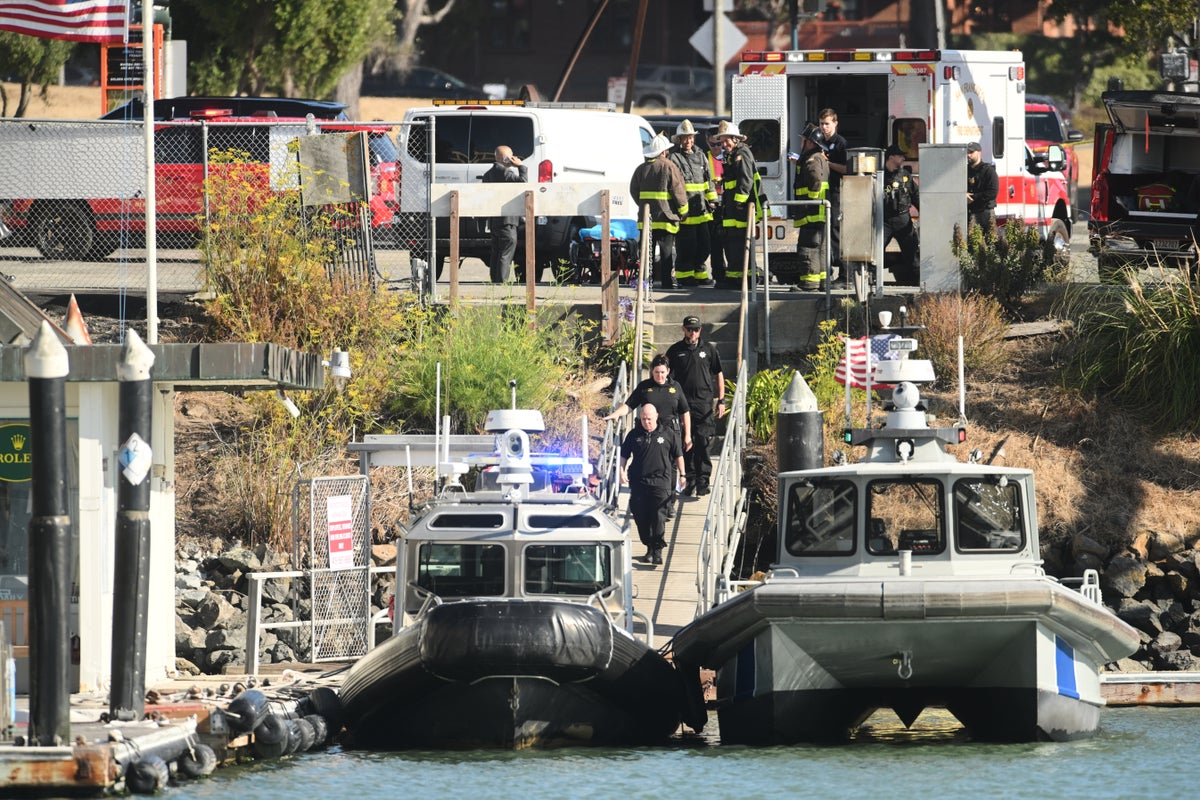
In the initial panic, a call went out to emergency dispatchers reporting a boat on fire. But when the first responders from the San Francisco Police Department’s Marine Unit arrived minutes later, they found a different nightmare.
There was no fire. There was only a sinking ship.
The 50-foot vessel was already capsizing, its top levels sinking rapidly beneath the surface. People were jumping into the frigid, 55-degree water. At that temperature, cold shock is instantaneous. It gasps the air right out of your lungs. Your muscles seize. The simple act of swimming becomes a monumental struggle.
Consider what happened next: rescue crews spotted a man in the water in severe distress. Officers pulled him onto their boat and immediately initiated CPR, pressing down on his chest as they sped toward Gas House Cove in the Marina District. But the bay’s grasp was too tight. He was pronounced deceased on the shore.
Near the submerged wreck, the water was thick with floating debris and leaking fuel. In a surreal, tragic detail, the boat’s motor was still running underwater, spitting exhaust into the whitecaps as the vessel took its final breaths.
The Invisible Stakes of the Search
By late afternoon, an armada of rescuers had converged on the scene. Eleven boats, helicopters, planes, and highly trained rescue divers from the U.S. Coast Guard, Oakland Police, and the San Francisco Fire Department combed the choppy waters.
They managed to pull 16 survivors from the bay.
The physical toll was immediately evident. While most of the survivors were safely transported to a family reunification center at Fort Mason, three were rushed to the hospital. They weren't suffering from burns, but from severe impact injuries—the painful result of falling or jumping from the high decks of the capsizing boat into the hard, unforgiving surface of the water.
Even the family's dog, who had been aboard for the journey, did not survive.
But as the sun began to dip behind the Golden Gate Bridge, casting long, amber shadows across the water, the focus shifted from rescue to a desperate race against time. Two passengers remained missing.
"We are in full rescue mode," San Francisco Fire Chief Dean Crispen announced during a tense evening press conference. He explained that any survivor still in the water would be swept quickly by the powerful, outgoing tides. Rescuers calculated the drift, moving their search grid steadily to the east, praying for a miracle in the dark.
What the Bay Leaves Behind
On the docks of Gas House Cove, the scene was one of quiet devastation. Live news footage captured a man and a woman, soaked and shivering, wrapped tightly in emergency blankets. They sat on a concrete curb, staring blankly ahead before being helped into a waiting ambulance. Nearby, a yellow tarp lay flat on the wooden planks, covering the passenger who couldn't be saved.
It is easy to look at a tragedy like this and search for someone to blame, to dissect the mechanics of the vessel, or to lecture on the dangers of the bay. But behind the statistics and the official coast guard reports is a family that set out to say goodbye to a loved one, only to be torn apart by the very water they chose for their memorial.
As night fell over San Francisco, the helicopters continued their sweep, their searchlights cutting white circles into the black, rolling swells of the bay, searching for the missing among the waves.