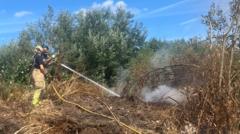
When the black smoke rolled across the valley, local residents assumed it was an industrial accident, a tragic anomaly at a standard recycling facility. They were wrong. The fire that consumed a suspected illegal waste dump last week was not an accident of misfortune; it was an inevitability manufactured by years of regulatory neglect, soaring disposal costs, and an underground economy that treats environmental laws as mere operational expenses.
An illegal waste dump operates in the shadows of the formal economy, bypassing municipal processing fees, environmental safety protocols, and zoning laws to accumulate hazardous materials, construction debris, and municipal refuse without oversight. When these sites catch fire, the public sees the dramatic orange glow and the plumes of toxic acrid smoke. What they miss is the intricate web of shell companies, absentee landowners, and lax enforcement agencies that allowed millions of pounds of combustible refuse to accumulate in plain sight.
The Economics of Abandonment
To understand how an illegal waste dump grows into a ticking ecological time bomb, you must follow the money. Commercial waste disposal is expensive. Municipalities charge tipping fees by the ton, and hazardous materials demand specialized handling that eats deeply into corporate profit margins.
Enter the shadow broker. A shady operator leases a vacant industrial lot or an abandoned agricultural warehouse, promising the landowner a steady rental income. Within weeks, trucks arrive under the cover of night. They dump everything from discarded tires and electronic waste to commercial solvents and construction drywall.
- Low initial overhead: Renting cheap land without permits requires minimal capital.
- Cash-only transactions: Bypassing paper trails makes tracking volume nearly impossible for tax authorities.
- Strategic abandonment: Once the site reaches maximum capacity or regulators start sniffing around, the operators vanish, leaving behind an LLC with zero assets and a mountain of trash.
When disposal costs rise, the incentive for underground dumping skyrockets. It is a simple equation of supply and demand. The supply of unwanted industrial waste is constant, and the underground market offers a discount that unscrupulous business owners find impossible to resist.
Regulatory Blind Spots and Bureaucratic Turf Wars
Environmental protection agencies are perpetually overstretched. Inspectors manage jurisdictions spanning hundreds of square miles with fractions of the funding necessary to audit every suspicious property.
They rely heavily on citizen complaints. If a neighbor does not smell chemical fumes or notice a suspicious procession of heavy trucks at three in the morning, a rogue site can operate for years. Even when complaints are filed, bureaucratic inertia sets in.
Jurisdiction becomes a game of hot potato. The local fire marshal says it is an environmental zoning issue. The state environmental protection department claims it is a local municipal code violation. The police department views it as a civil property dispute until a crime is explicitly proven. While agencies debate jurisdiction, the site grows larger, denser, and more dangerous.
Property owners who lease land to these operations often hide behind layers of corporate obscurity. Shell companies registered in distant states obscure the identity of the ultimate beneficiary. By the time an abatement order is issued, the responsible parties have dissolved the corporate entity and moved their illicit operations three counties over.
The True Cost of a Burn
When an illegal waste dump burns, the immediate danger is obvious: acute smoke inhalation and thermal hazards for nearby communities. Firefighters face unique, hidden perils when confronting these blazes. Unlike a standard structure fire, an illegal waste dump contains an unpredictable cocktail of burning polymers, heavy metals, and synthetic chemicals.
Water is often insufficient. Pouring millions of gallons of water on burning electronic waste or chemical solvents simply washes toxic runoff directly into local groundwater tables and storm drains. Fire crews are forced to let these fires burn themselves out, exposing surrounding neighborhoods to days of carcinogenic fallout.
Long after the flames die, the financial burden shifts squarely onto taxpayers. State and federal superfund programs must step in to remediate the poisoned soil and haul away the melted remnants. The original perpetrators are long gone, and the landowner is typically bankrupt or untraceable. The public cleans up the mess while bearing the health costs of breathing the residue.
Dismantling the Shadow Network
Solving this crisis requires abandoning the reactive posture that defines modern environmental enforcement. Inspecting a site after it catches fire is a failure of policy.
Municipalities must mandate real-time monitoring of vacant industrial zones using satellite imaging and drone surveillance to detect unauthorized grading and rapid accumulation of materials. Furthermore, legislators need to target the financial enablers. Law enforcement must aggressively prosecute the corporate landlords who look the other way while their properties are transformed into toxic repositories.
Until commercial waste generators face mandatory cradle-to-grave tracking with severe criminal penalties for outsourcing disposal to unverified third parties, the underground dumping economy will thrive. Every vacant lot remains a potential hazard, waiting for the right spark to reveal the rot hidden beneath the surface.


