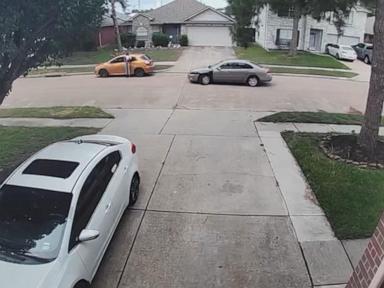
A viral ring camera clip recently made the rounds on social media, prompting the usual flurry of feel-good internet commentary. In the video, a Houston-area DoorDash driver parks her car and steps out to deliver food. Seconds later, a gray sedan driven by a fleeing suspect slams directly into her, throwing her onto the hood of the car. The suspect scrambles out of his vehicle and runs through nearby backyards before his eventual arrest.
But it isn’t the police chase that caught everyone's attention. It is what the driver did next. She got back up on her feet, dusted herself off, picked up the customer's food, and walked it right to the front door.
The internet reaction was predictable. People cheered her work ethic. Commenters called her a hero. Local news segments wondered aloud if someone could "reward her or something".
Let's stop doing this.
There is nothing heartwarming about an underinsured independent contractor feeling so much systemic pressure that she prioritizes a ten-dollar burrito delivery over checking herself for internal bleeding. When we frame these moments as stories of triumphant human grit, we ignore the reality of the gig economy. It's not a heartwarming tale. It's a symptom of a deeply broken safety net.
The Brutal Reality Behind the Hustle
When a traditional employee gets hit by a car on the job, a clear sequence of events follows. They go to the hospital. Workers' compensation covers the medical bills. Their paycheck continues while they recover.
For gig workers, the story changes completely. Companies like DoorDash, Uber Eats, and Instacart classify their fleet as independent contractors. This distinction isn't just bureaucratic legal speak; it has massive real-world consequences for driver safety and financial survival.
Because they aren't official employees, gig workers do not qualify for traditional workers' compensation benefits in most states. If they don't work, they don't get paid. If their car gets totaled, their entire source of income vanishes in an instant.
When you see a delivery driver get hit by a car and immediately complete the drop-off, you aren't witnessing dedication. You're witnessing fear.
- The Fear of Deactivation: Algorithms are ruthless. If a driver drops communication or fails to complete an accepted order, they risk a major hit to their completion rate. Drop below a certain threshold, and the app can deactivate the account automatically.
- The Immediate Financial Burden: A ruined delivery means a lost tip, a canceled base payment, and a potential dispute with the platform.
- The Cost of Medical Care: Without a company health plan, an emergency room visit can easily trigger financial ruin.
The Houston driver later told reporters she didn't want to go on camera but was dealing with intense aches and pains. She completed the delivery because, in the moment, the app was the only structure dictating her immediate survival.
Navigating the Gig Insurance Nightmare
If you drive for a delivery app, you need to understand exactly how unprotected you are before an accident happens. Most drivers assume their personal auto insurance policy has their back. It doesn't.
Standard personal auto insurance policies explicitly exclude commercial activity. If your insurance company finds out you were dropping off food when an accident occurred, they will deny the claim. They might even drop your policy altogether.
[Driver On-Duty Status]
       │
       ├─► App Closed: Personal Insurance Only
       │
       ├─► Waiting for Order: Driver's Insurance (DoorDash contingent liability kicks in if denied)
       │
       └─► En Route/Active Delivery: DoorDash Excess Liability ($1 Million third-party coverage)
DoorDash does provide occupational injury insurance for Dashers, which can help cover medical expenses for on-the-job injuries. They also provide up to $1 million in excess auto liability insurance. But there is a massive catch.
This corporate coverage only applies to third-party bodily injury and property damage. It means if you hit someone else, DoorDash's policy protects them. It does not cover the damage to your own vehicle. If a hit-and-run suspect smashes your car into a telephone pole while you're delivering a pizza, you are largely on your own to fight your personal insurer or chase down the suspect's non-existent insurance.
Stop Cheering for Survival
We see this specific flavor of toxic positivity everywhere. We applaud the teenager who walks 10 miles through the snow to get to his minimum-wage job. We weep tears of joy over coworkers donating their sick days to a father undergoing cancer treatment.
We celebrate the individual survival strategy while completely ignoring the institutional failure that made the strategy necessary.
The Houston driver shouldn't have had to pick up that food box. She should have been surrounded by paramedics, secure in the knowledge that her medical bills were covered and her rent would be paid that month. Instead, the video shows her walking up the driveway because the delivery deadline was still ticking on her phone screen.
If you work in the gig economy, you have to protect yourself, because the platforms won't. Do not rely on corporate goodwill.
First, call your auto insurance provider today and ask for a commercial rideshare or delivery endorsement. It usually costs only a few extra dollars a month, but it prevents your insurer from denying a claim if you get hit on the job. Second, if you are ever involved in an accident while delivering, document everything inside the app immediately. Take screenshots of your active order, save your location data, and file an incident report with the platform before the order history disappears from your screen. Your financial recovery depends entirely on the paper trail you create in the minutes following a crash.