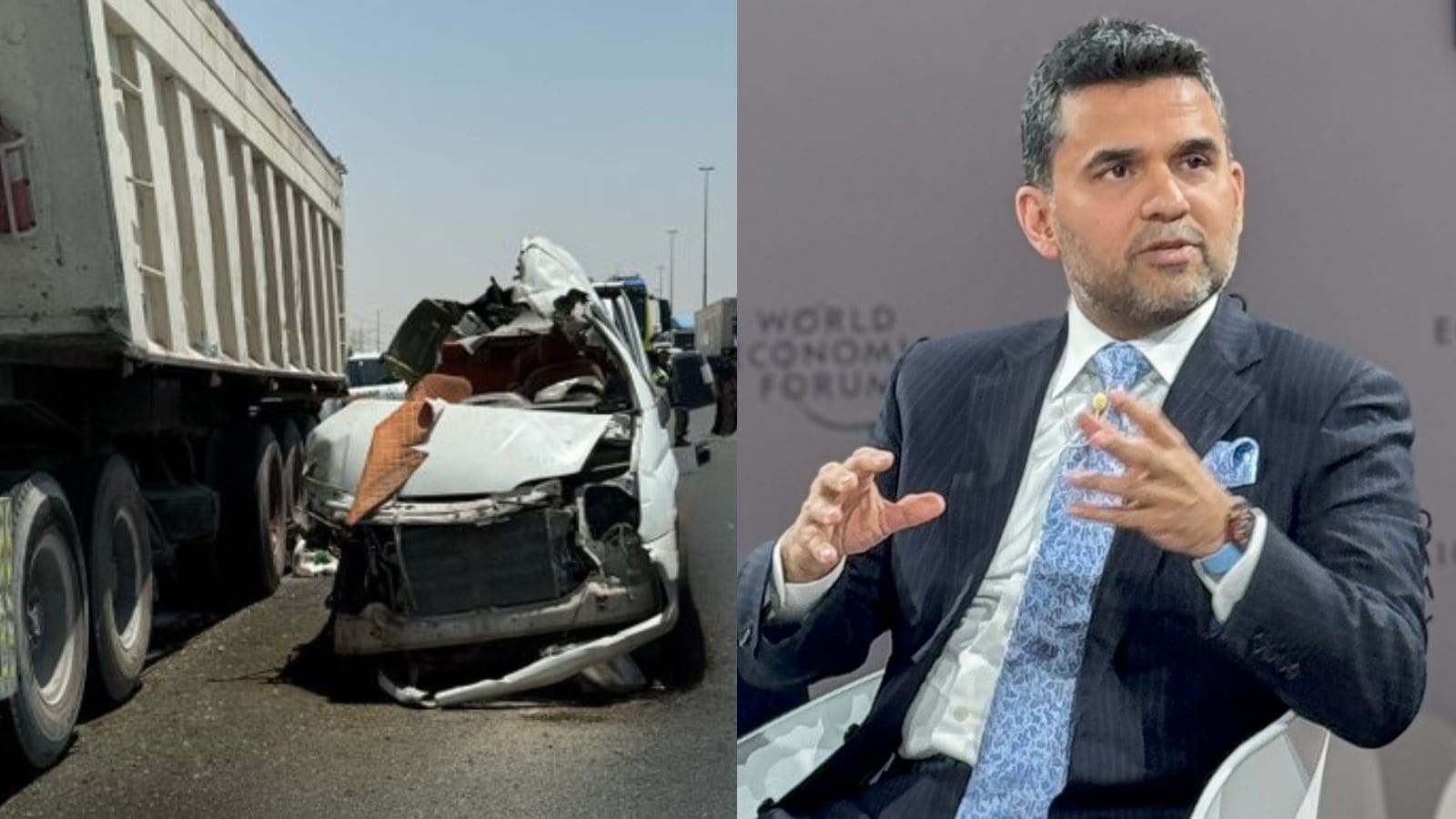
A horrific bus crash in Dubai leaves seven people dead. Within hours, the media machine spins into action, breathless over a billionaire's announcement of a Rs 2 crore package for the victims' families. The public applauds. The corporate PR team polishes its halo. The collective conscience of the internet feels briefly satisfied that a wealthy benefactor has stepped in to "fix" the unfixable.
It is a comforting narrative. It is also entirely broken.
We need to stop treating reactive, post-disaster billionaire philanthropy as a virtue. It is not an act of grace; it is a structural failure disguised as a handout. When a massive transport tragedy occurs, the immediate flood of private cash serves as a smoke screen that blinds us to systemic regulatory failures, absent corporate accountability, and the cold reality of how liability actually works.
I have spent years analyzing corporate crisis management and the mechanics of supply chain liabilities. I have seen multinational entities shell out millions in immediate "goodwill" payments specifically because doing so controls the narrative, dampens legal retaliation, and preempts deeper systemic investigation.
The lazy consensus buys the press release. The reality is far uglier.
The Economics of the Quick Settlement
When a high-net-worth individual or a massive corporation drops a massive lump sum immediately after a fatal incident, the public views it as pure empathy. The spreadsheet views it as a highly effective risk-mitigation strategy.
Let’s look at the math. A Rs 2 crore package distributed among multiple victims seems substantial to the average observer. But in the grand scheme of corporate litigation, statutory payouts, and reputational damage control, it is a rounding error.
By controlling the payout mechanism instantly, the benefactor achieves three distinct corporate objectives:
- Liability Cap Assumption: It subtly establishes a benchmark for what a human life is worth in that specific context, often well below what a protracted, discovery-heavy court battle might yield.
- Media Distraction: The headline shifts from "Why did the safety protocols fail?" to "Billionaire steps up." The core operational failure becomes a footnote to the philanthropy.
- Regulatory De-escalation: Regulatory bodies and local authorities face less public pressure to levy catastrophic fines or initiate criminal negligence probes when the victims' families are perceived to be "taken care of."
This is the optimization of tragedy. If you think this is cynical, you haven't sat in the boardrooms where these numbers are crunched.
PAA: Why do billionaires give money after major accidents?
The Flawed Premise
The standard assumption embedded in this question is that these acts stem from a spontaneous burst of altruism. The brutally honest answer is that immediate financial intervention is an existential shield for the enterprise behind the tragedy.
True accountability is expensive. It requires halting operations, auditing safety protocols, firing negligent executives, and accepting legally mandated, court-ordered damages that include punitive multipliers. A voluntary payout bypasses the friction of the legal system. It allows the entity to dictate the terms, the timing, and the optics of the compensation.
The Danger of Privatizing Justice
When private wealth replaces institutional accountability, justice becomes arbitrary.
If you die in a crash involving a company owned by a high-profile billionaire, your family gets a massive, widely publicized payout. If you die in the exact same type of crash involving a mid-sized, cash-strapped logistics firm, your family is left to navigate the sluggish, underfunded state legal apparatus for years to get a fraction of that amount.
This creates a dual-track system of human value based entirely on who hit you.
+-----------------------------------+-----------------------------------+
| Billionaire-Backed Payouts        | Standard Institutional Justice    |
+-----------------------------------+-----------------------------------+
| Dictated by corporate PR needs    | Dictated by legal precedent       |
| Fast, conditional, un-audited     | Slow, thorough, legally binding   |
| Erases systemic operational flaws  | Exposes systemic operational flaws|
+-----------------------------------+-----------------------------------+
Relying on the whims of the ultra-wealthy to patch up structural failures means we abandon the demand for rigorous, state-enforced safety standards. We replace strict regulatory compliance with a lottery system of post-mortem corporate benevolence.
The Trade-off: Optics vs. Operational Integrity
There is an inherent downside to rejecting this contrarian view. If we demand that corporations stop making these immediate, voluntary payouts and instead force them through the grueling gears of formal legal liability, the victims' families wait longer for capital. That is a painful, undeniable truth. The legal system is slow; corporate PR is fast.
But the long-term cost of accepting the quick check is far higher. When companies can buy their way out of a reputational crisis via immediate philanthropy, the incentive to invest heavily in preventative safety measures evaporates.
Why spend tens of millions upfront on advanced driver-monitoring systems, strict rest mandates, and cutting-edge fleet maintenance when you can just budget a couple of crores for the inevitable PR cleanup if a catastrophe happens?
Preventative safety is a cost center with no immediate marketing value. Post-disaster philanthropy is a marketing masterstroke. As long as the market rewards the latter, the former will always be underfunded.
Shift Your Expectations
Stop applauding the check. Start scrutinizing the license.
The next time a headline breaks trumpeting a massive, voluntary financial package after a corporate disaster, change the questions you ask:
- Do not ask: "How generous is this billionaire?"
- Ask instead: "What specific safety regulation was bypassed to allow this tragedy to happen, and will this money prevent a judge from looking into it?"
- Do not ask: "How will this money help the families?"
- Ask instead: "Is this payout contingent on the families signing non-disclosure agreements or waiving their right to sue for systemic negligence?"
If a company genuinely cares about human life, that care is visible in their capital expenditure reports before the crash, not in their press releases after the bodies are counted.
Stop letting corporate entities use their wealth to buy absolution on the cheap. Demand the friction of the law. Demand the public exposure of the audit. Demand that safety be a non-negotiable operational metric rather than a charitable afterthought.
The check isn't a solution. It's a distraction. Turn off the cameras, reject the narrative, and look at the brakes.


