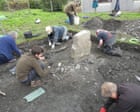
History isn't always written in massive textbooks or carved into towering cathedrals. Sometimes, it sits quietly in the wind-scoured soil of a remote outcrop, waiting for a trowel to reveal what textbooks got wrong. If you look at the map of Scotland, tiny islands dot the rugged coastline like breadcrumbs. Archaeologists have started digging into those crumbs, and the results are rewriting our understanding of how Christianity actually spread across Britain.
Forget the standard narrative of sweeping conversions and royal decrees. What's happening on places like Calf of Eday in Orkney reveals a much messier, far more fascinating reality. These remote Atlantic outposts weren't isolated backwaters waiting for civilization to arrive. They were bustling monastic hubs, early communication nodes, and places where diverse cultures collided long before the medieval period solidified.
Why Small Islands Drew Early Christians
You might wonder why monks and early missionaries packed their bags for barren, wind-lashed rocks where survival itself was a daily gamble. Modern comfort wasn't on their checklist. Isolation was the ultimate currency.
For early Celtic Christians, seeking the desert didn't mean heading to the Sahara. It meant finding an island far enough from the mainland to achieve total quiet, yet close enough to the sea routes that kept communication lines open. The sea wasn't a barrier. It was the highway of the early medieval world.
Recent digs on tiny Scottish islets prove these communities weren't just hiding. They were connected. Excavations have uncovered fragments of imported Mediterranean pottery, fine metalwork, and intricate stone carvings. These items show trade routes stretching thousands of miles south. Monks on these rocks were drinking wine from Gaul and trading with Pictish kingdoms.
When you study the archaeological layers, you stop seeing these sites as lonely monastic cells. You start seeing them as the Silicon Valleys of the early Middle Ages. High concentration of intellectual power, intense networking, and rapid cultural shifts all packed into a few acres of grass and rock.
The Problem With Standard History Texts
Most history books love a neat timeline. They tell you Christianity arrived in Scotland on a specific date, converted the local chieftains, and neatly replaced older pagan traditions overnight. Archaeology hates neat timelines.
The physical evidence pulled from recent Scottish island excavations paints a picture of gradual integration. Christian symbols pop up right beside older Pictish stones and pre-Christian burial practices. People didn't just flip a switch and change their entire worldview because a guy in a robe stepped off a boat.
Communities blended ideas. They took traditional sacred spaces and quietly repurposed them. A holy well became a Christian baptismal site. A pagan ritual gathering place gained a small stone cross. This wasn't watering down the faith. It was smart cultural survival.
If you visit these sites today, you can feel that tension in the landscape. The brutal Atlantic gales remind you how fragile life was back then. It makes you respect the sheer grit of people who built stone chapels using nothing more than drystone techniques and stubborn persistence.
What Modern Digs Are Actually Finding
Archaeology has gotten a massive upgrade over the last decade. Researchers aren't just relying on shovels and hopeful guesses anymore. They are using ground-penetrating radar, soil chemistry, and high-precision carbon dating to map sites without even turning over the turf.
On smaller Scottish islands, these non-invasive techniques have mapped entire monastic settlements hidden beneath sheep pastures. We are talking about complexes featuring living quarters, scriptoriums, metalworking hearths, and agricultural terraces.
One of the most striking discoveries involves agricultural innovation. These monks brought advanced farming and water-management techniques to islands previously thought unviable for permanent settlement. They built stone-lined drainage systems, cultivated specialized crops, and managed livestock with surprising sophistication.
The artifacts themselves tell intimate human stories. Archaeologists have found bone styli used for writing on wax tablets, glass gaming pieces for quiet evenings, and tiny beads lost in floor cracks over a thousand years ago. These aren't just museum pieces. They are proof of everyday lives lived on the edge of the known world.
Why This Matters Right Now
You might ask why any of this matters outside of academic circles. It matters because it changes how we view resilience and cultural exchange.
We live in a hyper-connected era where we assume distance equals isolation. The history of these Scottish islands proves the exact opposite. People thousands of years ago maintained vast, intricate networks across dangerous seas with primitive technology. They exchanged ideas, argued theology, traded goods, and built resilient communities against impossible odds.
Next time you plan a trip to Scotland, skip the crowded tourist hubs on the mainland for a day. Look at the smaller ferries servicing the outer reaches. Think about the monks, craftspeople, and farmers who braved those exact waters centuries ago.
If you want to dive deeper into this history, start by reading field reports from historic environmental agencies operating in Scotland or plan a visit to community-led museums on islands like Orkney and Shetland where these artifacts are actively curated. Support local preservation groups keeping these stories alive before the North Atlantic weather washes them away for good.