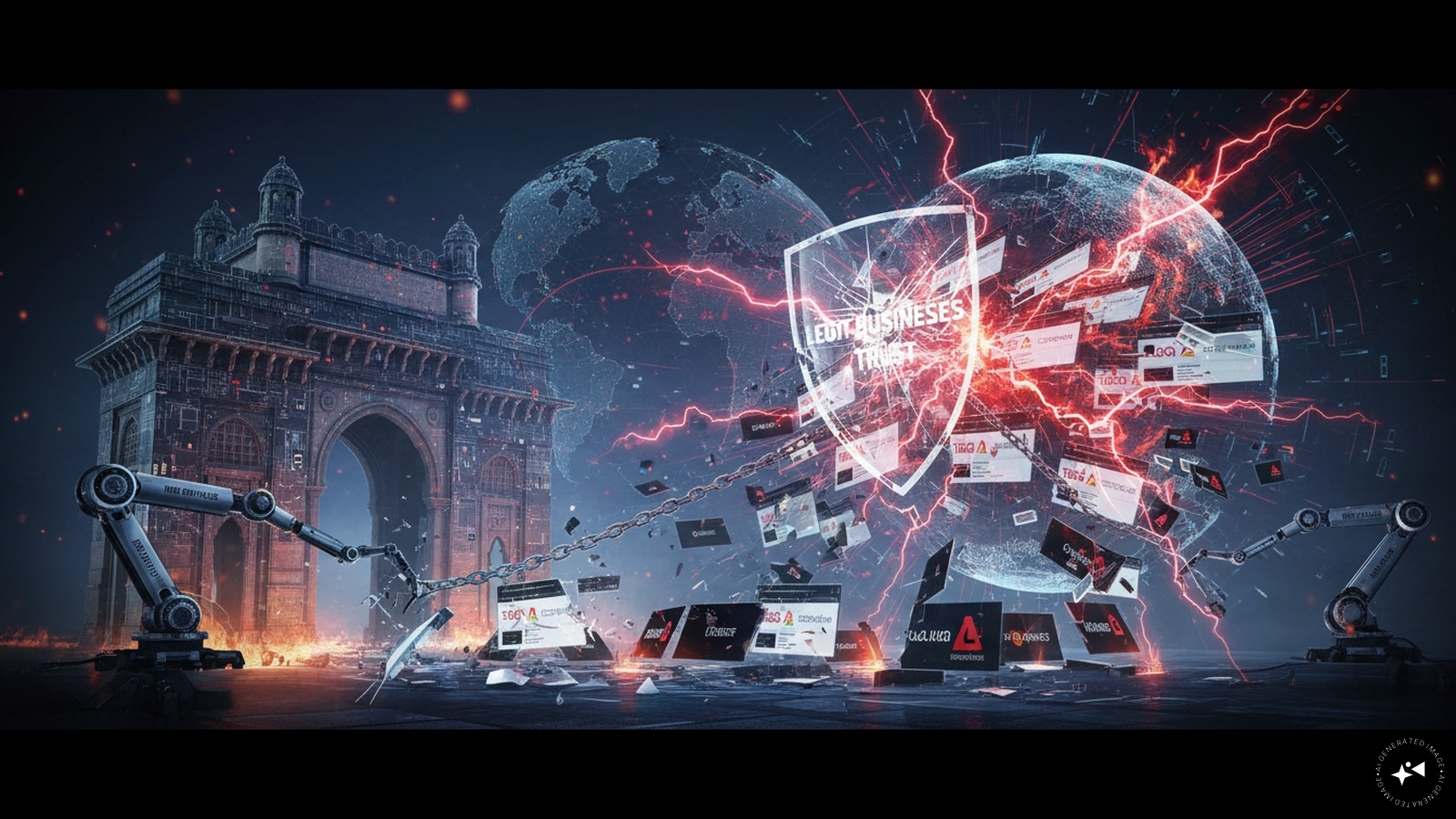
The entertainment elite are panicking over a ghost story.
Every major studio lot is currently buzzing with the same anxious narrative: ByteDance conquered the attention economy with short-form video, and now their generative AI tools are about to march into California, replace directors, and automate the silver screen. Trade publications love this narrative. It builds clicks out of raw existential dread.
It is also completely wrong.
Hollywood is not about to be conquered by ByteDance’s text-to-video models. To believe that artificial intelligence will seamlessly inherit the mantle of premium cinematic storytelling is to deeply misunderstand both the mechanics of filmmaking and the actual psychological utility of TikTok. ByteDance is not building the next Paramount or Warner Bros. They are building a hyper-optimized digital theme park designed to capture transient micro-attention.
The lazy consensus insists that computational power plus massive data equals inevitable creative dominance. The reality? Scaling an algorithm that keeps a teenager scrolling for ninety seconds is fundamentally different from sustaining a cultural narrative that compels an audience to sit in a dark room for two hours.
The Illusion of Scale: Why Volumetric Content Fails
The tech press looks at the sheer volume of assets generated by platforms like CapCut and Sora-class models and mistakes velocity for value. They assume that because an AI can generate ten thousand visually striking five-second clips in the time it takes a human crew to light a single close-up, the traditional studio model is dead.
I have spent a decade looking at the backend data of digital media distribution. I have watched tech platforms burn hundreds of millions of venture capital trying to force short-form creators into making "premium long-form series." It fails every single time.
Why? Because generative AI operates on statistical probability, not intentional subversion.
- The Probability Trap: Generative video models predict the most likely next pixel based on historical training data. Great cinema relies entirely on the least likely, most surprising narrative choice that still manages to feel inevitable.
- The Context Collapse: A ninety-minute film requires a massive web of micro-continuity—emotional arcs, lighting consistency, spatial awareness, and subtext. Current diffusion architectures struggle to maintain the geometry of a room across three cuts, let alone the psychological evolution of a character across three acts.
- The Friction Deficit: Tech executives view production friction as a bug to be engineered out. In reality, the friction of filmmaking—the physical constraints of a location, the negotiation between a director and an actor, the limitations of a budget—is precisely where human texture is born.
When you strip away the friction, you get infinite, frictionless sludge. It is visually perfect, emotionally sterile, and entirely unmemorable.
Dismantling the "People Also Ask" Consensus
Look at the standard questions dominating industry panels right now. The premises themselves are rotten.
"Will AI video tools lower the barrier to entry for independent filmmakers?"
This sounds noble, but it is a fundamental misunderstanding of the current bottleneck. The barrier to entry for filmmaking hasn't been technical for over a decade. Anyone with an iPhone and Blackmagic DaVinci Resolve has a Hollywood-grade toolkit in their pocket. The real bottleneck is not production; it is curation and distribution.
If ByteDance floods the market with automated creation tools, they don't democratize cinema. They simply create a nuclear winter of noise. When the cost of content creation drops to zero, the value of human curation skyrockets. Audiences will flee the unvetted swamp of algorithmic feeds and retreat toward trusted human gatekeepers, prestigious film festivals, and curated theatrical experiences.
"Can an algorithm replicate the emotional resonance of a classic script?"
An algorithm can perfectly replicate the structural beats of Joseph Campbell’s hero’s journey. It can map out a three-act structure down to the millisecond. What it cannot do is experience grief, shame, or existential dread.
AI does not know what it feels like to fail. It doesn't know the specific terror of aging or the precise texture of heartbreak. It can only mimic the syntax of humans who did. Audiences are hyper-sensitive to this mimicry. We don't just consume content; we consume the human labor and intent behind the content. We watch movies to know we are not alone in our humanity. You cannot get that reassurance from a statistical prediction model running in a server farm in Virginia.
The Economics of Hyper-Fragmentation
Let’s look at the financial math that the tech evangelists ignore. The traditional Hollywood economic model relies on a hit-driven system where a single Avatar or Top Gun: Maverick subsidizes dozens of experimental failures and prestige dramas. It relies on a monoculture.
ByteDance’s entire monetization engine is built on the exact opposite principle: hyper-fragmentation.
+-------------------------------------------------------------+
|               THE MONOCULTURE VS. THE SWARM                 |
+-------------------------------------------------------------+
| HOLLYWOOD MODEL             | BYTEDANCE MODEL               |
| 1 Massive Cultural Anchor   | 10,000,000 Micro-Niches       |
| $300M Production Budget     | $0 Production Cost (User-Gen) |
| Shared Global Experience    | Isolated Algorithmic Feeds    |
| High Monetization Per Capita| Low Margin, High Volume Ads   |
+-------------------------------------------------------------+
ByteDance does not want to produce a movie that 100 million people watch together on a Friday night. That would require taking a massive balance-sheet risk on a singular creative vision. Instead, they want 100 million individual users watching 100 million distinct, algorithmically tailored streams of hyper-personalized background noise.
This is not a takeover of Hollywood. It is a secession from the very concept of shared cultural experiences.
By framing ByteDance as the "new Hollywood," analysts are missing the much more dangerous reality. They aren't trying to replace the movies. They are trying to atrophy the human attention span to the point where the medium of film becomes entirely unreadable to the next generation.
The Hidden Cost of the Algorithmic Feed
There is a major caveat to my own position that must be acknowledged. While ByteDance cannot build a superior cinematic engine, they can absolutely destroy the economic viability of the talent pipeline that feeds Hollywood.
The true threat of AI video generation on social platforms isn't that an AI will write a better script than an Oscar winner. The threat is that the low-tier commercial work—the corporate videos, the local car dealership ads, the music videos, the basic television VFX—will be entirely automated.
This unglamorous, low-tier ecosystem is exactly where young directors, cinematographers, and editors learn their trade and pay their rent before making their first feature film.
- By wiping out the entry-level commercial market, tech platforms are destroying the farm system of human creativity.
- The studios of tomorrow will face a talent drought not because AI is better, but because humans were never given the financial runway to get good.
This is the real crisis. Not an AI-generated Godfather, but an industry starved of human operators who know how to hold a camera or cut a scene.
Stop Romanticizing the Tech Pivot
If you are a studio executive, a creator, or an investor, stop looking at ByteDance's generative AI roadmap as a blueprint for the future of entertainment. They are playing an entirely different sport. They are in the dopamine-delivery business. You are in the myth-making business.
Every dollar spent trying to make an AI model act like a human director is a dollar thrown into a furnace. The companies that survive the next decade will not be the ones that successfully automate away human art. It will be the ones that double down on the inimitable, messy, theatrical, high-risk reality of physical human performance.
Stop optimizing for the feed. Quit trying to make movies that look like TikToks. Give the audience the one thing the algorithm can never generate: a genuine risk.