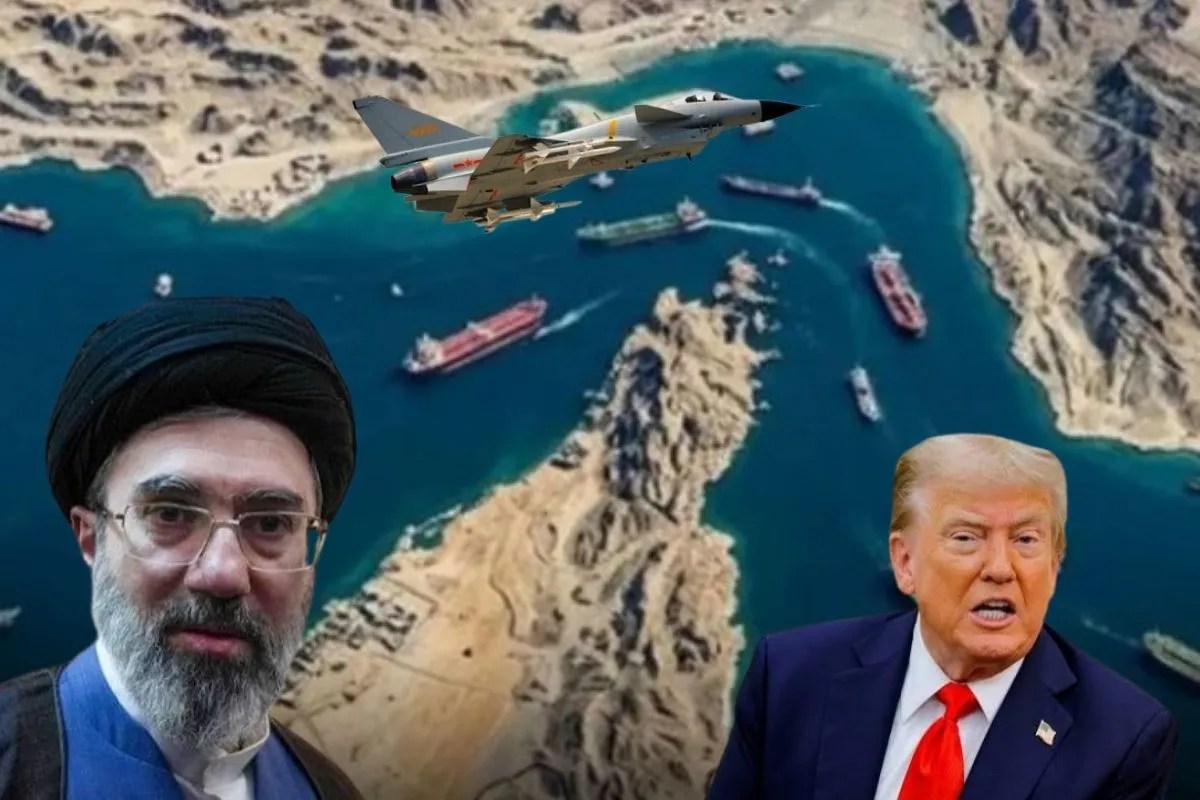
The lazy consensus in Washington and across mainstream media is that Donald Trump’s latest outburst against Oman is just another piece of unscripted geopolitical theater. Pundits love to clutch their pearls over his threats to bomb a quiet Gulf mediator, framing it as erratic noise while missing the structural crisis entirely.
Let us clear the air immediately. Calling the Strait of Hormuz a new American territory or threatening Muscat is not a sign of strength. It is a symptom of deep strategic panic.
When a superpower starts drawing imaginary borders over a narrow maritime chokepoint while domestic energy prices spike ahead of midterm elections, the negotiation strategy has already failed.
The Illusion of Territorial Fiat
The conventional narrative assumes that military bluster can reopen a critical economic artery overnight. This ignores basic geography and maritime realities.
Nearly twenty percent of the world's traded oil supply relies on smooth transit through a waterway where the northern coast belongs to Iran and the southern coast belongs to Oman. Declaring it a territory on social media does not change the physical mechanics of naval logistics, marine insurance rates, or missile ranges.
Oman has historically functioned as the diplomatic shock absorber of the Middle East. Threatening a neutral intermediary that is actively attempting to broker a compromise on shipping lanes does not isolate Tehran. It isolates Washington.
The Leverage Trap
Here is what the talking heads refuse to admit: Iran weaponized the Strait of Hormuz because Washington walked into a classic trap of overreach.
By launching a prolonged military campaign without a clean exit strategy, the White House handed Tehran the ultimate asymmetric advantage. Every day the waterway remains effectively constrained, energy markets tighten, and political pressure mounts at home.
When diplomacy breaks down, saber-rattling against traditional partners like Oman is what happens when leaders run out of actual economic or military levers. It substitutes volume for victory.
What Happens When Bullying Replaces Strategy
Imagine a scenario where the administration actually follows through on these threats against a sovereign Gulf state. The immediate result would not be open shipping lanes. It would be the complete evaporation of any remaining regional trust, the permanent destabilization of the Arabian Peninsula, and an oil shock that would dwarf anything seen in decades.
Real strength requires precision, credible alliances, and an understanding of limits. Shouting at the map does not rewrite geography.
Stop pretending that erratic ultimatums equal geopolitical mastery. The harder the rhetoric, the weaker the hand.