Thirteen years is long enough for a child to learn how to drive, graduate from high school, and lose their first job. It is long enough for entire console generations to rise, dominate living rooms, and quietly gather dust in attic boxes. For millions of people scattered across the globe, thirteen years is also the exact distance between the dusty, sun-bleached hills of Los Santos and the neon-soaked humidity of Leonida.
Wait. Think about what that silence actually felt like.
When Rockstar Games released Grand Theft Auto V in September 2013, Barack Obama was in his second term, the PlayStation 4 had not yet hit store shelves, and the idea of a single video game surviving across three separate hardware eras sounded like a boardroom hallucination. Yet it happened. Over two hundred million copies later, GTA V did not merely succeed; it ossified into a permanent fixture of digital culture, a digital third place where teenagers became adults and adults stayed young. All the while, the clock ticked louder on its successor.
To understand why Grand Theft Auto VI feels less like a product launch and more like a seismic cultural reckoning, you have to look past the corporate earnings calls and the breathless trailer breakdowns. You have to look at the people waiting on the other side of the glass.
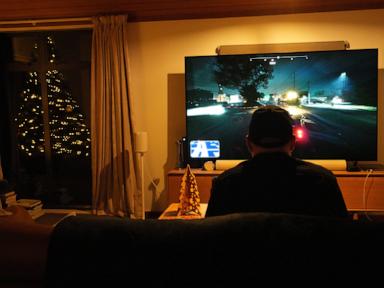
Consider a hypothetical player—let us call him Marcus—who bought GTA V at a midnight launch in 2013 while working a minimum-wage retail shift. Back then, escapism was simple. He wanted fast cars, satirical radio stations, and a sandbox where consequences vanished the moment he outran a three-star wanted level. Today, Marcus is thirty-four. He has a mortgage, a bad lower back, and a cynical exhaustion toward the modern entertainment industry's endless parade of half-finished live-service games and aggressive microtransactions. When Marcus watches the footage of GTA VI, he is not just looking at improved ray-tracing or denser crowd physics. He is asking a quiet, desperate question: Can a piece of commercial art still make me feel that specific, untamed wonder again, or have both the industry and I grown too jaded for the magic to work?
The Architecture of Digital Desire
The numbers surrounding Grand Theft Auto VI are so massive they border on the abstract. Analysts at firms like DFC Intelligence and Wedbush Securities have projected opening-year revenues easily clearing three billion dollars, dwarfing the box-office runs of Hollywood’s biggest blockbusters combined. Take-Two Interactive, Rockstar’s parent company, spent years watching its stock price fluctuate based on single-sentence rumors about development milestones.
Yet numbers are cold. They do not explain the visceral electricity that shot through the internet in December 2023 when a hacker forced Rockstar’s hand, prompting the studio to release its debut trailer early. Within twenty-four hours, that ninety-second clip shattered YouTube records with over ninety million views, fueled by Tom Petty’s "Love Is a Long Road" echoing over shots of airboats skimming across alligator-infested wetlands and lowriders cruising down Ocean Drive.
Why does a fictionalized version of Miami hold such a violent grip on our collective imagination?
Part of the answer lies in how Rockstar constructs its worlds. Most open-world games operate like amusement parks: the rides are bolted to the concrete, the actors repeat the same three lines of dialogue, and the illusion collapses the second you step off the designated path. Rockstar builds ecosystems. Think of the difference between a painted theatrical backdrop and an actual city block where the plumbing works behind the drywall. In Red Dead Redemption 2, the studio proved it could simulate the shrinking of horse pupils in bright sunlight and the gradual decomposition of wildlife in the woods. With GTA VI, that obsessive engineering turns toward the chaotic, hyper-connected absurdity of contemporary Florida—reimagined here as the state of Leonida.
From the leaked development footage of 2022 to the official reveals, the technical leap is unmistakable. We are looking at a world built on the newest iteration of the RAGE engine, designed exclusively for the current generation of consoles—the PlayStation 5 and Xbox Series X/S—with a PC release trailing behind, following Rockstar’s long-standing historical pattern. The verticality of the interiors, the dynamic weather systems that bend palm trees under tropical squalls, and the sheer density of non-player characters reacting to smartphones, social media livestreams, and street chaos point toward a simulation that mirrors our own fractured reality back at us.
Bonnie, Clyde, and the Modern Hustle
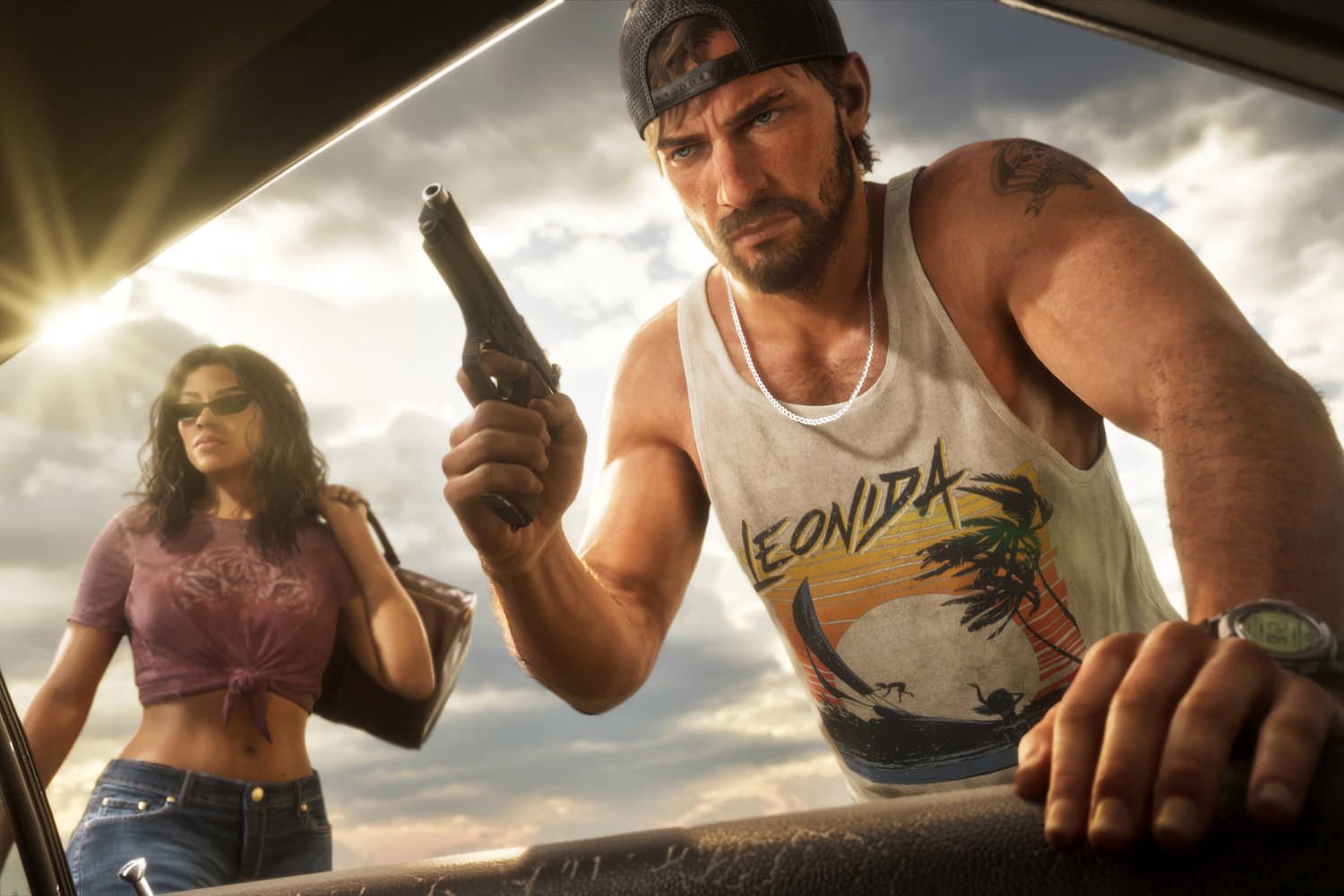
For the first time in the franchise's modern 3D era, the emotional anchor of the story rests on a female protagonist. Lucia, introduced in an orange prison jumpsuit during the opening moments of the reveal, shares the stage with her partner, Jason.
This is not merely a cosmetic shift in character selection. It changes the entire gravitational pull of the narrative.
Historically, Grand Theft Auto protagonists have been solitary men driven by rage, greed, or the hollow pursuit of the American Dream—Niko Bellic haunted by war crimes in Liberty City, or Michael De Santa suffocating in his Vinewood mansion. By centering GTA VI on a criminal duo bound together by trust and survival, Rockstar taps into the classic outlaw romance of Bonnie and Clyde, filtered through the neon glare of modern economic desperation.
Imagine a late-night convenience store holdup in Vice City. In previous entries, a robbery was a mechanical transaction: point weapon, empty register, flee cops. Now, layer in the psychological tension of two people whose lives depend on each other’s split-second decisions while a bystander in the corner films the entire ordeal for a fictional TikTok equivalent. Trust becomes a gameplay mechanic. The stakes stop being purely financial and become intensely personal. When the sirens start wailing in the distance, you are no longer just protecting your health bar; you are trying to keep a partnership from fracturing under pressure.
Satire in an Age Beyond Parody
Here lies the sharpest creative hurdle facing Rockstar Games, and it is one that keeps longtime fans awake at night.
How do you satirize a world that has already become a caricature of itself?
When Dan Houser, co-founder and longtime lead writer of the series, departed Rockstar in 2020 alongside other veteran creatives like Lazlow Jones, a quiet tremor ran through the community. For two decades, Houser’s biting, cynical worldview defined the soul of Grand Theft Auto. He skewered talk radio, corporate greed, reality television, and political hypocrisy with surgical precision.
Today, the real world moves faster than any writers' room. The infamous "Florida Man" headlines—alligators tossed through drive-thru windows, shirtless suspects wrestling traffic signs during hurricanes—are no longer absurd exaggerations; they are Tuesday afternoon news cycles. The trailer for GTA VI leaned directly into this madness, recreating real viral moments frame for frame, from the "Florida Joker" with his purple hair and facial tattoos to twerking atop moving cars on congested highways.
The danger is obvious. If a game merely holds up a mirror to internet memes, it risks feeling dated before the installation bar finishes loading. True satire requires a point of view, a moral compass hidden beneath the comedy. Without Houser’s specific voice at the helm, the remaining creative leadership at Rockstar North faces the monumental task of proving that GTA VI has something meaningful to say about modern isolation, influencer culture, and the commodification of outrage—rather than just laughing at the spectacle.
The Invisible Toll Behind the Screen
We cannot talk about the triumph of this release without confronting the human cost required to build it.
Video games of this magnitude do not materialize out of thin air. They are forged through years of grueling labor by thousands of artists, programmers, animators, and quality-assurance testers. Back in 2018, Rockstar came under intense scrutiny over its notorious "crunch" culture—weeks stretching to eighty or a hundred hours as teams scrambled to finish Red Dead Redemption 2. To its credit, the studio publicly committed to overhauling its workplace practices, restructuring management, and prioritizing sustainable schedules during the production of GTA VI.
Yet the tension between corporate deadlines and artistic perfection never truly disappears. In early 2024, when Rockstar mandated that employees return to the office five days a week for the final stretch of development, citing security concerns after the massive 2022 data breach and the need for collaborative polish, labor unions pushed back hard. Developers worried about lost flexibility, long commutes, and the creeping return of burnout.
When you drive down the virtual coastline of Vice Beach, watching the sunset reflect off the hood of a stolen sports car, every blade of grass and every line of ambient dialogue represents a piece of someone's real life. Knowing that history changes how you look at the screen. It reminds us that digital escapism is never entirely free; someone, somewhere, paid for those pixels in time they will never get back.
The Online Afterlife and the Question of Patience
Of course, the single-player campaign—however sprawling, emotional, and cinematic it turns out to be—is only half the equation. Looming behind the story of Lucia and Jason is the inevitable evolution of Grand Theft Auto Online.
Over the past decade, GTA Online transformed from a buggy multiplayer mode into a multi-billion-dollar juggernaut, buoyed in recent years by the explosion of user-generated roleplay servers on platforms like FiveM. In 2023, Rockstar made the strategic decision to acquire Cfx.re, the team behind FiveM and RedM. That single acquisition revealed the company's long-term vision more clearly than any press release ever could.
Rockstar saw how players were not just shooting each other in deathmatches; they were clocking into virtual shifts as paramedics, lawyers, nightclub owners, and street racers, turning Los Santos into a living, breathing improv theater. By bringing those modding architects in-house, GTA VI is positioned to blur the line between official game design and player-driven storytelling.
Still, a shadow lingers over that promise. Will the next iteration of online play prioritize genuine community creativity, or will it lean even harder into aggressive monetization—paid subscriptions like GTA+, inflated in-game economies, and artificial grind designed to nudge players toward Shark Cards?
We do not know yet. Even with the release window locked in and marketing engines roaring to life, a thick veil of secrecy still covers the exact mechanics of the multiplayer economy, the full map boundaries beyond Vice City, and how Rockstar plans to balance realism with the sheer, anarchic fun that made the series famous in the first place. That uncertainty is unsettling. Billions of dollars are riding on a delicate tightrope walk between artistic integrity and shareholder expectations.
The Last Exit Before Vice City
Step back for a second and strip away the stock tickers, the console wars, and the endless YouTube speculation videos.
Think again about Marcus, sitting on his couch late on a Friday night, controller resting in his hands as the installation finishes and the opening credits begin to roll. Outside his window, the real world is loud, expensive, and exhausting. The news is bleak, the algorithms are angry, and the future feels perpetually uncertain.
For a few hours, none of that matters. The neon lights of Ocean Drive flicker to life. The bassline of a synthetic 1980s track hums through the speakers. Two flawed, desperate characters step out into the humid night air, engines idling, ready to outrun whatever comes next.
Maybe Grand Theft Auto VI will redefine interactive entertainment for the next decade, shattering every record in its path. Maybe it will stumble under the impossible weight of thirteen years of collective longing. Either way, when those city lights finally switch on, millions of us will be standing on the sidewalk, waiting to step inside.