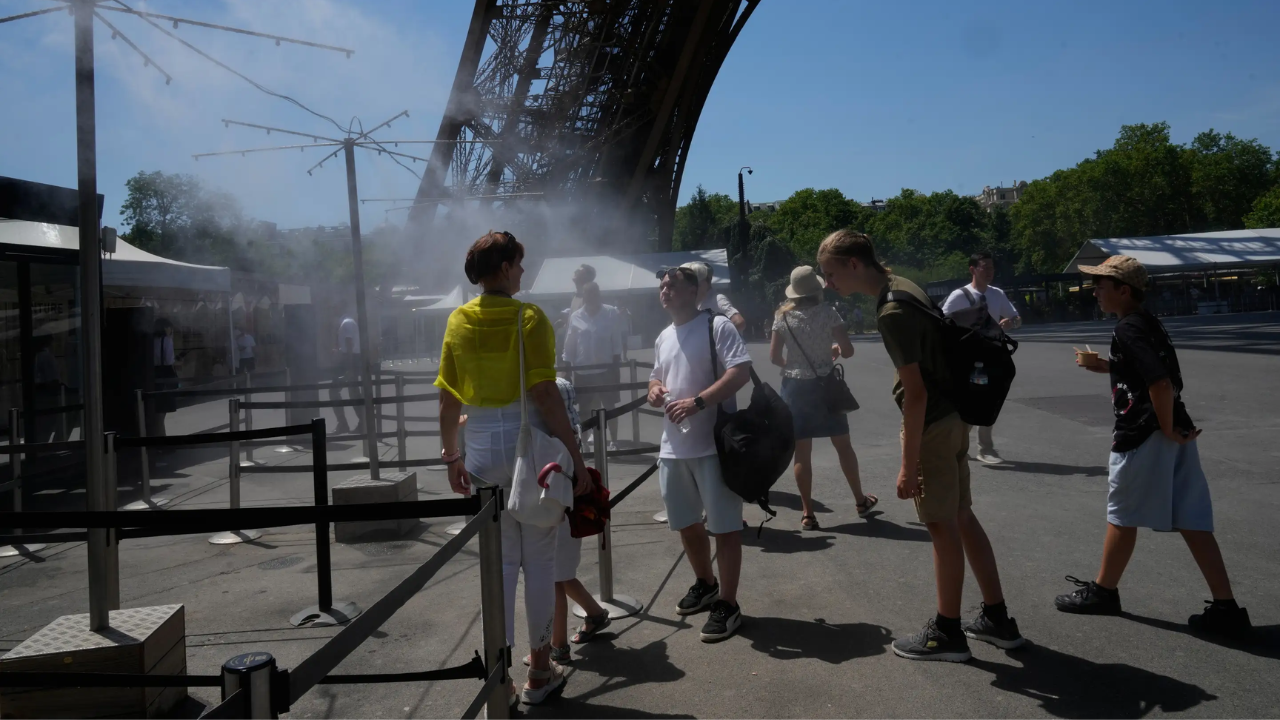
The standard playbook for managing extreme weather focuses primarily on peak daytime temperatures. This metric fails to account for the actual driver of public health emergencies: cumulative thermal stress. When the French public health authority, Santé publique France, reported an estimated 1,000 excess deaths within a multi-day window during the late June June 2026 heatwave, it highlighted a systemic failure in how municipal infrastructure and medical systems calculate vulnerability. Managing these climate-induced surges requires a shift from tracking absolute meteorological peaks to quantifying the compounded degradation of human and structural systems.
The Mechanics of Excess Mortality: Tracking Lagged Biological Strain
The headline figure of 1,000 excess deaths represents a baseline metric derived from preliminary digital death certificates, which capture roughly 60% of nationwide fatalities in real time. The ultimate mortality footprint will be significantly higher once physical records from rural municipalities, long-term care facilities, and private residences are consolidated.
Public health frameworks frequently miscalculate the impact of extreme heat by treating mortality as an immediate, synchronous event. In reality, thermal shock operates on a distinct lag phase.
[Meteorological Peak (Day 0)] ➔ [Internal Building Saturation (Day 1–2)] ➔ [Cardiovascular/Renal Failure Peak (Day 3–5)]
The physiological mechanics of heat-induced mortality rely on three primary vectors of biological strain:
- Cardiovascular Overload: To dissipate core heat, the human body initiates massive peripheral vasodilation, forcing the heart to increase its output dramatically. For individuals with underlying ischemic heart disease, this sustained workload induces acute cardiac failure.
- Renal Saturation and Electrolyte Depletion: Sustained sweating without precise fluid and electrolyte replacement triggers rapid dehydration, driving acute kidney injury. This process accelerates the concentration of toxins in the bloodstream, destabilizing metabolic balance.
- Systemic Inflammatory Response: When core body temperature crosses the threshold of 40°C, cellular damage occurs, initiating a systemic inflammatory cascade akin to sepsis. This state can cause multi-organ dysfunction even after the ambient temperature drops.
French Health Minister Stéphanie Rist observed that the medical implications of extreme heat extend up to ten days beyond the retreat of a weather front. The lingering strain on public health networks persists because chronic conditions, once destabilized by thermal shock, require extended clinical management to re-stabilize.
The Dual Vector of Vulnerability: Demographics and Spatial Heat Islands
The mortality distribution of the June 2026 event reveals a precise intersection between biological vulnerability and structural inequality. Of the recorded fatalities, 85% occurred within populations aged 65 and older. This demographic skew highlights a predictable structural failure rather than an unavoidable natural outcome.
The risk profile of this population is governed by a clear mathematical function of biological and environmental inputs:
$$\text{Risk Profile} = f(\text{Age-Induced Anhidrosis}, \text{Impaired Baroreflex Sensitivity}, \text{Thermal Retentive Architecture}, \text{Social Isolation})$$
Aging systematically degrades the body's autonomous thermoregulatory systems. Older adults experience an elevated threshold for sweat initiation (anhidrosis) and a dampened thirst mechanism, preventing timely behavioral corrections.
The structural amplification of this biological vulnerability occurs through specific spatial factors:
- Micro-Geographic Urban Heat Islands: The sharpest increase in fatalities occurred within private residences in urbanized regions, specifically the Île-de-France zone encompassing Paris and its immediate suburbs. High-density urban areas replace natural soil and vegetation with non-reflective asphalt and concrete, creating a micro-climate where ambient localized temperatures remain up to 10°C higher than surrounding rural environments.
- Vertical Thermal Gradients: Within urban housing blocks, mortality concentrates on top floors directly beneath uninsulated zinc or slate roofing. These materials act as thermal batteries, absorbing solar radiation by day and radiating it directly down into living spaces by night.
- The Inversion of the Domestic Haven: Traditional public health messaging urges vulnerable populations to stay indoors. However, during an extended atmospheric stagnation event, uncooled domestic spaces transform from zones of safety into high-density thermal traps.
Infrastructure Friction: The Cost Function of Thermal Saturation
The June 2026 heatwave was driven by an Omega block atmospheric configuration—a high-pressure system flanked by two low-pressure troughs that locked intense solar radiation over western and central Europe. This meteorological ceiling prevents the normal movement of weather systems, causing heat to pool and intensify.
The operational failure of the European urban environment under an Omega block can be traced to structural friction across multiple critical systems.
Residential Architecture and the Absence of Active Cooling
Unlike regions with systemic air conditioning integration, Western European residential architecture has historically been engineered for thermal retention to minimize winter heating costs. Thick masonry walls and double-paned windows capture energy effectively but lack the ventilation capacity to expel it during sustained summer anomalies. When nighttime temperatures fail to drop below 25°C, the built environment reaches structural thermal saturation. The structure loses its capacity to dissipate heat to the outside air, turning internal spaces into ovens.
Healthcare Capital Starvation and Emergency Surges
During the peak days of the June front, emergency room admissions across Paris public hospitals spiked by 33% above normal baselines, forcing the activation of emergency contingency protocols across all 38 regional public facilities. The French government's subsequent allocation of €100 million in emergency spending to procure mobile cooling units and fans for clinical environments represents a reactive capital allocation rather than a systemic solution. It illustrates a failure to build climate resilience directly into the baseline operational budgets of medical facilities.
Industrial and Energy Supply Disruption
The thermal threshold of regional infrastructure creates immediate economic bottlenecks:
- Nuclear Power Degradation: The Beznau nuclear plant in Switzerland was forced to reduce its operational capacity because the temperature of the feeding River Aare rose too high to safely absorb the plant's thermal cooling discharge without destroying local aquatic ecosystems.
- Linear Infrastructure Failure: High ambient heat causes asphalt on critical transport corridors, such as Germany's Autobahn network, to buckle under compressive stress. Concurrently, overhead rail power lines sag, and steel tracks expand, forcing speed restrictions and halting logistical supply chains.
Scaling From Reactive Crisis to Structural Resilience
Mitigating the lethal trajectory of future atmospheric blocks requires moving past reactive alerts and short-term capital infusions. The data from the June 2026 event demonstrates that urban environments must be systematically re-engineered through targeted policy allocations.
Municipalities must treat urban heat as a structural zoning issue rather than an unavoidable weather event. The immediate tactical play requires a three-pronged intervention framework.
First, cities must implement mandatory retrofits for high-density residential buildings, emphasizing external solar shading, high-albedo reflective roof coatings, and passive cross-ventilation pathways to disrupt vertical thermal accumulation.
Second, public health networks must shift from passive public service announcements to localized, data-driven active outreach. Integrating municipal utility registries with medical data allows authorities to map and physically audit isolated, high-risk individuals before internal building temperatures reach critical thresholds.
Third, the energy grid must be insulated against concurrent spikes in cooling demands and river-water cooling constraints. This involves decentralized solar-plus-storage installations dedicated strictly to climate-shelter infrastructure within vulnerable urban zones.
The baseline data confirms that the cost of retrofitting urban infrastructure is substantially lower than the compounding economic and human losses generated by treating thermal anomalies as temporary surprises. Municipalities that fail to transition to active, structural heat management will see their emergency infrastructure routinely overwhelmed by predictable atmospheric patterns.