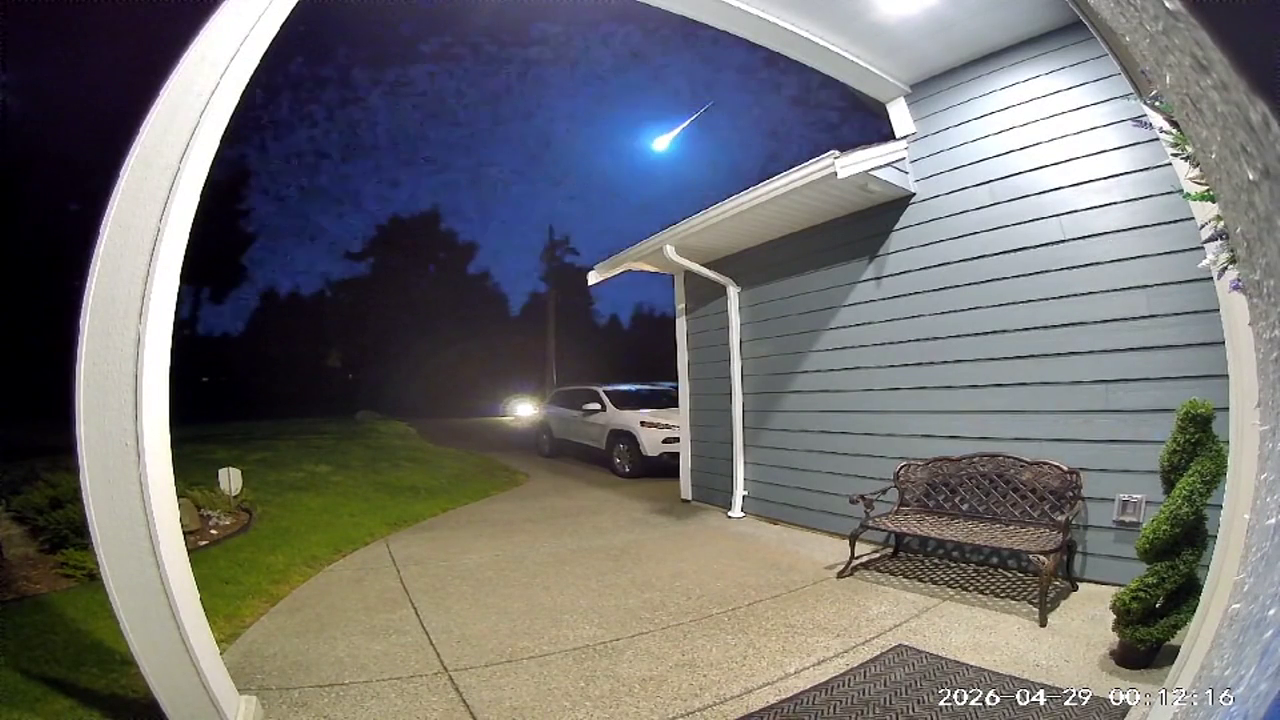
The probability of a bolide—a high-energy meteor—initiating a localized structure fire on a terrestrial target like the Mount Washington summit represents a convergence of extreme statistical outliers and contradictory physical mechanics. While eyewitness reports and thermal signatures often spark speculative narratives regarding celestial ignition, the delta between atmospheric entry physics and building material flash points suggests that the ignition source for the Great Gulf-side structures almost certainly resides within internal mechanical or electrical failure vectors. To determine the validity of a meteor-sparked fire, one must deconstruct the event through three analytical lenses: the thermodynamic dissipation of meteoric material, the kinetic impact profile, and the historical failure rate of high-altitude infrastructure.
The Thermodynamic Paradox of Meteoric Ignition
A fundamental misconception in public reporting of "fireballs" is the assumption that a meteor remains incandescent upon impact. This ignores the atmospheric braking and thermal shedding processes that occur during the transition from the thermosphere to the troposphere.
- Ablation and Surface Cooling: As a meteoroid enters the atmosphere at velocities ranging from 11 km/s to 72 km/s, it undergoes intense compressive heating, creating a plasma sheath. However, this process is self-limiting through ablation—the vaporizing of the outer layers. By the time a fragment reaches the "dark flight" phase (typically at an altitude of 10-20 km), it has lost the majority of its cosmic velocity.
- The Heat Sink Effect: Contrary to the "glowing coal" imagery, meteorites are poor conductors of heat. The brief period of intense atmospheric friction only heats the outer millimeter of the rock. Because the core remains at the near-absolute-zero temperature of deep space, the object acts as a heat sink. Historical recovery of fresh meteorites often reveals the presence of frost on their surfaces despite a scorched exterior.
- Flash Point Mismatch: For a meteor to ignite a wooden chalet, it would need to maintain a surface temperature exceeding the ignition point of seasoned timber (approximately 300°C) at the moment of contact. Given the convective cooling experienced during several minutes of subsonic terminal velocity fall, the object arrives at the surface barely warm, if not cold.
Kinetic Energy as an Ignition Vector
If thermal transfer is ruled out, the second possibility is kinetic ignition—the conversion of motion into heat upon impact. This requires a specific mass-velocity ratio that is rarely satisfied by the small fragments capable of striking a single building.
The kinetic energy of a falling object is expressed by:
$$E_k = \frac{1}{2}mv^2$$
For a meteorite to generate enough heat to spark a fire through impact, it must possess sufficient mass to cause a high-velocity compression of the target material. However, the terminal velocity of a small meteorite (under 10kg) is roughly 100 to 200 mph. While this is sufficient to penetrate a roof or cause significant structural damage, the energy density at the impact site is insufficient to reach the auto-ignition temperature of construction-grade materials. The energy is dissipated through mechanical fracturing of the wood or stone, rather than being converted into a thermal spike.
Internal Infrastructure Vulnerabilities in High-Altitude Environments
Mount Washington is characterized by some of the most erratic and severe weather patterns in the Northern Hemisphere. When a structure like a mountain chalet burns, the probability distribution heavily favors environmental and mechanical stressors over exogenous celestial events.
- Extreme Barometric Shifts: Rapid pressure changes and 100+ mph winds place immense physical strain on structural seals, leading to moisture ingress in electrical conduits.
- The Chimney Effect: High-altitude structures are designed with robust insulation and ventilation systems to manage extreme cold. If a small electrical fault occurs, the pressure differentials between the interior and exterior of the mountain-side structure act as a bellows, accelerating a minor spark into a total-loss fire within minutes.
- Static Discharge and Lightning: The summit is a focal point for atmospheric electrical activity. A cloud-to-ground strike provides the exact thermal and electrical energy required for immediate ignition, often leaving a "burned entry point" that a lay observer might confuse with a physical impact site.
Evaluating the Eyewitness Data and Temporal Correlation
The primary driver of the meteor theory in the Mount Washington case is the temporal proximity of reported meteor sightings to the fire's discovery. In data analysis, this is categorized as a "false correlation based on visibility bias."
On nights of high visibility or during known meteor showers (such as the Perseids or Geminids), the frequency of sightings increases. If a fire occurs during a window of high meteor activity, the human brain seeks a causal link between two rare, dramatic events. However, the geographic "footprint" of a meteor shower spans thousands of miles; a sighting "near" the mountain could actually be an atmospheric burn-up occurring 50 miles away over the Atlantic Ocean or deep in the Maine wilderness. Without a recovered physical specimen embedded in the charred remains—a "smoking gun" that has never been documented in the history of North American firefighting—the theory remains a statistical phantom.
Structural Failure Mapping: The Likely Culprits
When deconstructing the Mount Washington incident, the focus must shift from the sky to the floorboards. The "Three Pillars of Structural Failure" in remote alpine environments provide a more rigorous explanation:
- Pillar I: Electrical Fatigue: Wiring in older chalets is subject to constant vibration from high-velocity winds. This leads to insulation chafing and arc faults.
- Pillar II: Propane/Fuel Systems: Remote heating systems rely on pressurized fuel. Thermal expansion and contraction cycles in extreme cold can cause micro-fissures in couplings. A slow leak in an unmonitored basement or crawlspace provides the perfect fuel-to-air ratio for a catastrophic event.
- Pillar III: Rodent Interference: Alpine rodents frequently seek shelter in insulated structures and have a documented tendency to gnaw through wiring, bypassing modern circuit protection.
Quantifying the Improbability
To put the meteor theory into perspective, consider the terrestrial surface area. Mount Washington's summit structures occupy approximately 0.00000001% of the earth's surface. The likelihood of a meteorite—already a rare event—striking a specific 2,000-square-foot target is astronomically low. When you further filter for the requirement that the meteorite must be of a specific composition and size to (theoretically) retain enough heat to ignite dry wood, the probability approaches zero.
Strategic Assessment of Forensic Evidence
For investigators to move beyond speculation, the forensic protocol must prioritize the "cold impact" reality. If a meteor were responsible, the debris field would contain:
- Fusion Crust Fragments: Small, glassy, black-crusted stones within the ash layer.
- Structural Piercing: A clear vertical or high-angle penetration path through the roof and multiple floors that precedes the burn pattern.
- Chemical Anomalies: Elevated levels of nickel and iron (for metallic meteorites) or specific silicate structures not found in local New Hampshire granite.
In the absence of these specific markers, the investigation should pivot toward the mechanical reality of mountain operations. The most effective strategy for preventing future losses is not "meteor proofing," but the implementation of rigorous, redundant electrical inspections and the installation of aerosol-based fire suppression systems that operate independently of the structure's primary power grid. The Mount Washington fire serves as a reminder that in the high-stakes environment of alpine management, the most dangerous threats are usually the ones hidden behind the walls, not the ones streaking across the sky.
The strategic priority for New Hampshire state park authorities and private chalet owners is the hardening of internal utility corridors. By treating the "meteor theory" as a romantic distraction, resources can be correctly allocated toward upgrading legacy electrical systems to meet the demands of a high-vibration, high-moisture environment. Any investment in celestial monitoring for the purpose of fire safety represents a misallocation of capital; the solution is terrestrial, mechanical, and preventative.