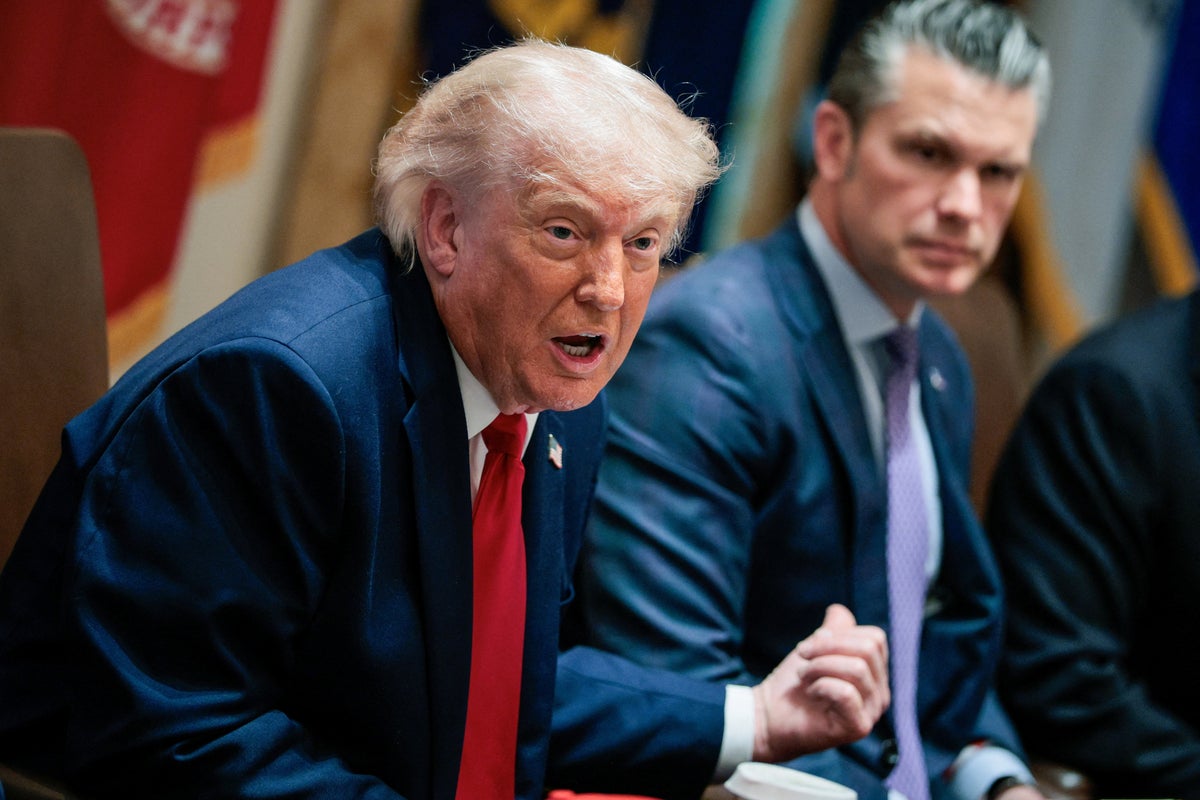
The political commentary class has lost its collective mind over a stray remark. Again.
Following a recent Cabinet meeting where Donald Trump reportedly threatened to "blow up" a sovereign nation over a trade and security deadlock, the headlines fell into a familiar, exhausted pattern. The consensus arrived instantly: a erratic leader is unravelling, international norms are disintegrating, and global stability hangs by a thread. For another perspective, check out: this related article.
This analysis is not only lazy; it completely misreads the mechanics of modern geopolitical negotiation.
What the establishment media diagnoses as instability is actually a textbook application of strategic asymmetry. It is an intentional, calculated performance designed to shatter the comfortable predictability that foreign adversaries rely on. The panic merchants are looking at a highly effective negotiation tactic and calling it a crisis. Further reporting on this trend has been shared by Associated Press.
Decoding the Madman Theory of Statecraft
The outrage machine operates on a flawed premise: that international diplomacy must always be conducted in the muted, predictable tones of a country club boardroom. When someone violates that etiquette, the immediate assumption is incompetence.
It isn't. It is the resurrection of the "Madman Theory," a diplomatic strategy pioneered by political scientists and deployed with varying degrees of intent by Richard Nixon during the Cold War.
The mechanics are straightforward. If your opponent believes you are completely rational, they can calculate exactly how far they can push you before you react. They use data, historical precedent, and diplomatic norms to build a predictable model of your behavior. They exploit that predictability to chip away at your position.
But if you convince your opponent that you are volatile, unpredictable, and entirely willing to take irrational actions, their calculus breaks down. Suddenly, the cost-benefit analysis changes. They can no longer risk pushing the envelope because they cannot predict where your breaking point lies.
When a leader hints at extreme kinetic options during a routine meeting, it is not an operational plan. It is a deliberate injection of noise into the adversary’s intelligence apparatus. It forces foreign capitals to pause, reassess, and ask the one question that shifts the balance of power: What if he actually means it?
The Flawed Premise of "Diplomatic Norms"
Mainstream geopolitical analysis constantly treats "diplomatic norms" as an inherent good. They want us to believe that maintaining decorum is the ultimate goal of foreign policy.
Look at the actual data of the last forty years. Under the watch of highly predictable, norm-abiding administrations from both parties, the international order did not become safer. It became stagnant.
- Adversaries routinely violated agreements because the penalties were entirely predictable and easily absorbed.
- Trade imbalances widened because foreign negotiators knew exactly how many sternly worded memos the state department would issue before giving up.
- Proxy conflicts dragged on indefinitely because the red lines drawn by western powers were transparently soft.
Predictability breeds exploitation. When a state actor knows that the worst consequence they face is a multi-lateral sanction package that will take eighteen months to pass through the UN Security Council, they move forward with their aggression. They factor the sanction into the cost of doing business.
An off-the-cuff threat of total destruction breaks that cycle. It bypasses the bureaucratic machinery of international relations and targets the risk-tolerance of the opposing leadership directly. It introduces massive, unquantifiable risk into their strategic plans.
The Cost of the Strategy
This approach is not a magic bullet. It carries significant structural downsides that standard contrarian cheerleaders like to ignore.
First, it burns through diplomatic capital at an alarming rate. When you constantly keep your adversaries off-balance, you accidentally terrify your allies too. Traditional partners begin to hedge their bets, seeking alternative security arrangements because they can no longer rely on the predictable umbrella of your protection.
Second, it relies entirely on credibility. If you threaten extreme action too many times without ever demonstrating a willingness to escalate, the strategy suffers from diminishing returns. The "madman" turns into the "boy who cried wolf." Once an adversary decides your volatility is merely performance art, your leverage evaporates completely, leaving you with fewer options than when you started.
Dismantling the Panic
The most frequent question circulating in think tanks right now is: How do we repair the damage done to global stability by these outbursts?
The question itself is broken. It assumes that the pre-existing stability was real, rather than a slow-motion decline disguised as peace.
I have watched policy analysts spend decades drafting white papers on deterrence, only to see those models fail the moment a rogue actor decides to ignore the rules. They are obsessed with the process; they ignore the outcome.
The outcome of high-stakes, asymmetric rhetoric is frequently a sudden breakthrough. We saw this during the first Trump administration with the "Little Rocket Man" rhetoric directed at North Korea. The foreign policy establishment warned of imminent nuclear annihilation. Instead, the escalation shifted the baseline of the relationship and led directly to unprecedented face-to-face summits.
The threat is the leverage. The outrage is just the background noise that makes the threat believable.
Stop analyzing these statements through the lens of a high school civics textbook. Stop expecting a populist executive to operate like a career diplomat. The objective is not to win the approval of international bodies; the objective is to disrupt the status quo to force a renegotiation from a position of absolute psychological dominance.
The next time a headline screams about a reckless remark from the Oval Office, stop looking at the words. Look at the reaction in the capitals of our adversaries. They aren't laughing, and they aren't ignoring it. They are scrambling to adjust their plans because their predictable playground just became completely hostile. That isn't a failure of foreign policy. It's the whole point.


