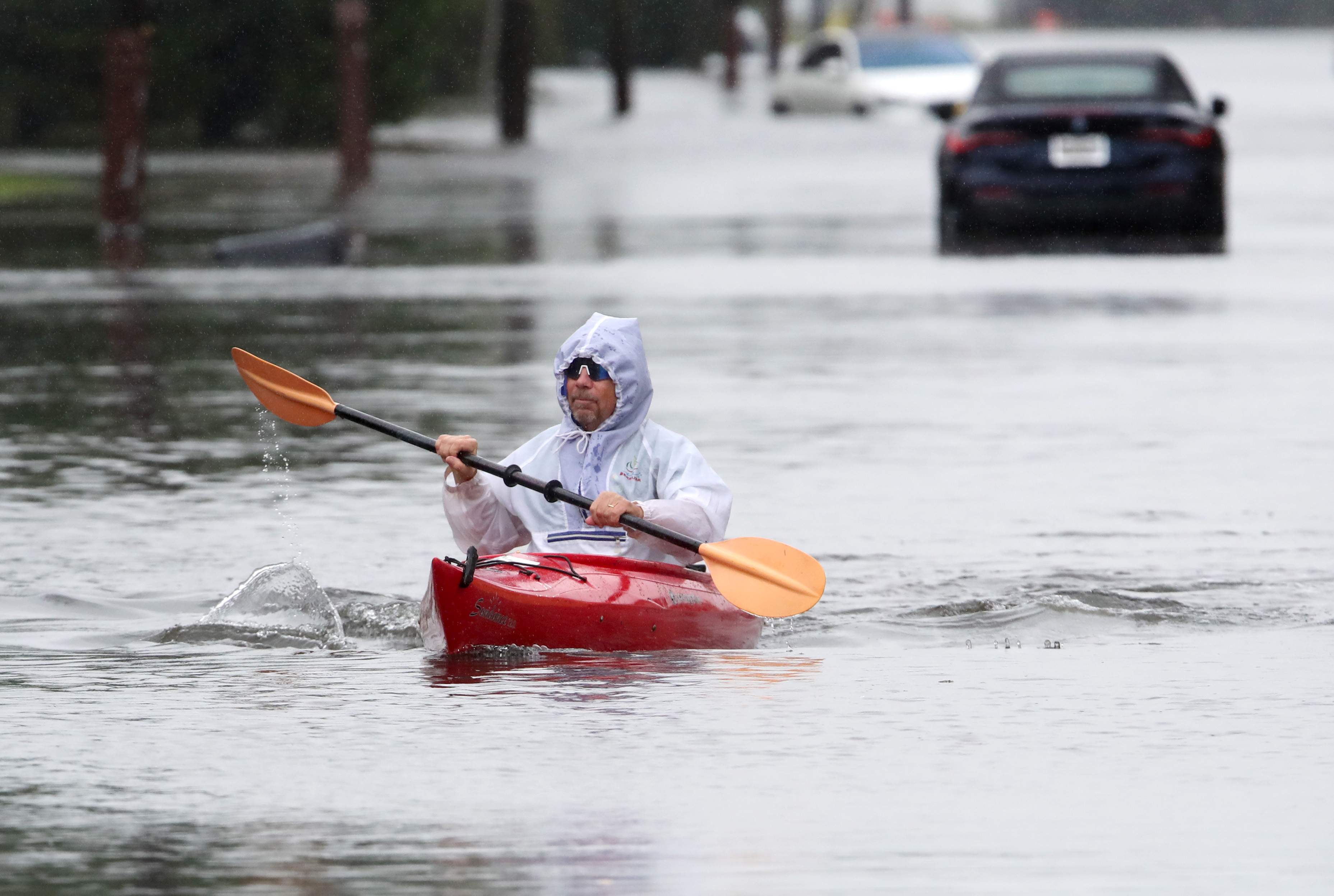
Cameras lie by framing choices. When international news agencies compile their weekly digests of global events, they assemble a visual mosaic designed to reassure the public that order still governs chaos. A handshake across a polished mahogany table. A robed figure standing beneath gothic arches. Submerged storefronts swallowed by brown water. These images are presented as discrete snapshots of a busy planet, disconnected fragments of unrelated happenings occurring simultaneously across different longitudes.
They are nothing of the sort.
Look closer at the machinery binding these moments together. Superpower statecraft, institutional religion, and ecological collapse are not separate theatrical acts playing out on independent stages. They are symptoms of a single, deeply strained global system buckling under the weight of accumulated contradictions. While leaders posture for the cameras, the physical and economic infrastructure sustaining modern civilization quietly frays at the seams. Understanding this requires moving past the glossy surface of photojournalism and examining the structural forces driving these headline moments.
The Architecture of Superpower Parley
Diplomacy is performance. When Western and Chinese delegations arrange high-level summits, the primary objective is rarely breakthrough policy. It is signaling. Domestic audiences demand strength; international markets demand stability; allied nations demand reassurance. Every gesture is scripted, from the exact angle of the handshake to the precise wording of joint communiques that commit neither side to actionable change.
Yet the underlying reality of US-China relations remains locked in an adversarial gravity that no single summit can alter. Industrial policy has diverged permanently. Supply chains are undergoing mandatory fragmentation, splitting global commerce into competing economic blocs driven by national security rather than comparative advantage. Tariffs, export controls, and capital restrictions have transformed trade from a bridge between nations into an instrument of economic containment.
Behind closed doors, the conversation is transactional rather than visionary. Both capitals recognize the existential danger of direct military escalation, particularly regarding territorial flashpoints in Asia. Consequently, bilateral summits serve primarily as safety valves, establishing communication floors to prevent tactical miscalculations from spiraling into strategic conflict. They manage friction; they do not resolve it.
The public consumes these meetings as historical turning points. Veterans of diplomatic corps know better. These encounters are holding patterns designed to buy time while both superpowers restructure their domestic economies for long-term competition. The rhetoric emphasizes cooperation, but the capital expenditure flows entirely toward national resilience, semiconductor independence, and naval modernization. The handshake is real, but so is the quiet stockpiling happening in the background.
Spiritual Geopolitics in Secular Europe
Religion adapts to survive. When the head of the Catholic Church travels to France, the visit is frequently analyzed through the lens of faith and secularism. Commentators debate the reception of clerical authority in a society founded on strict state neutrality and laïcité. Millions observe the crowds, measuring the vitality of an ancient institution against the rising tide of secular indifference across Western Europe.
That framing misses the geopolitical utility of the modern Vatican. Stripped of territorial sovereignty and military might, the Holy See operates as a distinct kind of diplomatic actor. It retains permanent observer status at international bodies, a global intelligence network built on centuries of missionary presence, and moral authority that secular states occasionally borrow when they require an independent intermediary for backchannel negotiations.
France offers a particularly complex laboratory for this dynamic. The relationship between the French republic and the Catholic Church has historically been contentious, defined by centuries of institutional struggle over education, civil law, and the public square. When a pontiff tours French dioceses, the unspoken subtext involves the integration of minority faiths, the preservation of historical ecclesiastical architecture, and the ideological boundaries of European secular identity.
Secularism in France is not merely a legal framework; it is a civil religion. Every intrusion of religious symbolism into public discourse triggers intense national anxiety about national cohesion and integration. By engaging directly with these tensions, the Vatican asserts its relevance in debates over European values, migration, and ethical limits on technological advancement. The robed figures beneath cathedral vaults are participating in a very modern struggle for ideological influence in a continent searching for moral anchors.
The Hydro Political Collapse in Southeast Asia
Water does not negotiate. While diplomats shake hands and pontiffs address crowds, rural populations and urban centers in Southeast Asia face the brutal arithmetic of climate volatility. When monsoon rains swell river basins beyond their historical boundaries, the resulting devastation exposes the limits of twentieth-century infrastructure facing twenty-first-century weather patterns.
Thailand provides a clear case study in these systemic vulnerabilities. The Chao Phraya River basin, which feeds the agricultural heartland and sustains the sprawling metropolitan mass of Bangkok, is caught in a hydraulic squeeze. Rapid urbanization has paved over natural floodplains, replacing absorbent wetlands with concrete foundations and impenetrable asphalt. Meanwhile, upstream dam management practices, designed decades ago for predictable seasonal variations, struggle to cope with erratic, high-intensity precipitation events driven by shifting atmospheric conditions.
The human cost of these floods is immediate and catastrophic. Rice paddies are submerged weeks before harvest, destroying rural livelihoods and rippling through international commodity markets. Urban neighborhoods experience prolonged inundation, paralyzing transport networks and contaminating water supplies. Yet the political response rarely matches the ecological reality.
Governments default to emergency disaster relief rather than structural transformation. Billions are spent on temporary barriers, pumps, and post-disaster compensation packages, while zoning laws continue to permit construction in high-risk flood zones. The underlying economics of land use remain unchanged, driven by real estate interests and short-term political expediency.
Nature keeps score. Each successive flood event strips away another layer of resilience, driving vulnerable populations deeper into debt and testing the administrative capacity of the state. These are not acts of God in the traditional sense; they are the predictable consequences of decades of deferred ecological maintenance and unbridled urban expansion.
The Convergence of Crises
These events share a common denominator. They represent different facets of systemic fragility.
Superpower competition dictates that nations look inward, prioritizing self-sufficiency over global cooperation just as planetary crises require coordinated transnational responses. Diplomatic institutions, whether bilateral summits or centuries-old religious hierarchies, grapple with a loss of binding authority in an increasingly fragmented world. Meanwhile, ecological collapse accelerates faster than the administrative machinery of governments can adapt, turning localized weather anomalies into chronic humanitarian strains.
The danger lies in treating these occurrences as isolated news items. When consumers flip through a weekly review of world events, the format encourages detachment. Today it is a summit; tomorrow it is a pilgrimage; next week it is a flood. This episodic consumption obscures the cumulative trajectory.
The architecture of global stability is being dismantled piece by piece. Economic decoupling undermines commercial interdependence. Ideological polarization weakens shared norms of governance. Environmental degradation erodes the physical foundation upon which states are built.
No single photograph captures this entire reality. The camera captures the handshakes, the robes, and the rising waterlines as distinct moments in time. But behind every image lies a deeper story of institutional exhaustion, resource scarcity, and structural transformation. The international order is not collapsing in a single catastrophic explosion; it is being reconfigured slowly, painfully, and visibly in plain sight, captured daily by the lenses of the world while the underlying ground shifts beneath our feet.