If you grew up in the late eighties or early nineties, that theme song is probably already drilling a hole through your brain. You know the one. It’s catchy, loud, and promises that "no case is too big, no case is too small." But when we actually sit down and look at the Chip 'n Dale Rescue Rangers characters, there’s a weird amount of depth there that most Saturday morning cartoons just didn't have. It wasn't just two chipmunks in outfits. It was a weird, functional family of rodents (and one fly) solving crimes in a world that didn't know they existed.
Honestly, the show shouldn't have worked as well as it did. Disney took two classic, somewhat one-dimensional pranksters from the 1940s and dropped them into a Magnum P.I. meets Indiana Jones procedural. It was a massive gamble.
The Core Five: More Than Just Rodents in Vests
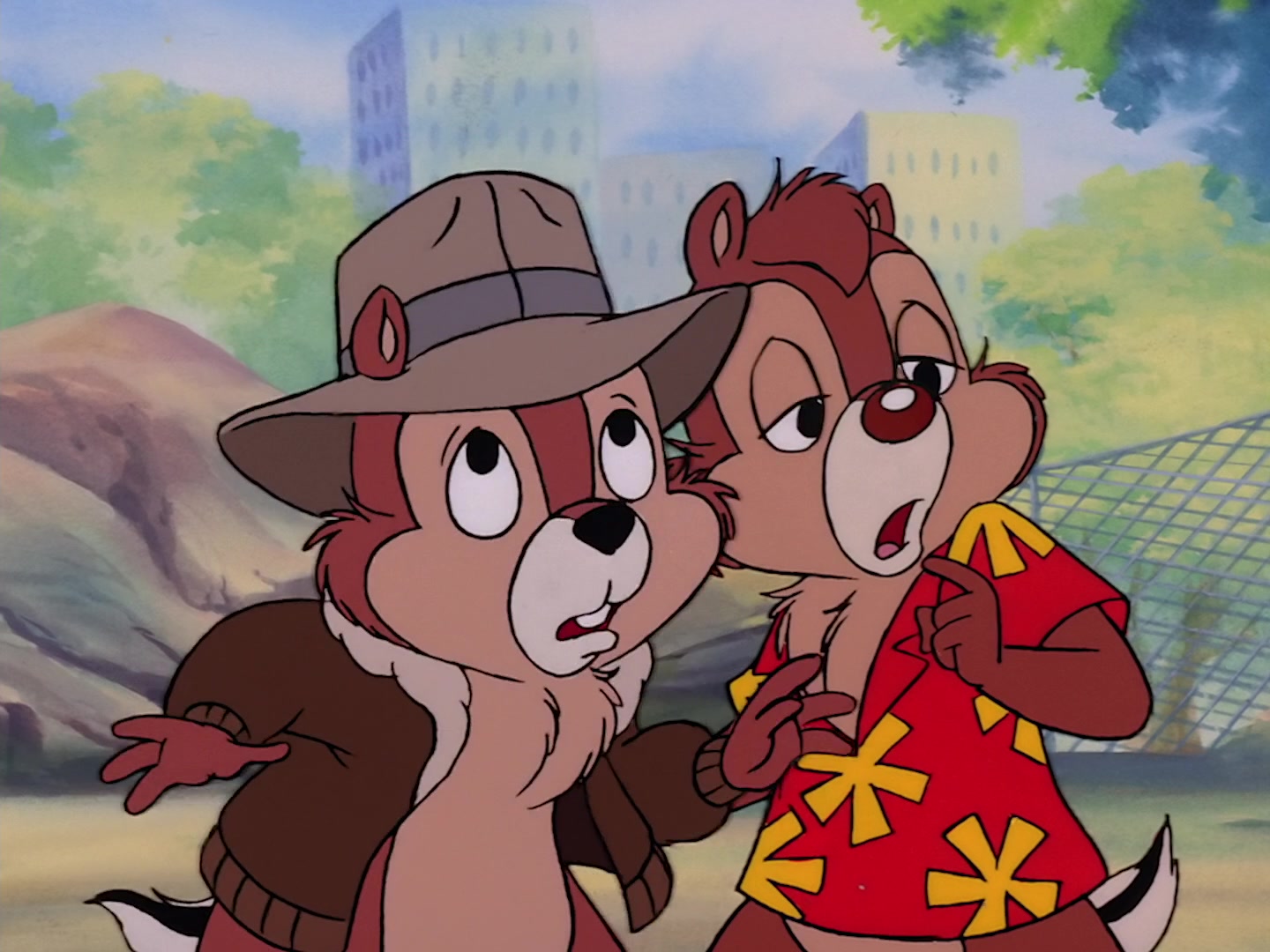
Let’s get the obvious stuff out of the way first. Chip and Dale are the anchors, but they’re basically the "Odd Couple" of the Disney afternoon. Chip is the leader. He’s the one wearing the bomber jacket and the fedora, clearly channeling his inner Rick Deckard or Indiana Jones. He’s serious—maybe a bit too serious. He wants to solve the crime, follow the clues, and keep everyone on track. Then you’ve got Dale.
Dale is chaos personified.
He’s wearing a Hawaiian shirt, which was a direct nod to Magnum P.I., and he’s usually the reason the team gets into trouble in the first place. He’s a goofball, obsessed with comic books and candy. But here is the thing people miss about these Chip 'n Dale Rescue Rangers characters: they represent the two halves of a functional brain. You need the logic, but you also need the imagination.
Gadget Hackwrench: The Real MVP
If you ask any engineer who grew up in the 90s why they started building things, there’s a statistically significant chance they’ll mention Gadget. She wasn't just "the girl" on the team. She was the intellect. Gadget Hackwrench is a mouse with a pilot’s jumpsuit and a genius-level IQ. She builds planes out of plastic bottles and engines out of discarded combs.
She’s also incredibly flighty.
Gadget’s character design was actually inspired by a character named Jordan from the 1985 film Real Genius. She talks fast, thinks faster, and often forgets that the other characters aren't on her level. Her inclusion changed the dynamic of the show entirely. Without Gadget, the Rescue Rangers are just two chipmunks hitting people with mallets. With her, they have the "Ranger Plane." They have gadgets. They have a fighting chance against humans.
Monterey Jack and Zipper
Then there’s Monty. Monterey Jack is an Australian mouse with a crippling addiction to cheese. We call it a "quirk" because it’s a cartoon, but let’s be real: when he smells cheddar, he enters a fugue state. It’s actually kind of dark if you think about it too long. He’s the muscle of the group, a world traveler with stories that may or may not be true.
And Zipper? Zipper is just a housefly.
But he’s the literal backbone of the team’s reconnaissance. He can go where they can’t. He’s tiny, brave, and remarkably loyal. The relationship between Monty and Zipper is probably the most wholesome thing in the entire series. It’s this giant, brawny mouse and a tiny fly who understand each other perfectly.
Why the Villains Defined the Heroes
You can’t talk about Chip 'n Dale Rescue Rangers characters without talking about Fat Cat. He wasn't just a cat; he was a mob boss. Voiced by the legendary Jim Cummings (who also voiced Monterey Jack after the first season), Fat Cat was sophisticated. He wore a three-piece suit. He had a literal criminal empire.
He had henchmen:
- Meeps: A thin, nervous cat.
- Mole: A dim-witted, well, mole.
- Wart: A lizard in a suit.
- Snout: A rat with a permanent cold.
Fat Cat worked because he was a reflection of the "upper class" villainy we saw in 80s movies. He didn't want to eat the mice; he wanted to outsmart them and take their resources. He was greedy. Then you had Professor Norton Nimnul. He was the "mad scientist" archetype—crazy hair, thick glasses, and a desperate need for validation. Nimnul’s inventions were often the catalyst for the show’s more sci-fi episodes.
The Evolution of Personality
What’s fascinating is how these characters changed when the 2022 movie hit Disney+. If you haven't seen it, it’s a meta-commentary on Hollywood. It treats the original show as a "job" the actors had.
In that version, the Chip 'n Dale Rescue Rangers characters are dealing with very human problems. Chip is an insurance salesman. Dale has had "CGI surgery" to stay relevant. It’s a jarring shift, but it highlights why the original characterizations were so strong. You can drop these personalities into any setting—a 1989 hand-drawn cartoon or a 2022 meta-comedy—and they still work because the archetypes are rock solid.
The 2022 movie also introduced "Sweet Pete," a cynical, aged-up version of Peter Pan. It was a risky move, turning a beloved Disney icon into a villain, but it served the story’s theme about how the industry treats its stars once they grow up. It made the stakes feel real for the Rescue Rangers, even if they were just animated characters in a live-action world.
The Weird Fan Subculture
We have to acknowledge it: Gadget Hackwrench has a cult. I’m not talking about "fans." I’m talking about a literal group in Russia that treats her like a deity. They call it "Gadgetology."
It sounds like a joke, but it’s real.
They find her personality—intelligent, kind, and inventive—to be the "ideal woman." While it’s definitely on the weirder side of the internet, it proves a point. These characters resonated on a level that most corporate-designed mascots never do. There was a sincerity to Gadget that made her feel more "human" than most human characters on TV at the time.
Practical Takeaways for Fans and Collectors
If you're looking to dive back into the world of these characters, there are a few things you should know about the current state of the franchise:
- The Original Series is on Disney+: All 65 episodes are there. If you’re watching for the first time in decades, you’ll notice the animation quality varies wildly. This is because it was outsourced to different studios, including TMS Entertainment (who did the incredible Akira).
- Merchandise is Tricky: Unlike Mickey or the Princesses, Rescue Rangers merch comes in waves. The "Disney Store" often ignores them until a milestone anniversary. Your best bet for high-quality figures is usually the "Disney Afternoon" collections from Funko or specialized boutique toy brands like Beast Kingdom.
- The NES Game Still Holds Up: If you’re a gamer, the Capcom Rescue Rangers game for the NES is a masterpiece of co-op gaming. It perfectly captures the "work together" vibe of the characters. You can find it in the Disney Afternoon Collection on modern consoles.
- Comic Books Exist: BOOM! Studios ran a short-lived but excellent comic series in the early 2010s that expanded the lore of the Chip 'n Dale Rescue Rangers characters significantly. It’s worth tracking down the trade paperbacks if you want to see what happened after the show ended.
At the end of the day, the Rescue Rangers weren't just a product of their time. They were a perfectly balanced ensemble cast. You had the leader, the wildcard, the brains, the brawn, and the scout. It’s a classic RPG party disguised as a children’s cartoon. Whether you’re a nostalgic millennial or a newcomer discovering them through the movie, the chemistry between these rodents is why they’re still being talked about thirty years later.
If you want to experience the best of the show, start with the five-part pilot, "Rescue Rangers to the Rescue." It explains exactly how this weird group of strangers met and why they decided to start an unlicensed private investigation firm in a treehouse. It’s the definitive look at who these characters are before the formula of the week set in.