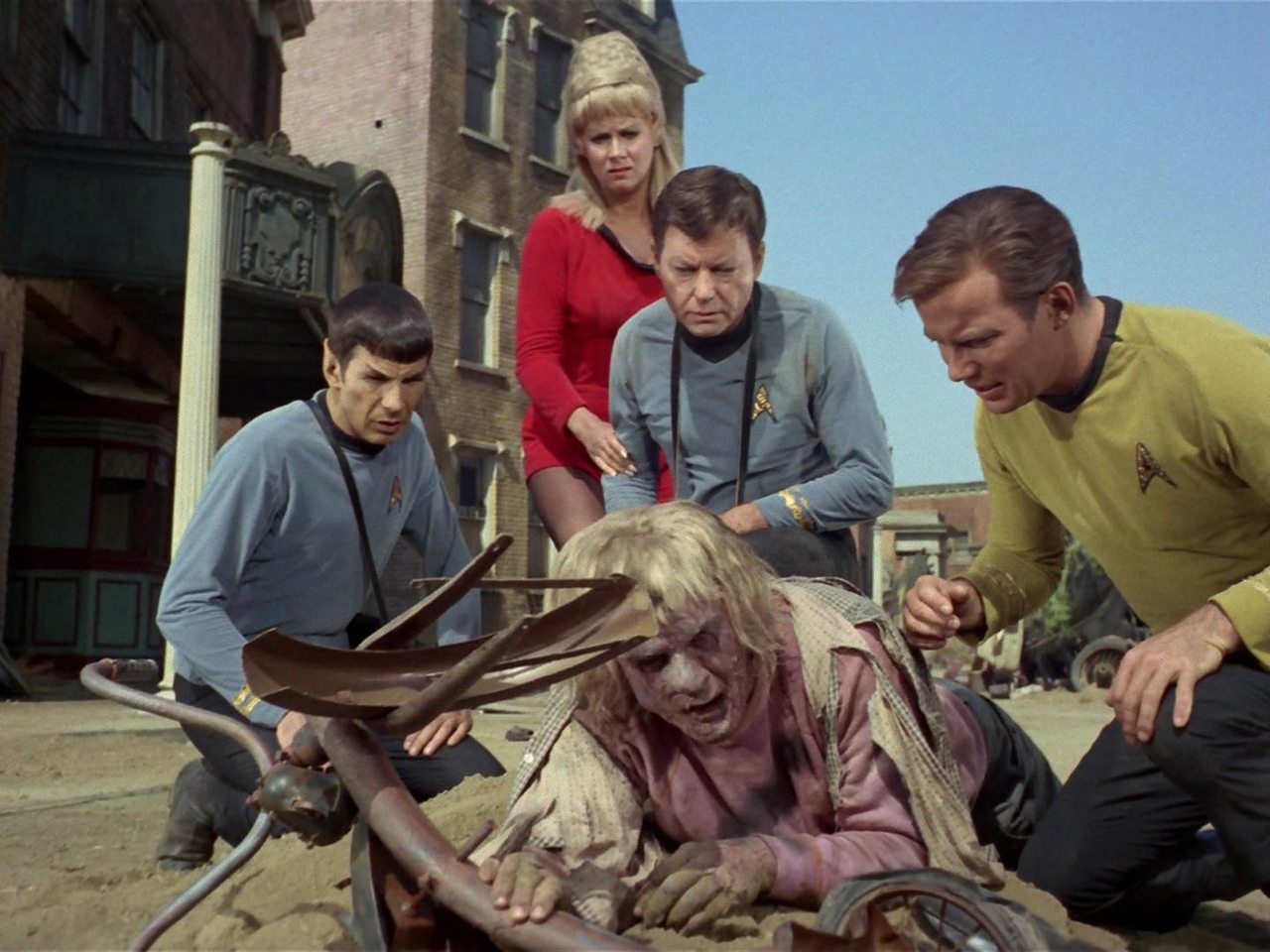
It’s one of those episodes that sticks in your craw. You know the one. Captain Kirk, Spock, and McCoy beam down to a "duplicate Earth" only to find a world populated entirely by children who have been alive for centuries. It's unsettling. The cast of Star Trek The Original Series Miri had to pull off a very specific kind of tonal tightrope walk—balancing the high-camp energy of 1966 television with a genuine sense of existential dread.
Honestly, the "Onlies" (as the kids called themselves) were terrifying. Read more on a connected subject: this related article.
While William Shatner and Leonard Nimoy were doing their usual heavy lifting, the episode's success really rested on the shoulders of a few guest stars and a literal pack of Hollywood youngsters. Some of them were already seasoned professionals, while others were literally just the children of the series' creators. It’s a weird, messy, fascinating bit of TV history that almost didn't make it to air in certain parts of the world because of how dark it got.
Meet the Leader: Kim Darby as Miri
Kim Darby was 18 when she played the title role, though she was meant to be playing a girl on the cusp of physical maturity—roughly 13 or 14 in "Onlie" years. Darby wasn't just some random casting choice; she was a serious actor who would go on to star opposite John Wayne in True Grit just a few years later. Additional reporting by GQ delves into comparable views on the subject.
She had this incredibly waifish, vulnerable quality. You've probably noticed that her performance feels different from the rest of the kids. She’s caught between two worlds. She wants to be a "grownup" because she’s falling for Kirk, but she’s terrified because, on this planet, becoming a "grupe" (grownup) means catching the virus and dying a screaming, painful death.
Darby’s chemistry with Shatner is... well, it’s a little uncomfortable by modern standards. But that was the point. The script by Adrian Spies required Miri to feel the first pangs of romantic jealousy. When she sees Kirk interacting with Yeoman Janice Rand (played by Grace Lee Whitney), Miri’s transition from ally to antagonist begins. It’s a nuanced performance for a show that usually dealt in broader strokes.
The Antagonist: Michael J. Pollard as Jahn
If Miri was the heart of the kids, Jahn was the fist. Michael J. Pollard brought an energy to the screen that I can only describe as "precociously chaotic." Like Darby, Pollard was much older than he looked; he was actually 27 years old during filming.
Think about that for a second. A 27-year-old man playing a feral teenager.
It worked because Pollard had that unique, puckish face and a mumbling delivery that felt genuinely unscripted. He wasn't playing a "TV kid." He was playing a survivor who had been leading a gang for 300 years. Pollard would later become a counter-culture icon for his role in Bonnie and Clyde, earning an Academy Award nomination. In "Miri," you see the seeds of that talent. He makes Jahn feel dangerous not because he’s strong, but because he’s a child with the stubbornness of a century-old ego.
The Secret Cast: The Kids of the Creators
Here is a fun bit of trivia that most casual fans miss. The cast of Star Trek The Original Series Miri was essentially a family affair. Because they needed a large group of children who could follow directions and not cost the production a fortune in specialized casting calls, the producers looked inward.
- Shatner’s Daughters: Melanie and Lisabeth Shatner both appeared as extras among the Onlies.
- The Nimoy Children: Adam and Julie Nimoy were also part of the group.
- The Roddenberry Connection: Even Gene Roddenberry’s daughter, Dawn, was in the mix.
- The Solow Kids: The children of Herb Solow, the executive in charge of production at Desilu, were there too.
It’s kind of wild to imagine the set that week. You have the icons of sci-fi trying to film a serious allegory about the Cold War and biological weapons, while their own kids are running around in rags, chanting "Bonk, bonk on the head!"
Speaking of that chant—it wasn't just mindless noise. It was a way to show how language and social norms degrade when there are no adults to pass down culture. The kids created their own tribal lexicon. "Grupes," "Onlies," "Funnies." It’s Lord of the Flies with a phaser-burn.
The Tragic Figure: Grace Lee Whitney as Janice Rand
We have to talk about Grace Lee Whitney. This was one of her final episodes as a series regular, and it’s arguably her best performance. While she’s part of the main cast of Star Trek The Original Series Miri, her role here is pivotal because she represents the stakes.
When Rand realizes she has contracted the virus, her breakdown in the laboratory is genuinely moving. She looks at her legs, sees the blue lesions forming, and loses it. It’s one of the few times in the first season where the "red shirt" peril feels personal.
Sadly, behind the scenes, Whitney was struggling. She was dealing with personal demons and, as she later detailed in her autobiography, The Longest Trek, she was facing a toxic environment on set. She was written out of the show shortly after this, which remains one of the biggest "what-ifs" in Trek history. Her presence gave the show a grounded, human perspective that the trio of Kirk, Spock, and McCoy sometimes lacked.
Why the BBC Banned the Cast of Star Trek The Original Series Miri
This is a detail that always surprises people. For years, "Miri" was banned by the BBC. Along with "The Empath," "Whom Gods Destroy," and "Plato's Stepchildren," it was deemed too "unpleasant" for British audiences.
Why?
The censors didn't like the idea of children turning into murderous savages. They also found the themes of a biological plague that only kills adults to be a bit too close to home in a post-WWII landscape. The cast of Star Trek The Original Series Miri delivered performances that were perhaps too effective. When the kids steal the communicators and mock Kirk, it’s not cute. It’s malicious.
The episode wouldn't be broadcast on the BBC until the 1990s. Imagine being a British fan in the 70s and 80s hearing about this "lost" episode where the kids take over. It developed a mythic status.
Production Quirks and 1960s TV Magic
The planet in "Miri" looks suspiciously like Mayberry. That’s because it basically was. They filmed on the "Forty Acres" backlot in Culver City, which was the same set used for The Andy Griffith Show.
There is something deeply surreal about seeing Captain Kirk walk past the same buildings where Barney Fife used to hang out, except now they’re covered in "space rubble" and "alien weeds." It adds to the uncanny valley feeling of the episode. It’s Earth, but not. It’s familiar, but broken.
The makeup department also deserves a shoutout. Those blue skin lesions were meant to look like a horrific cross between bruising and rot. On the 1960s color TVs, that shade of blue-purple really popped. It made the threat of "growing up" feel visceral.
The Lasting Legacy of the Onlies
What makes the cast of Star Trek The Original Series Miri stand out compared to other "planet of the week" actors?
It’s the lack of a happy ending for the culture. Sure, McCoy finds a cure. The Enterprise leaves medical technicians behind to help the kids. But the psychological damage is done. These are children who have been playing for 300 years and have now been told they have to become the very thing they feared: grownups.
The episode handles the transition from childhood to adulthood as a literal horror story.
How to Appreciate the Episode Today
If you're revisiting "Miri," keep an eye on these specific details to get the most out of it:
- Watch Kim Darby's Eyes: She spends most of the episode looking at Shatner with a mix of awe and terror. She’s not just "acting" a crush; she’s acting the physiological shift of her character’s body.
- Listen to the Sound Design: The "Bonk, bonk" chant was layered in post-production to sound like it was coming from everywhere. It’s a classic horror movie trope used in a sci-fi setting.
- Spot the "Nepotism": Try to pick out the Nimoy and Shatner kids in the background of the schoolroom scenes. It’s a fun game of "spot the relative."
- Note Spock's Detachment: Spock is particularly cold in this episode. His clinical analysis of the children’s "rotting" society provides a sharp contrast to McCoy’s emotional outbursts.
The cast of Star Trek The Original Series Miri helped define what Star Trek could be. It wasn't just about space battles or meeting "god-like" aliens. Sometimes, it was about the small, sad tragedies of a playground that lasted too long.
To really dive into the history of these performers, you should look up Michael J. Pollard’s later work in the 70s—he became a quintessential character actor. Also, checking out Grace Lee Whitney’s memoir provides a sobering look at what it was like to be a woman in the cast during those early years. Understanding the context of their lives makes the performances on screen feel even more significant.