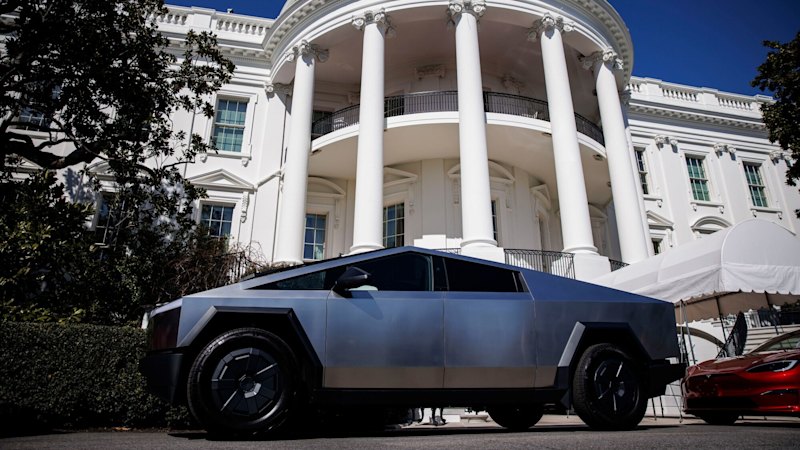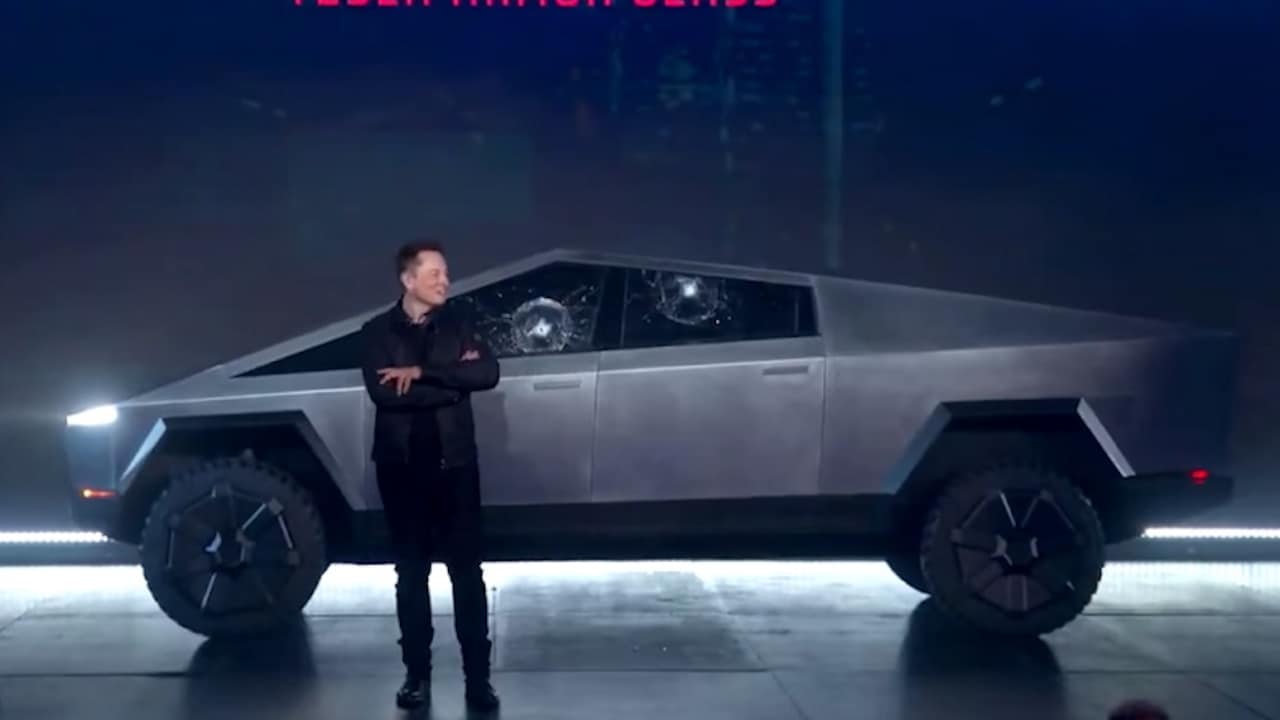
Elon Musk confirmed on November 6, 2026, that Tesla will wind down Cybertruck production at Gigafactory Texas by the middle of 2027. The official explanation from the chief executive is straightforward. Tesla needs the factory floor space in Austin to scale up manufacturing for the Cybercab, its two-seat autonomous taxi.
That explanation does not survive scrutiny. Gigafactory Texas is one of the largest manufacturing footprints in North America, spanning over ten million square feet with vast stretches of undeveloped land surrounding the main structure. Tesla already constructed a dedicated manufacturing line in Austin specifically for the Cybercab's unboxed assembly process, and state registration records show fewer than 500 Cybercabs were on Texas roads as of late October 2026. Tesla is not short on real estate. It is short on buyers.
The decision to pull the plug barely three and a half years after initial customer deliveries marks the quiet end of the most polarizing automotive experiment of the twenty-first century. To understand why Tesla is abandoning a vehicle Musk once claimed would sell up to 250,000 units annually, you have to look past the social media posts and examine the brutal arithmetic of automotive manufacturing, the collapse of the electric pickup market, and the strategic pivot that is reshaping Tesla from a carmaker into an artificial intelligence and fleet operator.
The Math That Broke the Stainless Steel Dream
Automotive manufacturing is a game of fixed-cost amortization. Every stamping press, gigacasting machine, and specialized battery line represents hundreds of millions of dollars in upfront capital expenditure. To make money, an automaker must spread those fixed costs across hundreds of thousands of vehicles.
When Tesla designed the Cybertruck line in Austin, it pushed suppliers to prepare for 250,000 trucks a year and installed physical equipment rated for at least 125,000 units annually. Reality never came close. According to industry registration tracking from Cox Automotive, Tesla sold roughly 38,965 Cybertrucks in 2024, its first full year of availability. Instead of climbing in 2025 as production stabilized, volume cratered. Full-year US sales fell 48.1 percent to just 20,237 units.
The slide continued throughout 2026. Between January and September 2026, Tesla moved only 11,586 Cybertrucks in the United States, a 28 percent drop compared to the same nine-month stretch the year prior. Cumulative sales since launch sit right around 71,000 vehicles—roughly a tenth of the annualized pace Tesla originally promised investors.
Even those modest figures relied heavily on internal corporate shuffling. Automotive registration filings compiled by S&P Global Mobility revealed that SpaceX purchased 1,279 Cybertrucks in the final quarter of 2025 alone. Combined with acquisitions by other Musk-affiliated ventures, internal corporate buyers accounted for nearly 19 percent of all US Cybertruck registrations during that period. Without sister companies absorbing excess inventory, the assembly line in Austin would have stalled months earlier.
Musk pushed back on November 9, claiming on X that the order rate exceeded production and denying that the program was unprofitable. Yet Tesla's own quarterly financial filings tell a much tighter story. Tesla no longer breaks out Cybertruck deliveries individually, lumping the pickup into an "Other Models" category alongside the Semi. After Tesla discontinued the aging Model S and Model X in April 2026, that category became a direct proxy for Cybertruck demand. In the third quarter of 2026, total global deliveries for "Other Models" sank to 8,295 units, down 48 percent year-over-year and the lowest quarterly figure since 2021.
While Tesla noted in late 2024 that the Cybertruck had achieved a positive gross margin on a unit basis, covering the cost of parts and assembly labor is vastly different from recouping billions in research, development, and custom tooling. Running a specialized stainless steel factory at 20 percent capacity bleeds cash through unabsorbed overhead. Closing the line is not a sacrifice for the Cybercab. It is a financial tourniquet.
Why No One Wants an Electric Pickup Truck
It would be easy to blame the Cybertruck's demise entirely on its polarizing wedge design, its sharp cold-rolled steel panels, or the string of missed promises from its 2019 unveiling. When the truck finally reached buyers, the flagship configuration fell well short of the advertised 500-mile range, towing capacity dropped from 14,000 pounds to 11,000 pounds, and payload capacity shed a thousand pounds. Meanwhile, sticker prices hovered well above $75,000, pricing out the working-class contractors who form the backbone of the American truck market.
Blaming the Cybertruck's quirks, however, misses a much larger structural reality. The entire electric pickup category has hit a brick wall.
Despite its steep decline, the Cybertruck actually outsold every competing electric pickup in America during 2026, capturing more than 45 percent of the segment. Rivian's updated R1T, Ford's F-150 Lightning, and General Motors' electric Silverado and Hummer pickups have all struggled to find mainstream traction. Across the entire automotive industry, total electric pickup deliveries in the United States barely crossed 120,000 units in 2026. For context, Ford routinely sells more combustion-powered F-Series trucks in sixty days than every automaker combined sells electric pickups in an entire year.
The physics of battery electric vehicles clash fundamentally with what truck buyers actually do. Trucks are heavy, aerodynamically blunt instruments. Moving a 6,500-pound vehicle at highway speeds requires massive amounts of energy. When a buyer hitches a 7,000-pound trailer to the back, aerodynamic drag spikes and real-world driving range routinely drops by half.
To compensate for that energy penalty, automakers have to install colossal battery packs exceeding 120 to 200 kilowatt-hours. Those packs add thousands of pounds of curb weight, require expensive raw materials, and push retail prices into luxury territory. A fleet manager or rural contractor looking for a reliable workhorse sees little reason to pay $80,000 for a truck that requires forty-five-minute charging stops every 130 miles while towing, especially when a $50,000 gasoline or diesel truck refuels in four minutes and runs for 500 miles.
The Cybertruck was also trapped by geography. Full-size pickups are an overwhelmingly North American phenomenon. Because of its rigid stainless steel exoskeleton and sharp front-end geometry, the Cybertruck failed to meet European pedestrian crash safety regulations, locking it out of the world's second-largest electric vehicle market from day one. Just weeks before announcing the production wind-down, Tesla quietly canceled planned launches in Australia and New Zealand as well. A high-cost vehicle restricted almost entirely to the United States and Canada could never achieve global economies of scale.
Engineering Triumph Versus Commercial Reality
Calling the Cybertruck an unmitigated disaster ignores what happened beneath the stainless steel skin. Inside engineering circles, the truck is widely viewed as a rolling testbed that dragged automotive electrical architecture into the modern era.
For decades, automakers built cars around 12-volt electrical systems inherited from the mid-twentieth century. As vehicles added heated seats, radar sensors, motorized tailgates, and massive touchscreens, those low-voltage systems required thicker, heavier copper wiring harnesses that added cost and complexity. Tesla used the Cybertruck to pioneer a transition to a 48-volt low-voltage architecture, slashing copper weight and reducing electrical current requirements by a factor of four.
The truck also served as the commercial debut for Tesla's steer-by-wire system and four-wheel steering, completely eliminating the mechanical steering column connecting the steering wheel to the front tires. Combined with 800-volt battery architecture and structural gigacasting techniques that replaced dozens of stamped metal parts with single massive aluminum castings, the Cybertruck fundamentally altered how Tesla designs vehicles.
When Cybertruck lead engineer Wes Morrill posted a farewell reflection on X following Musk's announcement, he noted that the pickup served as an extraordinary technology development platform whose DNA lives on directly inside the Cybercab. That assessment is accurate. The Cybercab relies on the exact same 48-volt architecture, steer-by-wire actuation, and casting methodologies validated on the Cybertruck assembly line.
The mistake was not building the technology. The mistake was wrapping that technology in an uncompromising, hard-to-manufacture stainless steel shell aimed at a niche luxury audience rather than deploying it immediately into a high-volume mass-market vehicle. Cold-rolled 30X stainless steel cannot be stamped in conventional presses without cracking or destroying dies. It requires specialized air-bending machinery, exhibits noticeable panel gap variations, and resists traditional paint finishes. Tesla spent billions solving manufacturing headaches for a body style that actively repelled mainstream buyers.
The Strategic Pivot From Cars to Fleet Autonomy
The decision to terminate the Cybertruck by mid-2027 fits cleanly into a broader, aggressive dismantling of Tesla's traditional automotive lineup. Within a single calendar year, Tesla has retired the Model S, ended the Model X, and scheduled the execution of the Cybertruck. By late 2027, Tesla's consumer vehicle catalog will effectively consist of just two aging models, the Model 3 sedan and the Model Y crossover.
This contraction is deliberate. Musk has spent the past two years convincing Wall Street that Tesla should no longer be valued as an automaker selling hardware at 15 percent gross margins, but rather as an artificial intelligence, robotics, and autonomous transportation company.
In that vision, selling individual vehicles to retail consumers is a legacy business with limited upside. The real prize is recurring software and ride-hailing revenue. Tesla launched its paid autonomous taxi service in limited zones of Austin, Texas, in 2026 using early Cybercab prototypes without steering wheels or pedals. Alongside the Cybercab, Tesla is dedicating massive engineering and capital resources toward training compute clusters—such as its Cortex 2 data center—and scaling production of the Optimus humanoid robot.
| Strategic Metric | Legacy Auto Model (Cybertruck) | Autonomous Fleet Model (Cybercab) |
|---|---|---|
| Target Buyer | Retail consumers ($75,000+ MSRP) | Commercial fleet operators and Tesla network |
| Body Construction | Custom cold-rolled stainless steel | Unboxed modular composite/stamped assembly |
| Global Addressable Market | Primarily US and Canada | Global urban centers (subject to regulation) |
| Revenue Profile | One-time hardware sale | Ongoing per-mile ride-hailing and FSD software |
| Core Bottleneck | Consumer demand and battery cost | Regulatory approval and autonomous safety validation |
Every dollar spent maintaining specialized tooling for a slow-selling pickup truck is a dollar diverted from GPU clusters, battery cell factories, and autonomous fleet infrastructure. Shutting down the Cybertruck frees up engineering talent, battery cell supply, and supplier bandwidth that can be reallocated immediately to higher-margin priorities.
What Current Owners and Deposit Holders Face Next
For the roughly 71,000 owners who already have a Cybertruck parked in their driveway—and the remaining reservation holders waiting in line—the wind-down creates immediate practical questions.
Musk acknowledged that Tesla will continue building the truck through roughly the middle of 2027 to work through existing orders, after which the company will refund deposits to remaining reservation holders who never took delivery. Those who cancel early or get refunded will walk away with their money back, ending a seven-year saga that began with $100 refundable deposits in November 2019.
Existing owners face a trickier reality. Under federal and state automotive regulations, manufacturers are required to maintain replacement parts inventory for vehicles they sell, typically for seven to ten years. Tesla's service centers will continue repairing Cybertrucks, and the truck's battery cells and drive units share enough commonality with other Tesla programs to remain serviceable.
Body panels, specialized windshields, and unique suspension components are another matter entirely. Low-volume discontinued vehicles inevitably suffer from parts bottlenecks as suppliers dismantle dedicated tooling and move on to active contracts. A minor fender bender on a vehicle made of unibody stainless steel already requires specialized body shop certification and lengthy wait times. Once the Austin assembly line goes dark in 2027, waiting months for a replacement quarter panel or gigacast structural piece will become a routine hazard of ownership, driving up insurance premiums and accelerating depreciation.
The Hard Lesson of Over-Engineering for a Mirage
For more than a decade, Tesla defied every rule of the automotive industry. It built a direct-to-consumer sales model when dealers said it was illegal, scaled electric vehicle manufacturing when incumbents claimed batteries were too expensive, and turned the Model Y into the best-selling vehicle on earth. That track record bred an internal culture of invincibility—a belief that if Tesla built something radical enough, consumer demand would inevitably materialize.
The Cybertruck proved that even Tesla cannot out-engineer basic market economics. You cannot force mainstream buyers to embrace a $80,000 angular stainless steel truck that struggles to tow long distances and cannot fit comfortably in a standard suburban garage.
As the welding robots in Austin prepare to stand down next summer, the Cybertruck leaves behind a dual legacy. Its internal architecture will quietly power the next generation of autonomous vehicles for years to come. Its exterior, however, will stand in automotive history alongside the Edsel and the DeLorean—a cautionary monument to what happens when a visionary company mistakes its own hype for a business plan.