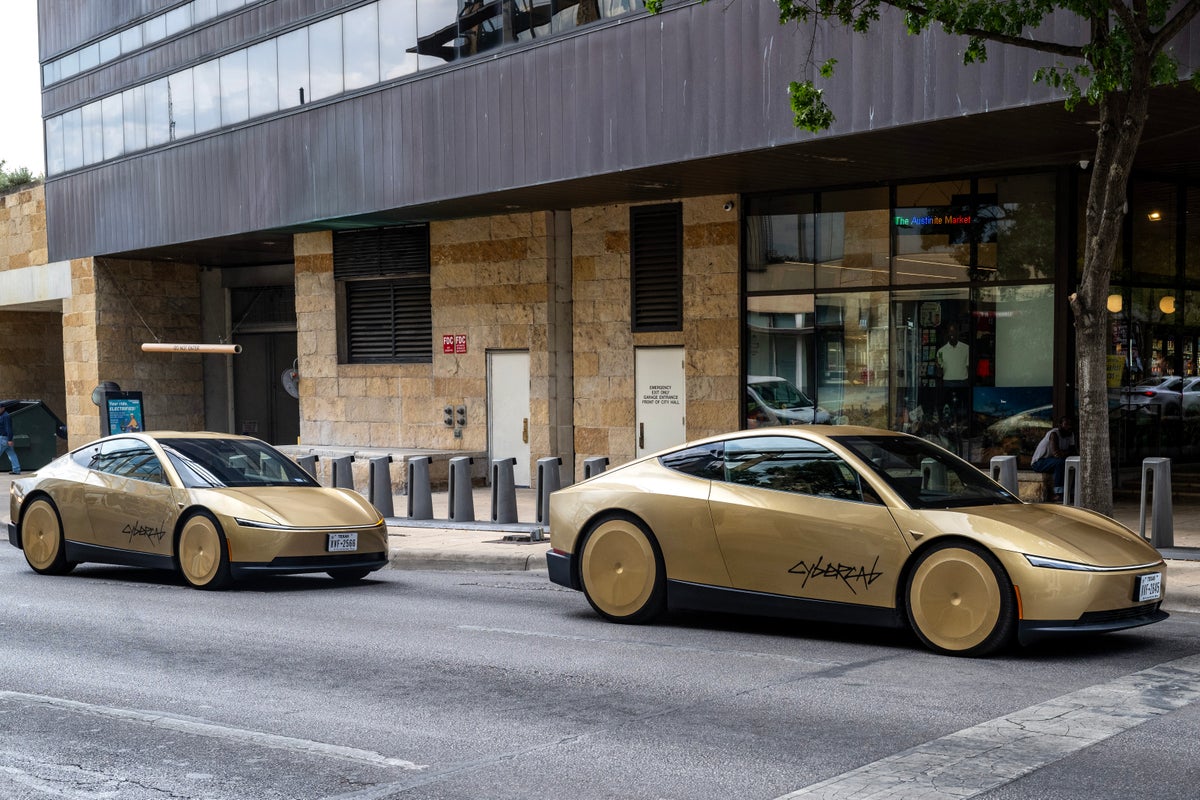
The steering wheel is gone. So are the brake pedals, the accelerator, and the rearview mirrors. Elon Musk rolled out Tesla's purpose-built Cybercab in Austin, Texas, with plenty of tech-industry fanfare, but federal regulators didn't even wait twenty-four hours before crashing the party.
The National Highway Traffic Safety Administration (NHTSA) opened an audit query into how Tesla certified nearly 1,000 Cybercabs without traditional human controls. Traditional auto manufacturing relies on self-certification against Federal Motor Vehicle Safety Standards. You build a car, you check the boxes, and you put it on the road. But those decades-old standards assume a human being is sitting behind a steering wheel, ready to take over when things go sideways. By omitting manual controls entirely, Tesla didn't just push the envelope—it bypassed the rulebook.
The Self-Certification Loophole
Automakers in the United States hold the power to self-certify that their vehicles meet safety mandates. It is a system built for a legacy industry. When a company designs a conventional sedan, self-certification is straightforward. When a company builds a compact, two-seater robotaxi with zero driver inputs, self-certification becomes a gray area.
NHTSA's investigation centers on whether Tesla determined that specific safety rules simply did not apply to its automated fleet. If you strip out the brake pedal, you are essentially declaring that standard pedal-retention and crash-testing requirements are irrelevant to your vehicle. Regulators disagree. While the agency has signaled a willingness to update rules for autonomous vehicles—and even proposed dropping the manual brake pedal requirement for self-driving pods—those rule changes are still works in progress. Existing standards remain the law of the land.
Zoox, the autonomous vehicle unit owned by Amazon, took a different path. They formally petitioned NHTSA for an exemption to deploy steering-wheel-free robotaxis, utilizing a federal provision that allows exemptions for up to 2,500 vehicles per manufacturer annually. Zoox waited for permission. Tesla decided to ship. That difference in strategy explains why Amazon's robotaxis rolled out under a stamped approval while Tesla's Cybercabs are currently under an enforcement microscope.
What Tesla Gets Wrong About Scaling Compliance
Tech companies love the move-fast-and-break-things mantra. Physics and federal oversight do not care about silicon valley startup culture.
Tesla’s entire autonomy bet rests on a camera-only sensor suite coupled with aggressive neural network training. Competitors like Alphabet's Waymo rely on a redundant mix of lidar, radar, and cameras, operating commercially across multiple major metropolitan areas with explicit state permits. Tesla's Austin rollout is heavily geofenced and carefully managed, but launching a commercial taxi service with vehicles that lack basic legal classifications invites immediate scrutiny.
If NHTSA determines that Tesla’s self-certification process bypassed mandatory safety standards improperly, the consequences go beyond a slap on the wrist. The agency can force recalls, halt deployments, or demand expensive hardware retrofits. Even if Tesla eventually wins the long-term regulatory war as standards modernize, the friction slows down the cash flow and dampens the hype.
Moving Forward With Autonomous Fleets
If you are watching the autonomous vehicle space closely, look past the launch event marketing. The real battle isn't happening on the streets of Austin; it's happening in federal filing offices and administrative courtrooms.
Companies hoping to commercialize driverless transportation must navigate a dual reality. You need software that can handle erratic human drivers, jaywalkers, and sudden construction zones, but you also need lawyers who can secure exemptions before you build a thousand cars that the government technically considers illegal to drive. Tesla has the manufacturing muscle and the AI talent, but ignoring the paperwork doesn't make the paperwork go away.
Watch how many Cybercabs actually scale past the initial Austin geofence over the next six months. If NHTSA forces a pause, Tesla's timeline for a nationwide robotaxi network hits a brick wall. Compliance isn't a formality anymore. It is the entire bottleneck.