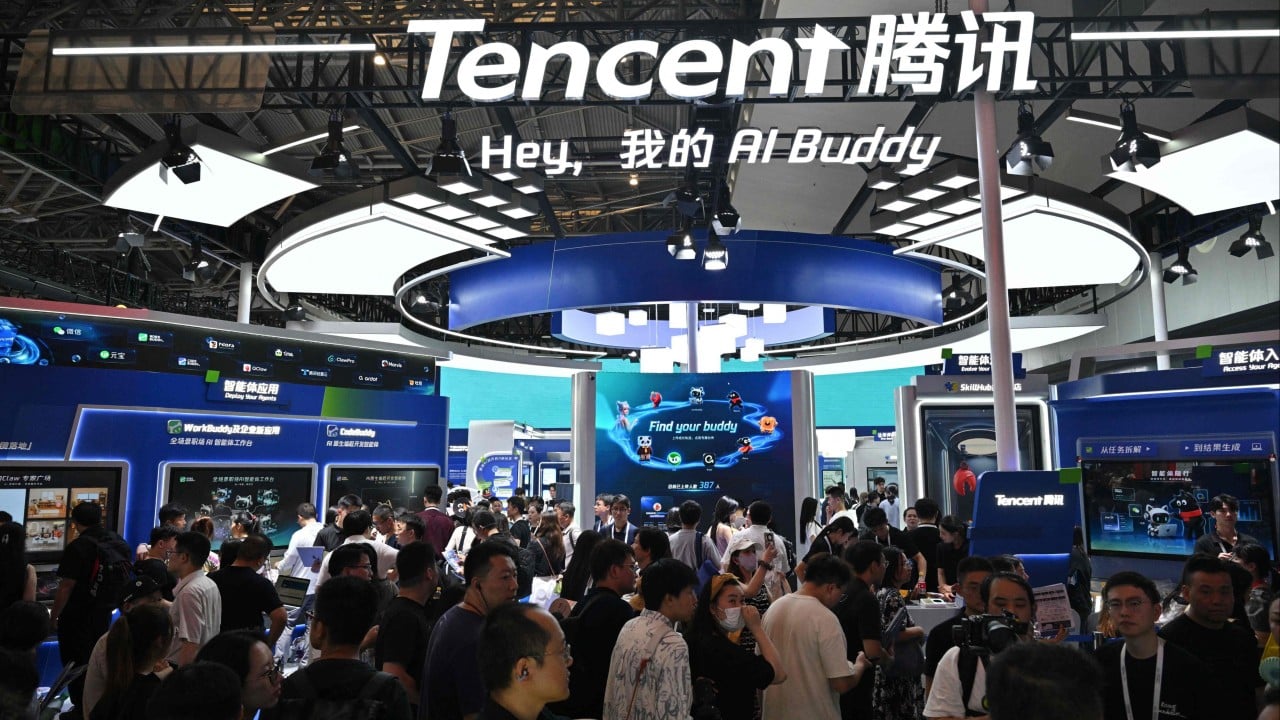
Tencent is pushing its enterprise AI agent, WorkBuddy, into Southeast Asia because the domestic Chinese artificial intelligence market has devolved into a margin-destroying price war where survival is no longer guaranteed. Facing brutal competition from ByteDance, Alibaba, and aggressive startups like DeepSeek, the Shenzhen tech giant is using Southeast Asia as an immediate commercial escape valve. By targeting rapidly digitizing businesses across Singapore, Indonesia, Vietnam, and Malaysia, Tencent hopes to capture enterprise recurring revenue before American hyperscalers or regional upstarts lock down the market.
That is the cold commercial reality behind the rollout. Enterprise software rarely makes for glamorous headlines, yet this specific expansion reveals a structural shift in how Chinese tech titans operate. For over a decade, the playbook was simple: dominate the massive domestic market first, build an impenetrable moat, and use those profits to fund measured international experiments. That era is dead. Today, the home market is saturated, regulatory scrutiny remains a constant background hum, and enterprise customers in Beijing and Shanghai demand steep discounts on cloud and AI services.
The Domestic Bloodbath Driving Tencent South
To understand why Tencent is aggressively marketing an AI workplace assistant in Jakarta and Bangkok, you have to look at the wreckage of China’s domestic enterprise software sector.
Chinese companies have historically resisted paying for standalone SaaS (Software-as-a-Service) products. Unlike American corporations that happily budget millions for Salesforce, Slack, and Microsoft 365, Chinese enterprises often view software as an accessory that should either be heavily customized for free or bundled at a steep discount with cloud infrastructure. When generative AI arrived, many observers assumed it would finally break this mindset and unlock massive software margins.
The exact opposite happened.
A vicious price war erupted across China’s foundational model providers. ByteDance slashed token prices for its Doubao models to fractions of a cent, forcing Alibaba Cloud, Baidu, and Tencent to follow suit. When the underlying intelligence becomes a near-free commodity, selling an application layer like WorkBuddy inside China becomes an uphill battle. Why would a mid-sized logistics firm in Guangzhou pay a premium for Tencent's AI agent when three competitors are offering similar workflow automation tools at cost just to win cloud storage contracts?
Tencent's enterprise division, Cloud and Smart Industries Group (CSIG), has spent years pivoting away from low-margin vanity projects toward sustainable profitability. Pushing WorkBuddy into Southeast Asia aligns directly with that mandate. In markets like Singapore and Malaysia, businesses are already conditioned to pay monthly per-seat licensing fees for productivity software. The unit economics simply work better south of the border.
What WorkBuddy Actually Does Under the Hood
Strip away the marketing gloss, and WorkBuddy is Tencent's answer to Microsoft Copilot and Slack AI. Built atop the company's proprietary Hunyuan large language model architecture, the tool is designed to sit directly inside daily corporate workflows—drafting documents, summarizing sprawling group chats, automating data entry, generating code snippets, and querying internal company databases.
It is not a consumer chatbot. It is an orchestration layer.
When an employee asks an AI agent to "pull Q3 sales figures from the regional spreadsheet and draft a summary email to the distribution team," the system has to execute multiple steps without hallucinating numbers or leaking confidential data across department lines. WorkBuddy relies on Retrieval-Augmented Generation (RAG) and strict permission controls to ensure a junior marketing coordinator cannot accidentally query executive payroll data through a clever prompt.
Tencent has spent years refining these enterprise plumbing mechanics inside WeCom (formerly WeChat Work) and Tencent Meeting. Those platforms already boast tens of millions of daily active business users. WorkBuddy takes the AI capabilities incubated within that domestic ecosystem and packages them for an international audience that may not use WeChat for corporate communication, integrating instead with standard international office suites and localized enterprise resource planning (ERP) systems.
Why Southeast Asia Is the Logical Battleground
Southeast Asia is not a monolith, and treating it as one has ruined plenty of ambitious tech expansions. Yet for an enterprise AI rollout, the region offers a rare combination of high mobile adoption, acute labor bottlenecks, and an absence of entrenched legacy software monopolies.
Consider the operational reality of a growing mid-market company in Ho Chi Minh City or Manila. The business is scaling fast, dealing with cross-border supply chains, multiple currencies, and multilingual customer support. Hiring enough skilled white-collar analysts to manage that administrative overhead is expensive and slow. An AI agent that can process invoices in English, Vietnamese, and Bahasa Indonesia while automating routine customer inquiries solves an immediate, painful bottleneck.
The Geopolitical Buffer Zone
There is also a quieter, pragmatic reason Tencent favors this region: geopolitical neutrality.
Attempting to sell Chinese enterprise AI software in the United States or Western Europe right now is a non-starter. Data sovereignty laws, national security reviews, and corporate risk aversion create an invisible wall that even the best engineering cannot scale. Southeast Asia operates differently. Governments in ASEAN nations largely maintain pragmatic, multi-aligned trade policies. They want foreign capital, cloud infrastructure, and productivity tools, regardless of whether the code originated in Redmond or Shenzhen.
Tencent has already laid the physical groundwork to capitalize on this openness. The company operates data centers in Singapore, Bangkok, and Jakarta. By hosting WorkBuddy instances locally on regional servers, Tencent can assure corporate clients and local regulators that sensitive company data never leaves national borders—a critical requirement for landing contracts in banking, healthcare, and logistics.
The Invisible Hurdles Nobody Mentions
Having a clear strategic rationale does not guarantee market dominance. As Tencent pushes WorkBuddy across Southeast Asia, it is walking straight into a buzzsaw of entrenched competitors and linguistic complexity.
First, there is the Microsoft problem.
Microsoft has spent decades embedding Office, Windows, and Azure into the corporate DNA of Southeast Asia's largest conglomerates. When Microsoft pitches Copilot, it is not asking a Chief Information Officer to adopt a new platform; it is asking them to turn on a feature inside the software their employees already stare at for eight hours a day. Convincing a bank in Singapore to rip out or bypass Microsoft’s ecosystem for a Tencent product requires more than just comparable features. It requires dramatically lower pricing or superior localized performance.
Second, Southeast Asia's linguistic reality breaks most standard AI models.
The region does not speak textbook English or pristine Mandarin. Corporate communication in Singapore happens in "Singlish"—a rapid-fire blend of English, Hokkien, Malay, and Cantonese. In Jakarta, emails switch mid-sentence between formal Bahasa Indonesia, Jakartan slang, and English business jargon. In Manila, "Taglish" dominates the workplace.
If an AI agent misinterprets a subtle shift in dialect during a contract review or customer escalation, trust evaporates instantly. While Tencent's Hunyuan models perform well on standard multilingual benchmarks, real-world accuracy across Southeast Asia's messy, code-switching office vernacular remains a persistent engineering challenge. Local competitors and regional initiatives—such as Singapore’s SEA-LION (Southeast Asian Languages in One Network)—are specifically training models on regional corpora to close this exact gap.
The Trap of the Subsidized Land Grab
There is a very real risk that Tencent falls back on old habits.
When Chinese tech giants enter new markets, the instinct is often to subsidize user acquisition aggressively—offering deep discounts, free migration services, and custom engineering just to inflate adoption metrics. While that strategy works brilliantly for consumer apps like games or short-video platforms, it is toxic in enterprise software.
Corporate clients acquired solely through rock-bottom pricing have zero loyalty. The moment a competitor undercuts the renewal rate by ten percent, those clients churn. Furthermore, offering bespoke customizations for every mid-sized enterprise turns a scalable software business into a low-margin IT consulting shop. Tencent learned this painful lesson in China's cloud market between 2018 and 2022, eventually forcing management to purge unprofitable contracts and refocus on standardized products.
If WorkBuddy is going to succeed in Southeast Asia, Tencent has to resist the urge to buy market share at the expense of unit economics. It has to prove that the software delivers measurable return on investment—saving actual billable hours—rather than simply being the cheapest AI badge on the market.
How Enterprise Buyers Should Evaluate the Pitch
For technology leaders and business owners in Southeast Asia currently being courted by Tencent’s regional sales teams, the arrival of WorkBuddy is good news, even if you never sign a contract. More competition forces Microsoft, Google, and regional SaaS vendors to sharpen their pricing and accelerate feature rollouts.
However, adopting an AI agent is far riskier than subscribing to a standard messaging app. Before integrating WorkBuddy—or any competing enterprise agent—into live workflows, technical decision-makers need to interrogate three specific areas:
- Data Isolation Architecture: Verify whether your company’s proprietary documents are strictly isolated within a dedicated tenant, or if metadata and interaction logs are used to fine-tune Tencent's broader foundation models. Get the data residency guarantees in writing, specifying exact server locations in Singapore, Indonesia, or Thailand.
- Integration Friction: An AI agent is only as useful as the systems it can read and write to. If your operations run on legacy ERP software or niche regional accounting tools, find out whether WorkBuddy offers native API connectors out of the box, or if your internal engineering team will be stuck building and maintaining brittle custom middleware.
- Total Cost of Token Consumption: Per-seat licensing looks predictable on paper, but heavy AI agent usage often triggers usage-based overage fees once employees start running automated multi-step workflows. Model your worst-case token consumption scenarios before signing a multi-year lock-in.
Tencent’s push into Southeast Asia with WorkBuddy is neither a victory lap nor a desperate Hail Mary. It is a calculated, pragmatic pivot by a massive tech incumbent adapting to a harsh new reality. The domestic gold rush in China is over, replaced by grinding attrition. Whether Tencent can successfully export its enterprise AI ambitions depends entirely on its ability to build software that understands the messy, multilingual reality of Southeast Asian business better than the American giants already sitting on the desktop.