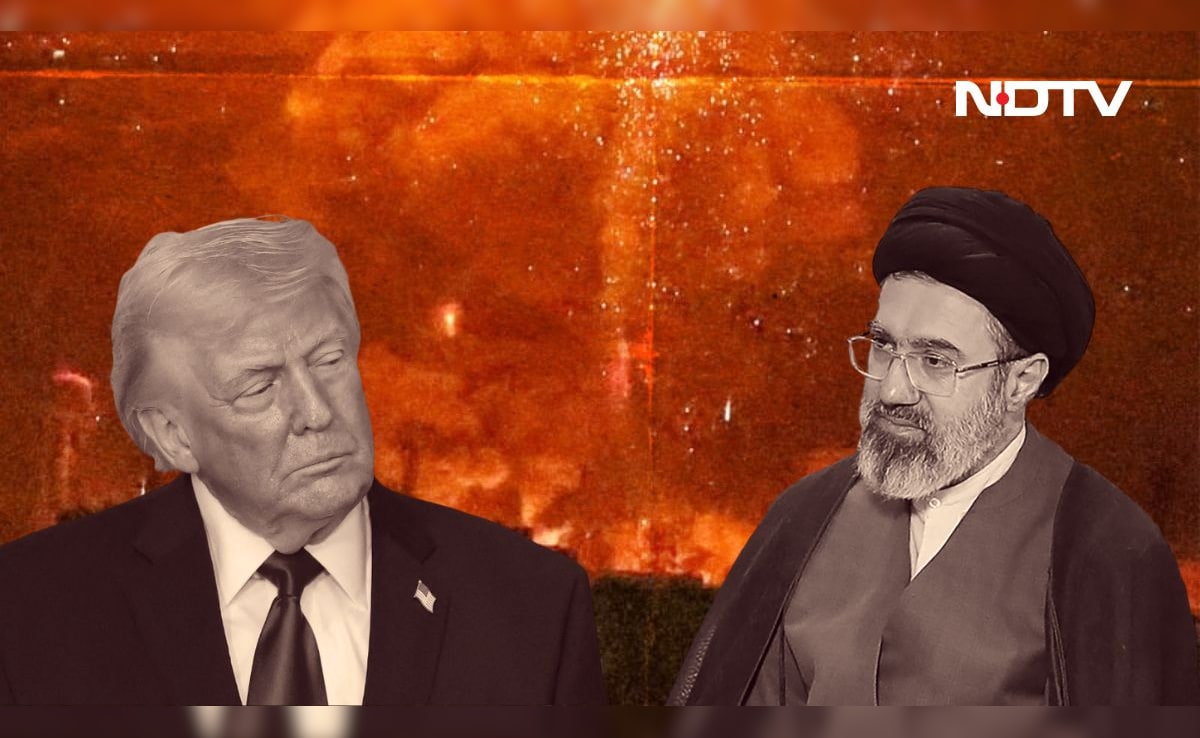
Iran is signaling a willingness to return to the negotiating table with the United States, but the overture comes with a heavy set of preconditions that suggest the Islamic Republic is not operating from a position of desperation. Foreign Ministry officials have made it clear that while they do not seek an escalation of conflict, they will not accept what they term "imposition"—a reference to the maximum pressure tactics that have defined Washington's approach over the last several years. This strategic pivot aims to test whether the current U.S. administration is willing to decouple nuclear oversight from Iran’s regional influence and ballistic missile programs.
The timing is far from accidental. Read more on a connected subject: this related article.
The Mechanics of Defensive Diplomacy
For decades, the back-and-forth between Washington and Tehran has followed a predictable script of brinkmanship followed by quiet backchanneling. However, the current environment is fundamentally different. Iran has spent the last five years aggressively diversifying its trade partnerships, pivoting toward the BRICS bloc and deepening ties with Moscow and Beijing. This "Resistance Economy" is no longer just a rhetorical device used for domestic consumption. It is a functional, if strained, reality that allows Tehran to view negotiations as a choice rather than a necessity for survival.
When Iranian officials state they "don't want war," they are acknowledging the devastating cost of a direct kinetic conflict. But when they add they won't accept "imposition," they are drawing a hard line in the sand regarding their sovereignty. They are betting that the United States, currently preoccupied with European security and Indo-Pacific posturing, has little appetite for a new, multi-front entanglement in the Middle East. More reporting by NBC News delves into similar perspectives on the subject.
Shifting the Burden of Proof
The core of the current stalemate lies in the wreckage of the 2015 Joint Comprehensive Plan of Action (JCPOA). From Tehran's perspective, the United States is the party that defaulted on the agreement. Therefore, the burden of initiating a credible return to diplomacy rests with Washington. This isn't just about pride. It’s about the tangible requirement for "verifiable" sanctions relief.
In past rounds of talks, Iran complained that even when sanctions were legally lifted, the "chilling effect" remained. Western banks and corporations were too terrified of future policy reversals to actually engage with the Iranian market. This time, Tehran is demanding more than just a signature on a page. They want structural guarantees that the economic benefits of a deal won't evaporate the moment a new administration takes office in the U.S.
The Regional Chessboard and the Nuclear Lever
While the headlines focus on the rhetoric of peace, the reality on the ground is one of calculated escalation. Iran has significantly increased its uranium enrichment levels, moving closer to the technical threshold required for a weapon. This is not necessarily a dash for a bomb, but rather the creation of "negotiating equity."
By advancing their nuclear capabilities, they increase the price the West must pay to dial them back. It is a high-stakes game of chicken where the currency is centifruge counts and enrichment percentages.
Proxy Networks as Permanent Infrastructure
One of the greatest sticking points in any potential talk is the "Plus" in the "JCPOA Plus" that Washington often mentions. The U.S. wants to include Iran’s regional activities—its support for various groups in Lebanon, Yemen, and Iraq—in any new framework. Tehran has signaled that this is a non-starter.
For the Iranian leadership, these regional ties are their "forward defense." They see the abandonment of these assets as a surrender of their national security. To expect Iran to trade its regional influence for temporary economic relief is to misunderstand the fundamental DNA of the Islamic Republic’s military strategy. They would rather remain under sanctions than leave their borders vulnerable to what they perceive as encirclement by hostile forces.
Internal Pressures and the Quest for Legitimacy
We must also look at the internal dynamics within Iran. The government faces a complex demographic challenge. A young, tech-savvy population is increasingly frustrated with economic stagnation and social restrictions. However, the ruling elite is not a monolith. There is a constant tug-of-war between the pragmatists, who see a deal as a way to stabilize the country, and the hardliners, who believe any concession to the "Great Satan" is a slippery slope to regime change.
The recent calls for talks are a victory for the pragmatists, but their leash is short. If a diplomatic path does not yield rapid, visible economic improvements for the average Iranian, the hardliners will use that failure to tighten their grip on the state apparatus even further.
The China Factor
Beijing’s role in this drama cannot be overstated. By acting as a primary buyer of Iranian oil through "dark fleet" tankers and non-dollar transactions, China has provided Tehran with a critical financial lifeline. This relationship has fundamentally altered the math of sanctions. When the U.S. could effectively cut off Iran from the global financial system, the pressure was immense. Today, that isolation is porous.
The security pact signed between Iran and China suggests a long-term strategic alignment that gives Tehran the confidence to say "no" to American demands. They are no longer looking exclusively to the West for a future; they are looking East.
The Mirage of a Grand Bargain
Many analysts still hope for a "Grand Bargain"—a sweeping agreement that settles the nuclear issue, regional conflicts, and human rights concerns all at once. This is a fantasy. The trust gap is too wide, and the interests are too divergent.
What we are likely to see, if talks actually progress, is a series of "less-for-less" arrangements. This would involve small, incremental concessions: perhaps a freeze on certain enrichment levels in exchange for the release of specific frozen assets. It is a fragile, transactional approach that lacks the permanence of a formal treaty but avoids the immediate catastrophe of war.
The Risk of Miscalculation
The danger in this "open to talk" stance is the potential for a catastrophic misunderstanding. Iran may overestimate its leverage, believing the U.S. is too distracted to respond to provocations. Conversely, the U.S. may underestimate Iran’s internal stability, believing that one more turn of the sanctions screw will bring the system to its knees.
History is littered with conflicts that started because both sides believed the other was bluffing. The current rhetoric is a sophisticated dance, but the floor is covered in glass.
The Economic Reality of the Oil Market
Global energy prices remain the ultimate wildcard. If oil prices spike due to instability elsewhere, Iran’s "Resistance Economy" becomes even more viable. Every dollar increase in the price of crude is an extra bit of leverage for Tehran. Washington knows this, which is why the enforcement of oil sanctions has been somewhat inconsistent. The U.S. wants to squeeze Iran, but it cannot afford to send global gas prices into the stratosphere during an election cycle.
Tehran is acutely aware of this leverage. They know that the global economy needs their energy, even if it has to be laundered through third-party intermediaries. This economic reality underpins their refusal to accept "imposition."
The current overture for talks is not an olive branch. It is a strategic opening. Iran is inviting the United States to a game where the rules have changed, and the old playbook of total dominance is no longer applicable. Whether Washington can adapt to this new reality—one where Tehran has options beyond the Western financial system—will determine if the coming months lead to a diplomatic breakthrough or a slow slide toward an inevitable confrontation.
The path forward requires an acknowledgment that Iran has built a system designed to withstand the very pressures meant to break it.