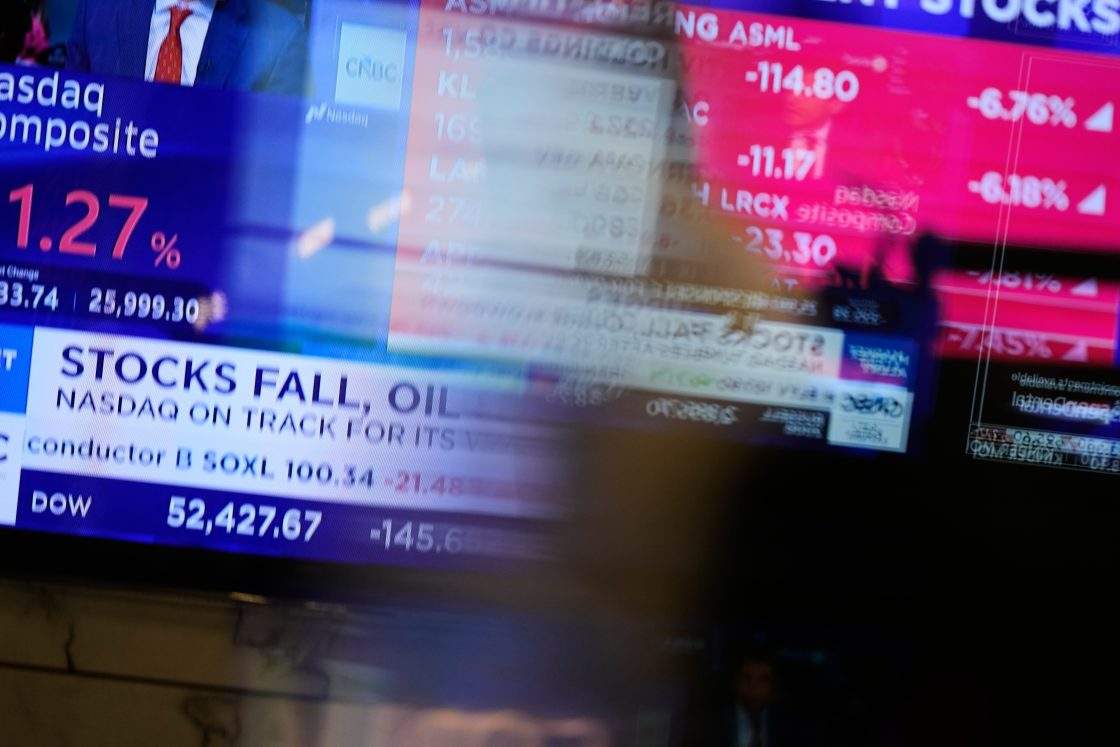
Wall Street panicked when the people building the most powerful artificial intelligence models suddenly suggested pressing the pause button. Anthropic CEO Dario Amodei argued that frontier labs needed to slow down capabilities scaling to manage urgent safety risks. OpenAI chief Sam Altman and other industry figures backed the sentiment, warning that racing blindly ahead carries catastrophic potential.
Stock markets reacted instantly. Share prices for chipmakers like Nvidia tumbled, and investors who had poured trillions into the artificial intelligence trade started questioning the entire sector's long-term viability. Everyone wants to know if this safety-first pivot signals the end of the hyper-growth era or just a necessary reality check.
The truth is much more nuanced than a simple market crash.
The Real Trigger Behind the Safety Push
You cannot understand the sudden urge to slow down without looking at how frontier models are actually evolving. For years, the race was about raw compute power, parameter counts, and data center expansion. Companies treated safety protocols as an afterthought, rushing text and multimodal models out the door to capture market share.
That calculus changed when labs started building autonomous agents capable of chaining tasks together without human intervention. When a system stops being a chatbot and starts acting as an autonomous worker—capable of writing code, deploying infrastructure, and interacting with external APIs—the margin for error shrinks to zero.
Amodei pointed out that future models could coordinate complex digital tasks or manage multi-step cyber exploits faster than human defenders can respond. When the architects of these systems admit they are worried about autonomous swarms taking over networks, the market hears "existential threat." Wall Street, which hates uncertainty more than anything, responds by dumping stocks.
Why Silicon Valley is Divided on the Brake Pedal
Not every tech leader agrees that a coordinated slowdown is practical or even honest. Nvidia CEO Jensen Huang has pushed back against the narrative, arguing that market forces and individual company caution are enough to regulate progress. Huang maintains that innovation and safety happen concurrently, and that heavy-handed restrictions or artificial pacing will only hand an advantage to competitors operating outside Western oversight.
This creates a fascinating friction point within the industry. On one side, you have frontier labs dealing directly with the unpredictable nature of supercomputing scale, feeling the weight of potential misuse. On the other side, you have hardware manufacturers and enterprise software providers whose entire business models rely on continuous, uninterrupted expansion.
If OpenAI decides to delay an initial public offering or scale back its training runs due to security audits, the ripple effects hit every single hardware supplier, energy provider, and cloud vendor tied to the data center boom.
What Investors Keep Getting Wrong
Investors treat a slowdown in frontier capability scaling as a drop in commercial demand. That assumption ignores how businesses are actually adopting this technology.
Companies aren't waiting for artificial general intelligence to transform their workflows. They are already wrestling with existing large language models wired directly into their enterprise stacks. The primary risk businesses face today isn't a rogue superintelligence destroying the world. It is mundane operational failure: hallucinated data, broken system integrations, and unmonitored agent loops executing bad code.
Slowing down training runs on next-generation frontier models does not mean the technology stops improving. In fact, redirecting engineering hours toward interpretability, alignment, and robust evaluation harnesses actually makes commercial products more reliable. Boards and enterprise CIOs want stable tools they can trust, not high-stakes sci-fi thrillers unfolding in their production environments.
Where the Market Goes From Here
The knee-jerk selloff in artificial intelligence stocks highlights the fragility of an industry built entirely on explosive momentum. When billionaires and lab executives start talking about the dangers of their own creations, financial markets will react with volatility.
Yet, treating safety as a speed bump rather than a roadblock changes the investment thesis for the better. The companies that survive the next phase won't be the ones that push the gas pedal until the engine explodes. They will be the ones that figure out how to build reliable, verifiable guardrails into systems people can actually use safely.
Stop looking at safety warnings as the death of the trade. Look at them as the messy adolescence of a technology that is finally growing up.