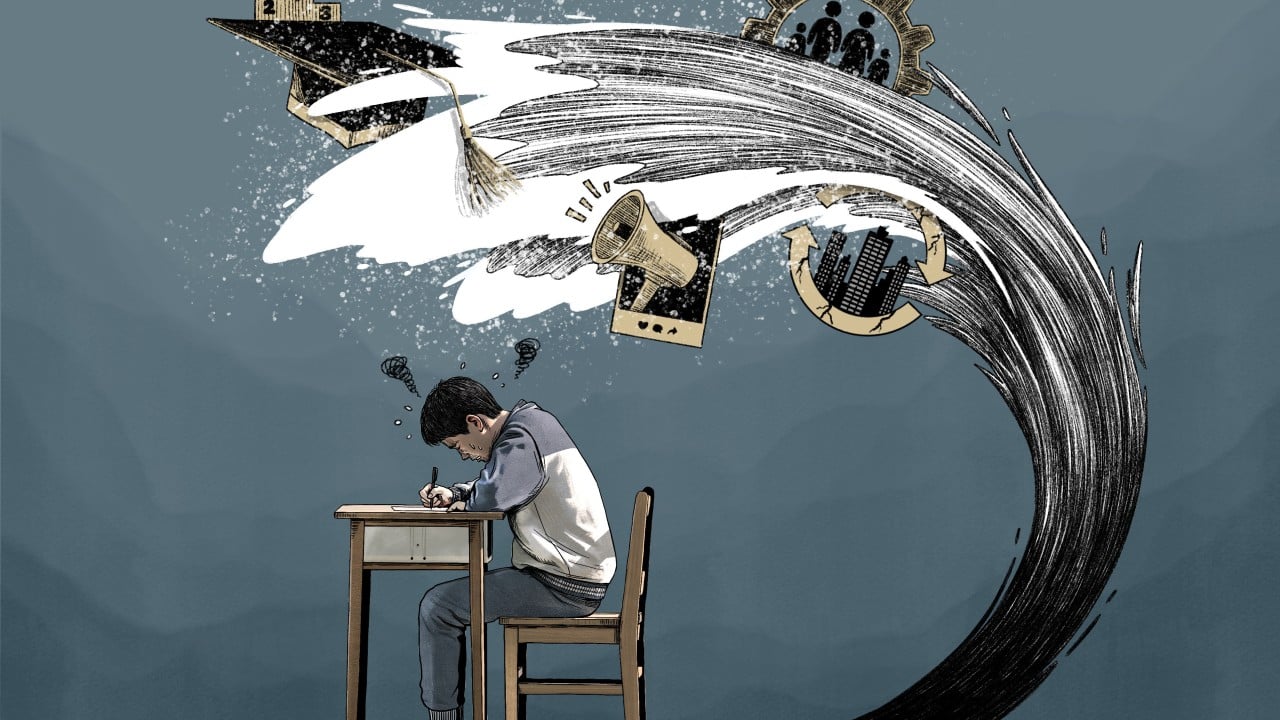
We have turned emotional regulation into a factory line, and nobody in education wants to admit the machinery is broken.
Goldie Hawn’s MindUP program boasts stats that make corporate boardrooms salivate: over seven million children reached across 48 countries. On paper, it sounds like a triumph of philanthropy and social-emotional learning. We teach five-year-olds to pause, take a deep breath, look at a brain diagram, and label their amygdala. Then we clap for ourselves, file the ESG report, and pretend we solved youth mental health. For an alternative look, check out: this related article.
It is a comfortable narrative. It is also fundamentally flawed.
Slapping a five-minute breathing exercise onto a hyper-standardized, high-stress school environment does not fix systemic anxiety. It industrializes coping mechanisms so kids tolerate an intolerable system. By framing emotional distress strictly as an internal brain glitch to be self-regulated away, we are performing an elaborate trick: shifting the responsibility of an adult-created crisis directly onto the shoulders of developing children. Further coverage on the subject has been provided by Psychology Today.
The Flaw in the MindUP Playbook
MindUP rests on a clean, marketable thesis: teach kids basic neuroscience, give them daily breathing breaks, and their stress will drop while their executive function improves.
It sounds scientific. It feels empathetic. But it relies on a reductive view of human psychology that experts in childhood development have quietly questioned for years.
When you teach a child that their anxiety or anger is just an overactive amygdala that needs to be "calmed down" with a controlled exhale, you are not teaching emotional intelligence. You are teaching emotional suppression under the guise of wellness. You are telling them that their reaction to a broken environment is the actual problem.
Consider the structural setup of the modern classroom:
- Standardized testing schedules that start in elementary school.
- Screen times stacked on top of homework loads.
- Severe reduction of unstructured physical play and recess.
- Constant surveillance through school safety protocols and digital monitoring apps.
Injecting three minutes of mindfulness between a high-stakes math drill and an intrusive standardized test is not a solution. It is sedating the canary in the coal mine.
I have watched school districts spend six-figure sums on social-emotional learning curricula while simultaneously cutting physical education, art, and free play—the precise activities that naturally regulate a child’s nervous system without needing a scripted lesson plan.
Toxic Positivity and the McMindfulness Industrial Complex
In clinical psychology, context is everything. What works in a controlled therapeutic environment often degrades when scaled into a mass-market curriculum delivered by overworked teachers with two hours of training.
Nicholas Van Dam, a clinical psychologist and associate professor at the University of Melbourne, led a comprehensive review titled Mind the Hype, published in Perspectives on Psychological Science. His research warned against the unchecked enthusiasm for mindfulness, pointing out that public adoption has outpaced rigorous scientific verification. When mindfulness is stripped of its traditional ethical frameworks and turned into a standardized classroom widget, it frequently loses its efficacy.
Worse, for a subset of children—particularly those suffering from acute trauma or adverse childhood experiences—forced introspective exercises can backfire. Internal monitoring (interoception) without proper clinical support can trigger hyper-arousal, panic, and dissociation.
When a school enforces "mindful moments" as a mandatory group activity, the child who cannot calm down feels like a failure twice over: first for feeling the stress, and second for failing the exercise meant to cure it.
We have built a "McMindfulness" industry that treats human emotion like bad data in a software script.
| Standard SEL Marketing | The Biological Reality |
|---|---|
| Stress is an internal neurological error. | Stress is a functional signal responding to environmental pressure. |
| Daily quiet breathing fixes focus. | Unstructured movement, real agency, and social play fix focus. |
| Kids need to understand their amygdala. | Kids need safe, predictable environments run by calm adults. |
| Scale the program to millions to maximize impact. | Mass delivery dilutes intervention quality and ignores individual trauma. |
The Search Queries Getting It Backward
People frequently search for quick answers to childhood behavioral issues. The questions reveal just how thoroughly the marketing messaging has warped our understanding.
Does MindUP lower stress in elementary students?
It depends on how you measure it. If you measure it by whether children sit quietly on a rug for ten minutes, yes. If you measure it by long-term cortisol regulation, long-term resilience, or reduced rates of adolescent depression, the evidence is far more mixed. Forced compliance is easily mistaken for inner calm.
Why is social-emotional learning failing in schools?
Because it is being used as a substitute for structural reform. You cannot lecture a child into self-regulation when their schedule is over-scheduled, their physical movement is restricted, and their educators are burnt out. Emotional health is relational, not instructional.
How can I teach my child to manage anxiety?
Stop treating anxiety as an isolated bug inside the child. Look at the surrounding system: sleep hygiene, screen exposure, family stress, school culture, and lack of free play. A child’s nervous system is a mirror of their environment.
The Real Fix: Environmental Redesign Over Self-Regulation
If we want resilient children, we need to stop handing them breathing scripts and start altering their daily reality.
Prioritize Unstructured Play Over Scripted Wellness
Children do not learn emotional regulation by staring at a poster of the brain. They learn it by negotiating rules in a game of tag, dealing with the frustration of losing, and working out disputes on a playground without adult intervention. Play is the evolutionary mechanism for building executive function.Fix the Adult Environment First
Anxious, overworked teachers cannot co-regulate anxious children. A school district that invests in expensive student mindfulness programs while ignoring teacher retention, workload, and compensation is engaging in theater. The single strongest predictor of student emotional safety is the stability and calm of the adults in the building.Address the Physical Fundamentals
Before trying to rewire a child’s cognition with mindfulness tricks, audit the physical baseline:
- Are they getting 10 hours of sleep?
- Are they spending at least 90 minutes outdoors daily?
- Are their hands off algorithmically addictive screens for the majority of their non-school hours?
If those three metrics are red, no amount of amygdala awareness will stabilize their emotional state.
The Trade-Off We Refuse to Acknowledge
Is mindfulness inherently bad? No. In clinical settings, guided by trained professionals, mindfulness-based interventions can be transformative.
The downside of my contrarian stance is clear: structural reform takes time, money, and political willpower. Handing out a standardized curriculum to 7 million kids is cheap, fast, and generates great press releases for celebrity foundations. Structural change does not fit neatly into an annual corporate report.
Replacing systemic overhaul with individual coping techniques is a dangerous bargain. It convinces us that the kids are alright because they know how to sit quietly when a chime rings.
Stop asking children to meditate their way through an unnatural, high-pressure childhood. Change the environment, return their play, calm the adults, and watch their nervous systems fix themselves.