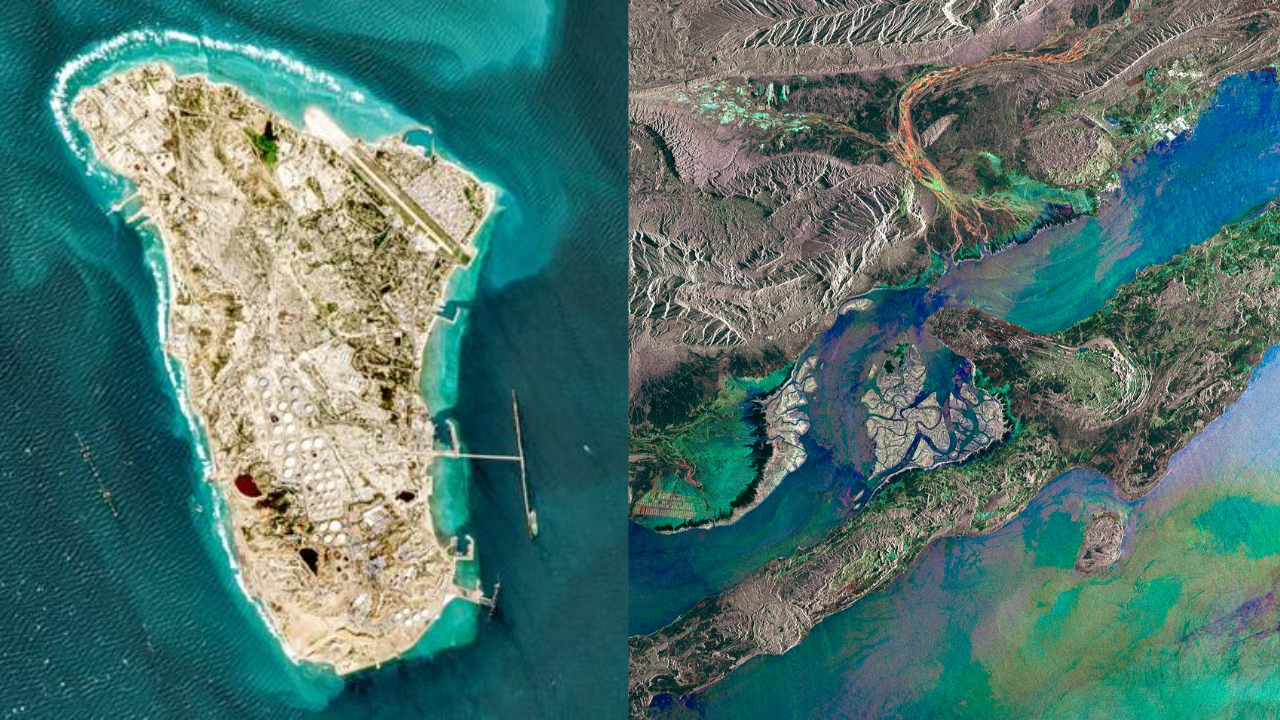
The armchair generals are at it again. Every time tensions flare in the Persian Gulf, a familiar list of Iranian islands—Kharg, Qeshm, Sirri, Abu Musa—gets cycled through cable news chyrons like a grocery list for a hypothetical kinetic strike. The consensus is lazy: hit the islands, choke the oil, win the war. It is a fundamental misunderstanding of 21st-century asymmetric warfare and the physical reality of the Strait of Hormuz.
If you think a few Tomahawk missiles directed at Kharg Island "solves" the Iran problem, you aren't paying attention to how the geography actually works. Targeting these islands isn't a masterstroke. It is a massive, expensive invitation to a global economic cardiac arrest that the West is uniquely unprepared to survive.
The Kharg Island Myth
Let’s start with the crown jewel of every "target list": Kharg Island. It handles roughly 90% of Iran’s crude exports. To the uninitiated, it looks like a single point of failure—a giant bullseye.
But here is the reality I’ve seen after years of analyzing energy security: blowing up Kharg does not just stop Iranian oil. It turns the Persian Gulf into a graveyard for global shipping. When you strike a terminal of that magnitude, you aren't just hitting a pier. You are initiating a regional ecological and navigational catastrophe. The smoke alone would ground air traffic across the UAE and Qatar. The insurance premiums for any tanker entering the Gulf would moon to the point of de facto closure.
You don't "target" Kharg. You euthanize the global energy market for six months. Anyone suggesting this as a "surgical" option is selling you a fantasy.
Qeshm and the Asymmetric Trap
Then there is Qeshm. The largest island in the Gulf. The media loves to talk about its "strategic position" near the mouth of the Strait. They imagine a conventional battle—destroyers vs. coastal batteries.
They are wrong.
Qeshm isn't a fortress; it's a hive. Iran’s strategy doesn't rely on big, shiny targets that can be picked off by a Predator drone. It relies on the "swarm." We are talking about hundreds of fast-attack craft, decentralized missile sites hidden in the rugged limestone terrain, and subsurface assets that don't need a massive port to operate.
If the U.S. targets Qeshm, they aren't "clearing the path." They are kicking a hornet's nest in a room where the floor is covered in gasoline. The Strait is only 21 miles wide at its narrowest point. The shipping lanes are even narrower—two miles wide in each direction, separated by a two-mile buffer. You don't need to sink a carrier to win here. You just need to sink one VLCC (Very Large Crude Carrier) in the channel.
The Fallacy of the "Quick Strike"
The "People Also Ask" sections of the internet are obsessed with how long it would take to neutralize these threats. They want a timeline.
- How long can Iran close the Strait of Hormuz?
- Can the U.S. Navy protect tankers from the islands?
These are the wrong questions. The real question is: What is the global economy’s tolerance for $250 a barrel oil?
You can strike Abu Musa. You can hit Sirri. You can even try to "pacify" the Greater and Lesser Tunbs. But the second a single Tomahawk touches those islands, you aren't just in a regional conflict. You are in a global supply chain meltdown. The 20 million barrels of oil moving through that 21-mile gap every day is the lifeblood of the global economy.
Imagine a scenario where the U.S. successfully "hits" all six islands. What then?
Iran’s response isn't a head-on naval engagement. It's the deployment of thousands of smart mines. It's the activation of sleeper cells in the regional oil infrastructure of neighboring states. It's the launch of hundreds of cheap, long-range drones that don't even need to sink a ship—they just need to hit one.
The Digital Front No One Mentions
The talk of "targeting islands" is so 20th century. It ignores the tech layer entirely. While the armchair analysts are busy circling Qeshm on a map, the real battle is being fought in the SCADA (Supervisory Control and Data Acquisition) systems that run the regional energy grid.
If you hit a physical island, you get a physical response. But the cyber-vulnerabilities of the Gulf’s energy infrastructure are a wide-open door. If the U.S. or its allies start a kinetic campaign against Iranian islands, expect the retaliatory strike to be digital. Imagine the irony of "securing" the Strait of Hormuz while the power grids in Dubai, Riyadh, and Houston are blinking out.
The Costs of Being Right
I have seen the simulation data. In a full-scale strike on these islands, the U.S. and its allies might "win" the tactical exchange in 72 hours. But the strategic cost is a multi-trillion-dollar hole in the global GDP.
Targeting Kharg or Qeshm is an admission of failure. It is the last resort of a power that has run out of ideas. It is not a strategy. It is a temper tantrum with global consequences.
The "experts" telling you it’s a clean list of targets are the same ones who thought Iraq would be a "cakewalk." They are looking at maps, not markets. They are counting missiles, not the cost of insurance. They are ignoring the sheer, brutal efficiency of asymmetric warfare in a chokepoint.
Stop looking at the islands. Look at the math. The math says we can't afford to win this fight.
The Fatal Flaw in Naval Escort
The "solution" always offered is naval escorts. The logic: if the islands are a threat, we'll just escort the tankers.
Have you ever seen a VLCC? They are floating cities. They have the maneuverability of a glacier. Putting a destroyer next to a tanker doesn't protect the tanker; it just gives the enemy two targets instead of one. In the narrow corridors of the Strait, the "islands" aren't just rocks in the water—they are permanent, unsinkable aircraft carriers.
If you want to understand the reality of the Strait of Hormuz, stop reading listicles about which islands "Trump might target." Start looking at the reality of 21st-century warfare. The days of "clearing the lanes" with a few strikes are over.
The islands aren't targets. They are the triggers for a global economic reset.
Pull the trigger and see what happens to the world as you know it.