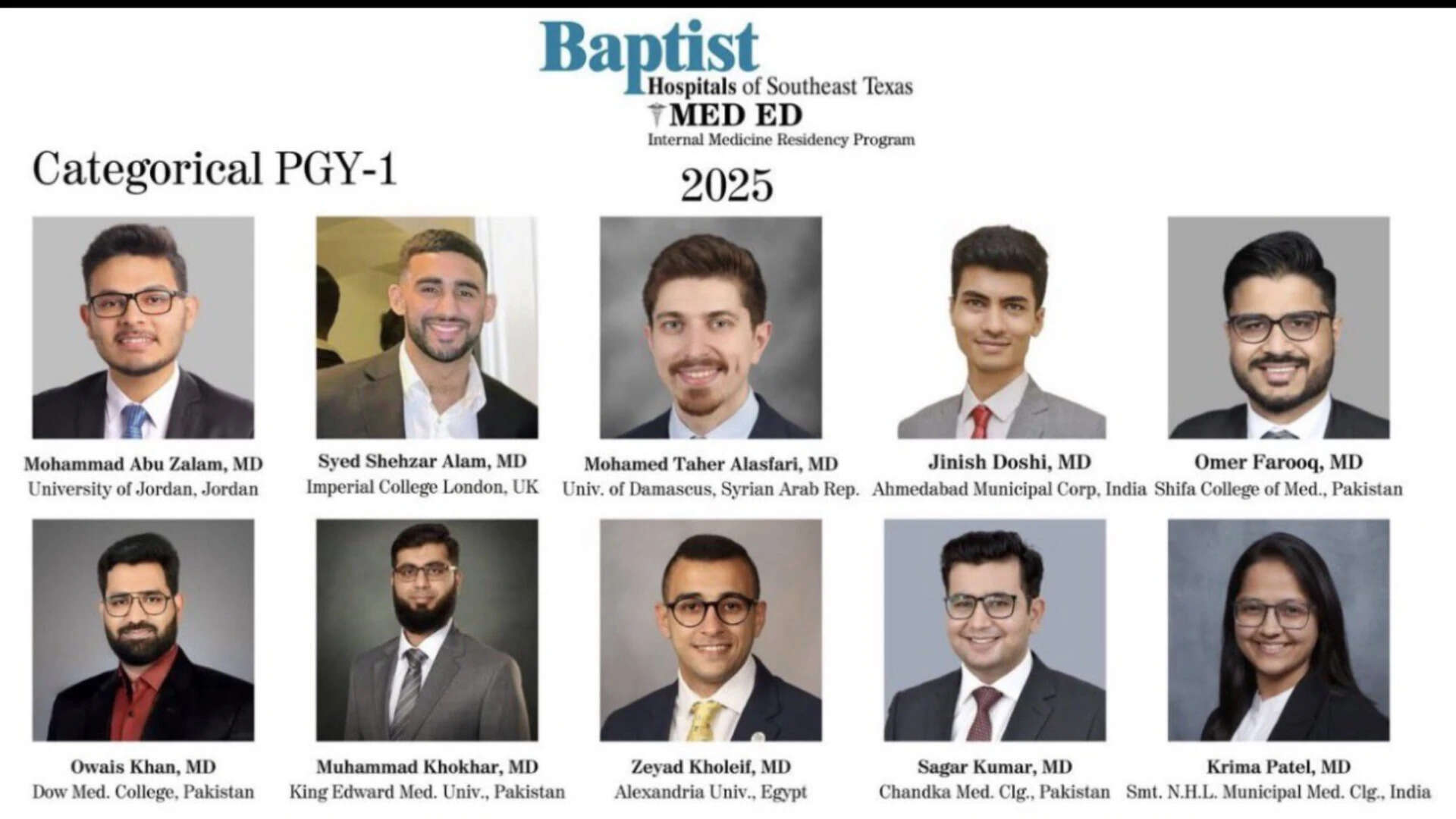
The latest firestorm involving Houston-based surgeon Mary Talley Bowden and a group of Pakistani medical residents isn't just another social media spat. It's a flashing red light for the future of healthcare. When Bowden, a prominent voice against vaccine mandates, took to X to call out Baptist Hospitals of Southeast Texas for its incoming class of internal medicine residents, she wasn't just sharing a roster. She was signaling a shift toward a brand of medical nativism that threatens to hollow out the clinics and hospitals you rely on.
She pointed out that all 13 residents were international medical graduates, specifically highlighting that six were from Pakistan. The implication was clear: why aren't these jobs going to "our own"? It’s a seductive argument if you don't know how the system works, but it falls apart the second you look at the math.
The Reality of the Residency Match
Every year, thousands of medical students across the globe enter a high-stakes computer algorithm known as "The Match." It's not a conspiracy. It’s a brutal, merit-based system designed to fill the massive gaps in the American physician workforce. If a community hospital in Beaumont, Texas, ends up with a class of doctors from Pakistan, India, and Jordan, it’s because those individuals were the most qualified candidates willing to serve that specific community.
The U.S. is facing a projected shortage of up to 86,000 physicians by 2036. We aren't in a position to be picky about where a talented doctor went to school. International Medical Graduates (IMGs) often take the "unpopular" jobs—primary care in rural areas, inner-city clinics, and community hospitals that domestic graduates frequently overlook in favor of high-paying specialties in big cities. If you live in a town that isn't a major metro hub, there's a high chance an IMG is the reason your local ER is still open.
The Viral Response That Missed the Point
The row took a bizarre turn when commentator Richard Hanania jumped in with a jab that set the internet off. He quipped, "At least the Pakistanis won’t kill their patients," a direct shot at Bowden’s anti-vaccine stance. While the internet loves a good "burn," this kind of rhetoric is just as unhelpful as the original post.
Suggesting that foreign doctors are "safer" because of their stance on a single medical issue is just the flip side of the same prejudiced coin. It turns medical professionals into political footballs. The truth is far more boring: these doctors are highly trained professionals who have jumped through more hoops than domestic graduates just to get a foot in the door. They have to pass the same boards, complete the same certifications, and prove their worth tenfold.
Why Pakistanis and Indians Dominate the IMG Pool
You might wonder why Pakistan specifically comes up so often. It’s simple. Pakistan and India have some of the most rigorous English-language medical curricula in the world. Their graduates are hungry for the advanced technology and research opportunities available in the West.
- Standardization: Their medical schools often mirror Western standards.
- Need: Many of these doctors come from regions where "doing more with less" is a daily reality, making them incredibly resourceful in a clinical setting.
- Selection: Only the top tier even attempts to make it to the U.S. residency system.
When someone like Bowden singles them out, she isn't just "asking questions." She's attacking the very pipeline that keeps American healthcare from collapsing under its own weight.
The Growing Hostility Toward Foreign Medics
This isn't just a Texas problem. In the UK, the Academy of Medical Royal Colleges recently warned that a "hostile environment" is driving foreign doctors away from the NHS. When the rhetoric turns to "foreigner bad," the best and brightest simply go elsewhere. Canada, Australia, and the Middle East are more than happy to take the talent that the U.S. and UK are currently insulting.
Imagine showing up to a hospital in a crisis only to find there’s no one to treat you because the residents were bullied out of the country. That's not a hypothetical. It's the logical conclusion of this line of thinking. Patients don't care about a doctor's birthplace when they're having a heart attack; they care about the hands holding the scalpel.
Stop Politicizing the Staff Lounge
The crossover between anti-vaccine advocacy and anti-immigrant sentiment is a new and messy development. It’s an attempt to discredit the medical establishment by attacking the identity of the people within it. If you can’t win the argument on the science, you attack the "outsider" status of the scientist.
We need to be honest about the stakes. The medical system is a house of cards held together by international talent. If we let social media influencers dictate who is "worthy" of treating us based on their passport, we’re the ones who will pay the price in the waiting room.
Next time you see a viral post "calling out" the demographics of a medical team, ask yourself what the alternative looks like. It usually looks like a "Closed" sign on the clinic door. If you want to support American healthcare, start by supporting the people actually doing the work, regardless of where they grew up. Reach out to your local hospital board or medical society and voice your support for diverse, international staffing—it's the only way the lights stay on.