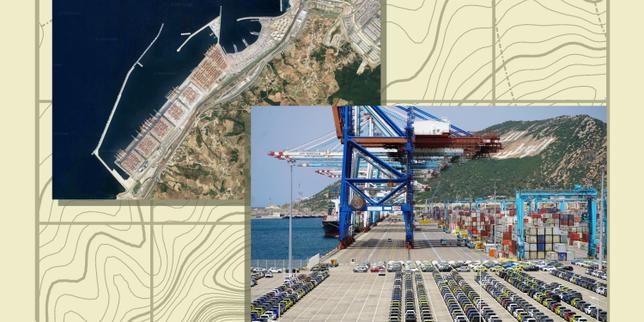
Tanger Med operates as the central nexus of North African maritime commerce, handling over nine million TEUs annually by exploiting a geography that sits at the intersection of the Mediterranean Sea and the Atlantic Ocean. The port's economic model relies on two primary mechanics: transshipment operations for global ocean carriers and an adjacent industrial zone that converts raw material imports into finished exports destined for European markets. This architecture now faces a structural squeeze. Chinese industrial manufacturers, fleeing domestic overcapacity and seeking tariff-neutral launchpads into the European Union, are deploying massive foreign direct investment into the Tanger Med industrial corridor. Simultaneously, European regulators are tightening rules of origin, implementing carbon border adjustments, and probing state-subsidized supply chains, converting Morocco's greatest strategic asset—its nearshoring proximity—into a regulatory target.
The Trilemma of Moroccan Industrial Policy
Moroccan trade strategy rests on three distinct operational pillars that are entering structural conflict.
- Tariff-Free Market Access: Morocco maintains a network of free trade agreements (FTAs) covering more than 50 nations, most notably with the European Union (under the 1996 Association Agreement) and the United States (effective 2006). These agreements allow goods manufactured within Moroccan free zones to enter Western markets with reduced or eliminated duties, provided local value-addition thresholds are met.
- Capital Neutrality and Open Foreign Investment: To build capital stock rapidly, the Moroccan state offers tax holidays, subsidized land, and streamlined currency repatriation for foreign industrial entities operating within the Tanger Med Special Economic Zone.
- Supply Chain Integration with China: Chinese industrial firms control critical nodes in battery chemistry, critical minerals processing, and electric vehicle (EV) component manufacturing. Moroccan infrastructure projects rely heavily on Chinese equipment, construction engineering, and upstream raw material inputs.
The intersection of these three pillars creates an operational friction point. European economic strategy increasingly focuses on strategic autonomy and defense against subsidies. When Chinese capital builds component factories inside Tanger Med to export goods into Europe under the EU-Morocco FTA, Western policymakers view the arrangement not as Moroccan industrialization, but as transshipment via manufacturing.
The Mechanisms of European Regulatory Backlash
European trade barriers are evolving beyond traditional tariffs into complex regulatory filters designed to inspect input provenance. Tanger Med's industrial base faces three specific regulatory mechanisms from Brussels.
Rules of Origin Scrutiny
Under preferential trade agreements, goods qualify for duty-free entry only if a specified percentage of total production cost originates within the partner nation. Traditional manufacturing permitted high levels of imported intermediate inputs if a "sufficient transformation" occurred locally. Revised European trade enforcement frameworks examine the entire value chain. If a Chinese battery manufacturer imports cathode active materials from China, processes them in a Moroccan facility using Chinese-manufactured capital equipment, and exports the final assembly to France, European customs authorities can deem the product non-originating, subjecting it to standard tariffs.
The Carbon Border Adjustment Mechanism
The European Union's Carbon Border Adjustment Mechanism (CBAM) levies costs on imported goods based on the embedded greenhouse gas emissions generated during production. The Tanger Med industrial complex relies heavily on the national Moroccan electrical grid, which remains reliant on coal for a significant portion of its baseline power generation. Unless industrial tenants secure direct, off-grid power purchase agreements with renewable generators, products exported from the zone bear an embedded carbon penalty that reduces their cost competitiveness against domestic European manufacturers operating under decarbonized power grids.
Anti-Subsidy and Foreign Subsidies Regulation
The EU Foreign Subsidies Regulation (FSR) grants European regulators authority to investigate and penalize non-EU companies operating within the internal market if those companies receive market-distorting subsidies from third-country governments. Chinese enterprises setting up production at Tanger Med frequently receive cheap capital, state-backed loans, and equipment subsidies from Beijing. When these companies market their goods within EU member states, European competitors can trigger formal FSR investigations, threatening import halts and financial penalties on the supply chains originating in northern Morocco.
Chinese Supply Chain Arbitrage at Tanger Med
Chinese industrial strategy in Morocco focuses heavily on EV battery materials, cathode production, and automotive components. China controls over 70 percent of global battery refining capacity and seeks to protect its market share against Western protectionism by establishing local production nodes close to European automotive plants.
The economic logic for Chinese firms operating at Tanger Med rests on cost differentials:
- Logistical Compression: Shipping processed materials from Tanger Med to European assembly plants takes two to three days, compared to four to six weeks from East Asian ports.
- Labor and Land Costs: Industrial labor costs in northern Morocco remain significantly lower than in Southern or Central Europe, while offering higher technical training standards relative to Sub-Saharan Africa.
- Infrastructure Capital: The Moroccan state has invested billions of dollars into deep-water berths, rail connections, and highway networks surrounding Tanger Med, lowering the capital expenditure required for foreign firms to set up logistics infrastructure.
This setup creates a structural vulnerability for the port authority and the broader regional economy. If Chinese firms view Tanger Med merely as a low-cost, tariff-evasion platform rather than a long-term capital commitment, any shift in European trade policy that closes regulatory loopholes will trigger rapid capital flight, leaving behind underutilized industrial infrastructure.
Operational Constraints on Moroccan Autonomy
Moroccan economic planners cannot easily balance these opposing pressures due to underlying systemic constraints.
First, domestic capital markets lack the liquidity required to replace Chinese direct investment. Developing high-value manufacturing ecosystems—such as cathode plants or automotive semiconductor assembly—demands billions of dollars in upfront capital. Western private equity and industrial firms have historically hesitated to match Chinese investment velocity in North African manufacturing infrastructure, leaving Chinese state and private firms as the primary source of heavy capital deployment.
Second, technology transfer remains minimal. While foreign industrial projects generate operational jobs, core intellectual property, supply chain management software, and high-level engineering oversight often stay within the home jurisdiction of foreign firms. This dynamic leaves local suppliers executing lower-margin assembly tasks rather than capturing high-margin research and development value.
Third, energy grid transition rates dictate industrial compliance timelines. Replacing fossil-fuel baseline power with solar and wind capacity across the northern industrial corridor requires significant grid modernization and storage infrastructure. Until this transition completes, energy-intensive tenants at Tanger Med remain exposed to European carbon import fees.
Strategic Realignment Requirements
Navigating this trade environment requires a restructuring of how Tanger Med integrates foreign investment into its industrial zones.
Morocco must reform its investment screening mechanisms to evaluate incoming foreign capital through a regulatory compliance lens. Rather than prioritizing gross capital expenditure, the state must evaluate incoming manufacturing projects based on their ability to clear European rules of origin and carbon emissions standard thresholds. Foreign firms operating within the zone must be required to integrate a minimum ratio of domestic upstream suppliers, ensuring authentic local value creation that withstands European customs audits.
In tandem, investment incentives must shift directly toward utility-scale renewable power contracts reserved exclusively for export-oriented manufacturers within the Tanger Med ecosystem. Securing verified zero-carbon power supply for industrial tenants neutralizes CBAM penalties, preserving the port's core cost advantage over non-EU production hubs.
Failure to execute this structural shift risks transforming Tanger Med from a premier global trade hub into a contested zone of international trade litigation, exposing the Moroccan industrial strategy to continuous regulatory disruption from its primary export market.