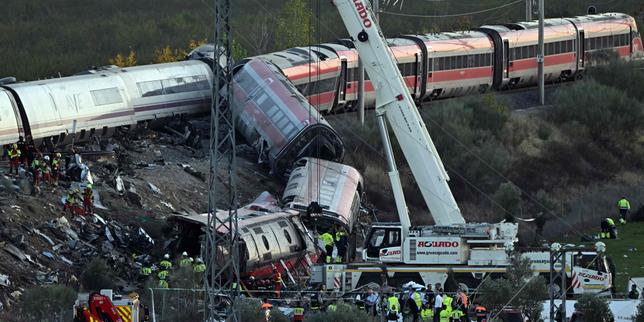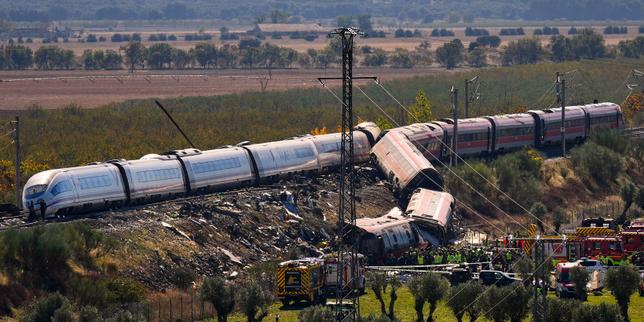
Two major railway catastrophes in Spain within a twelve-month window cannot be dismissed as statistical anomalies or isolated human errors. When a national transport network suffers a second fatal derailment or collision less than a year after a tragedy of the scale of Adamuz, the root cause shifts from operator negligence to structural and systemic degradation. A rigorous operational audit of the Spanish rail ecosystem—spanning infrastructure management under Adif, rolling stock operations across competing carriers, and regulatory oversight—reveals a classic failure mode described in safety engineering as Normal Accident Theory.
Standard media coverage treats each rail disaster as a discrete narrative defined by immediate mechanical failure, weather anomalies, or localized signaling faults. That framing obscures the true mechanics of infrastructure decay. High-density rail networks operate as tightly coupled, complex systems where minor degradations in track geometry, deferred maintenance budgets, and increased traffic volume compound until a routine perturbation triggers a catastrophic cascade.
The Structural Anatomy of Compounding Rail Risk
To understand why Spain’s rail network is experiencing clustered failures, analysts must separate proximate triggers from systemic vulnerabilities. A proximate trigger might be a fractured rail weld, an uncalibrated axle counter, or a misread European Rail Traffic Management System (ERTMS) signal. Systemic vulnerabilities are the organizational and economic conditions that allow those triggers to exist undetected and unmitigated.
The Spanish rail sector has undergone rapid structural transformation over the past decade, driven by European Union railway liberalization packages. While passenger volumes on high-speed corridors surged following the entry of private operators like Iryo and Ouigo alongside state incumbent Renfe, capital expenditure and preventative maintenance on conventional and mixed-traffic lines faced persistent resource allocation bottlenecks.
This creates a bifurcated network risk profile:
- High-Speed Corridor Saturation: Increased train frequency on the Madrid-Andalusia and Madrid-Barcelona axes compresses overnight maintenance windows. Track tamping, ultrasonic rail flaw detection, and catenary inspections are forced into narrower temporal slots, increasing the probability that micro-fissures in steel rails progress to critical failure between inspection cycles.
- Conventional Network Underinvestment: Regional and freight lines—often sharing trackage or junctions with high-speed feeders—suffer from aging interlocking systems and legacy signaling infrastructure (such as ASFA Digital rather than full ERTMS Level 2). When maintenance capital prioritizes flagship high-speed expansions over baseline asset renewal, mean time between failures (MTBF) drops across the secondary network.
- Interface Friction: The most acute risk resides at transition zones where high-speed lines merge with conventional tracks, or where different rolling stock architectures interact with variable track tolerances. In the context of the Adamuz incident and subsequent disruptions in Andalusia, these physical and operational interfaces act as stress concentrators.
Applying Normal Accident Theory to Iberian Infrastructure
Sociologist Charles Perrow’s Normal Accident Theory demonstrates that in systems characterized by high interactive complexity and tight coupling, catastrophic failures are inevitable once safety margins are eroded. The Spanish rail network exhibits both traits in extreme measure.
Interactive complexity refers to the presence of unfamiliar, unplanned, or unexpected sequences of interactions that are either not visible or not immediately comprehensible to operators. Modern rolling stock relies on dense arrays of onboard sensors communicating with trackside balises and centralized traffic control (CTC) centers. When a sensor fault occurs simultaneously with a localized power fluctuation or an unscheduled speed restriction, the resulting alarm flood can mask the actual physical hazard—such as ballast washout or rail buckling.
Tight coupling means there is no slack or buffer between system components; a failure in one node rapidly propagates to others without opportunity for human intervention. On a high-density corridor, trains operate at tight headways. If a leading train experiences a bogie failure or strikes debris, the stopping distance of a following train traveling at 250 to 300 kilometers per hour exceeds visual sightlines entirely. Safety depends 100 percent on automated braking curves and real-time track circuit integrity. When those automated layers fail—or when crews are forced to operate under degraded modes with manual authorizations—the buffer disappears.
The Maintenance Deficit and Economic Trade-offs
Infrastructure operators face a fundamental optimization problem: maximizing track availability for revenue-generating train paths while minimizing lifecycle maintenance costs. In economic terms, this is an intertemporal trade-off. Deferring preventative maintenance reduces short-term operational expenditure (OpEx) and boosts immediate network capacity, yet it accrues technical debt that manifests later as nonlinear spikes in failure rates.
Consider the mechanics of rolling contact fatigue (RCF) on steel rails. Every axle pass exerts immense Hertzian contact stress on the railhead. Under controlled conditions, scheduled rail grinding removes microscopic surface cracks before they propagate downward into the web of the rail. If budget constraints or schedule congestion delay grinding cycles by even 15 to 20 percent of cumulative tonnage, subsurface cracks accelerate exponentially. Once a transverse defect reaches critical size, a single heavy axle load can shatter the rail instantaneously, leaving no warning for the oncoming train.
The competitor’s framing of these tragedies as a string of cruel misfortunes ignores this basic metallurgy and operations research. Fatalities on modern rail networks rarely stem from unforeseeable acts of nature; they are the predictable output of maintenance intervals stretched beyond the physical endurance limits of steel, concrete, and copper.
Regulatory Capture and the Post-Accident Investigation Bottleneck
When a rail disaster occurs in Spain, the formal investigation falls to the Comisión de Investigación de Accidentes Ferroviarios (CIAF). A recurring vulnerability in European rail governance is the structural proximity between accident investigation bodies, infrastructure managers (Adif), and transport ministries.
Effective root-cause analysis requires institutional independence capable of indicting upper-level budget decisions and regulatory standards, not merely frontline train drivers or local dispatchers. Historically, technical investigations across European rail networks have exhibited a bias toward blaming operator error—such as failing to reduce speed sufficiently before a curve or misinterpreting a degraded-mode protocol—while treating the absence of automated fail-safes as an acceptable baseline condition.
If the post-Adamuz regulatory response focused narrowly on localized procedural circulars rather than overhauling automated speed supervision and track-monitoring frequencies, the underlying hazard remained active across the network. A second catastrophe within the same year validates the hypothesis that corrective actions after the first event failed to address systemic latent conditions.
Differentiating Known Operational Realities from Analytical Hypotheses
In evaluating consecutive rail disasters before final forensic reports are published, rigorous analysis requires strict separation between established engineering facts and working hypotheses:
- Established Facts: Spain operates Europe’s longest high-speed rail network alongside an extensive conventional network; liberalization has driven record traffic density on core corridors; extreme seasonal temperature swings in central and southern Spain induce severe thermal expansion and contraction stresses in continuous welded rail; and major tragedies occurring within a twelve-month span indicate an elevated baseline risk profile.
- Educated Hypotheses: The clustering of severe incidents points toward either an unaddressed systemic vulnerability in track-side asset monitoring (such as insufficient deployment of acoustic bearing detectors and automated geometry inspection cars) or organizational strain caused by integrating higher train frequencies onto infrastructure with uneven maintenance backlogs.
- Unknowns Pending Forensic Telemetry: Until event recorders (black boxes) and track-side maintenance logs are audited independently, analysts cannot determine the exact ratio between rolling stock mechanical failure, track bed instability, and signaling system latency in the latest incident.
Limitations of Technological Fixes
A common institutional reflex following high-profile rail accidents is to announce accelerated procurement of advanced signaling hardware or AI-driven predictive maintenance software. Practitioners who manage heavy civil infrastructure recognize the limitations of purely technological remedies.
Sensors cannot compensate for physical asset degradation if maintenance crews lack the track possession time to execute repairs. Installing fiber-optic acoustic sensing along every kilometer of track will generate terabytes of anomaly alerts, yet if operational pressures prevent dispatchers from imposing immediate temporary speed restrictions (TSRs) or halting traffic for emergency welding, the data stream merely documents the disaster in higher resolution.
Furthermore, introducing complex new software layers onto legacy electromechanical interlocking systems often increases interactive complexity. Unless accompanied by simplified operating rules, rigorous staff training on degraded-mode operations, and strict enforcement of maintenance windows, technology upgrades can inadvertently create new failure pathways.
Strategic Restructuring for Network Resilience
Preventing a third catastrophe within the same operational cycle requires dismantling the economic and scheduling incentives that erode safety margins. Transport ministries and infrastructure managers must execute four structural interventions immediately:
First, decouple track access pricing and capacity allocation from short-term political targets for passenger volume growth. Network capacity must be calculated strictly from verified maintenance windows, granting track engineering teams non-negotiable possession blocks for ultrasonic testing, tamping, and rail grinding.
Second, mandate independent, real-time public auditing of deferred maintenance backlogs across both high-speed and conventional networks. Transparency forces capital allocation toward high-risk junctions, aging bridges, and legacy signaling zones before structural fatigue reaches failure thresholds.
Third, eliminate single-point human failure modes on all passenger-carrying lines by accelerating the replacement of legacy warning systems with continuous speed-supervision architectures capable of enforcing braking curves independent of driver reaction time.
Fourth, reform accident investigation governance to ensure total financial and administrative independence from the Ministry of Transport, empowering investigators to audit executive budget allocations and safety management systems directly. Until Spain’s rail governance prioritizes physical asset integrity over headline capacity expansion, the network will continue operating inside the statistical red zone of Normal Accident Theory.