The headlines missed the entire point. Again.
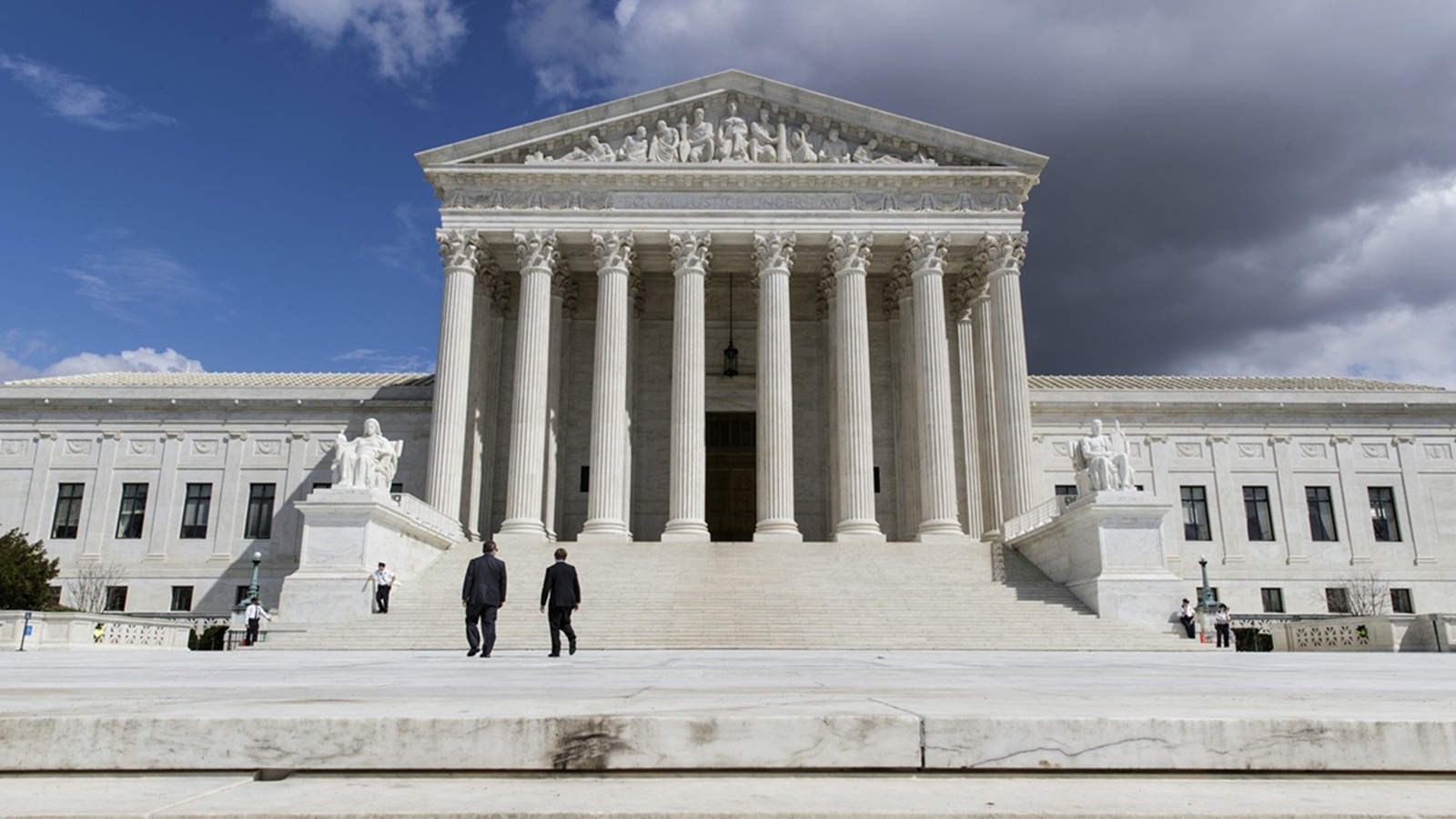
When the US Supreme Court rejected Bayer’s latest appeal regarding lawsuits alleging that Roundup weedkiller causes cancer, the mainstream media trotted out its favorite predictable narratives. Outlets framed it as either a devastating blow to corporate shielding or a catastrophic failure to protect public health. You might also find this connected article insightful: Targeting American Booze While Protecting Potash Proves Saskatchewan Misses The Entire Point.
Both sides are entirely wrong.
The real story here is not about whether glyphosate causes non-Hodgkin lymphoma. The EPA says it does not. The European Chemicals Agency says it does not. Regulatory bodies in Canada, Australia, and Japan say it does not. The real story is how the American civil justice system has completely decoupled from scientific consensus, allowing junk science and emotional jury appeals to override federal regulatory frameworks. As highlighted in latest articles by Investopedia, the implications are worth noting.
By refusing to hear the case, the Supreme Court did not rule on the safety of weedkiller. It punted on a critical constitutional question of federal preemption. In doing so, it left American agriculture exposed to a multi-billion-dollar litigation tax driven by trial lawyers, not toxicologists.
The Illusion of the Corporate Bailout
Every corporate compliance officer and corporate defense attorney knew what was at stake in this appeal. Bayer was banking on the legal doctrine of express preemption under the Federal Insecticide, Fungicide, and Rodenticide Act (FIFRA).
The logic is straightforward:
- Under FIFRA, the Environmental Protection Agency (EPA) has exclusive authority over pesticide labeling.
- The EPA has explicitly stated, repeatedly, that a cancer warning on glyphosate products would be "misleading" and therefore illegal under federal law, because the agency’s extensive reviews show the chemical is not a carcinogen.
- Therefore, state-law tort claims arguing that Bayer failed to warn consumers about cancer risks should be legally preempted. A company cannot be sued under state law for failing to do something that federal law explicitly prohibits them from doing.
The Ninth Circuit disagreed, creating a bizarre paradox where a company must violate federal mandates to escape state-level liability. By declining to review this chaos, the Supreme Court did not vindicate the plaintiffs. It simply chose cowardice over clarity.
I have spent decades watching corporations navigate regulatory friction. What we are seeing now is not the triumph of the little guy; it is the weaponization of the legal system to extort settlements out of deep-pocketed defendants based on cherry-picked data. When a regulatory framework can be completely overturned by twelve citizens in a California courtroom who were selected precisely because they have no background in biochemistry, the predictability required for industrial innovation vanishes.
The Hazard vs. Risk Flaw
To understand why the litigation industry won this round, you have to understand the intentional confusion between "hazard" and "risk."
The entire universe of Roundup litigation rests on a single 2015 classification by the International Agency for Research on Cancer (IARC), an arm of the World Health Organization. IARC classified glyphosate as "probably carcinogenic to humans" (Group 2A).
The media ran with this as absolute proof of danger. What they ignored—and what plaintiffs' lawyers actively obscured—is that IARC conducts hazard assessments, not risk assessments.
- Hazard looks at whether a substance can cause harm under any circumstances, at any dose, no matter how unrealistic. IARC puts glyphosate in the same category as red meat, hot beverages, and working night shifts.
- Risk measures the likelihood of harm under actual conditions of use.
Imagine a scenario where a scientist determines that a tiger is a severe hazard. This is undeniably true. If you are locked in a cage with a hungry tiger, your risk is exceptionally high. But if that tiger is behind reinforced glass at a zoo, the hazard remains identical, while your risk drops to zero.
The EPA, Health Canada, and the European Food Safety Authority conduct comprehensive risk assessments. They look at how farmers and homeowners actually apply the product. Their conclusions have been uniform: used according to label instructions, glyphosate does not pose a public health threat. Yet, the tort system treats the IARC hazard identification as an infallible truth while tossing decades of peer-reviewed risk data into the trash.
How the Litigation Machine Manufactures Science
How does a plaintiff convince a jury to ignore the global scientific consensus? You build a parallel scientific universe.
Mass tort law firms do not merely find victims; they create markets. They spend tens of millions of dollars on late-night television ads and targeted social media campaigns to aggregate thousands of plaintiffs. Once they have the volume, they fund their own networks of expert witnesses.
These experts are paid thousands of dollars an hour to testify that the EPA is corrupt, that corporate cover-ups are afoot, and that a single statistical outlier in an epidemiological study outweighs fifty comprehensive animal studies. They use highly emotional presentations, showing pictures of suffering patients to juries who are understandably sympathetic.
But sympathy is a terrible metric for establishing biological causation.
If you look at the agricultural data, the rate of non-Hodgkin lymphoma among American farmers—who apply glyphosate at vastly higher rates than the general public—has not tracked with the explosion of glyphosate use over the last forty years. In fact, large-scale, independent studies like the Agricultural Health Study, which tracked over 50,000 licensed pesticide applicators for decades, found no statistically significant link between glyphosate use and non-Hodgkin lymphoma.
Juries are never forced to reckon with the Agricultural Health Study. They are shown internal corporate emails from twenty years ago containing poorly phrased sentences written by defensive middle managers. The trial becomes a morality play rather than a scientific inquiry.
The Invisible Cost to Consumers
There is no free lunch in global supply chains. When a company faces a $16 billion litigation reserve for a single product, those costs do not just vanish into corporate balance sheets. They are extracted directly from the agricultural economy.
Glyphosate revolutionized modern farming. It enabled no-till agriculture, which significantly reduces soil erosion and carbon emissions by eliminating the need to plow fields mechanically. If farmers are forced to abandon glyphosate due to artificial supply constraints or skyrocketing litigation costs passed down through product pricing, they will return to older, harsher chemicals and more carbon-intensive farming methods.
The yield reductions alone would drive up food prices globally. For an industry operating on razor-thin margins, an increase in input costs or a forced shift to less efficient weed management systems means smaller farms go under. The irony is staggering: a legal campaign ostensibly launched to protect human health will ultimately make nutritious food more expensive for the poorest segments of society.
The Structural Downside of Corporate Capitulation
If there is a flaw in my argument, it lies in the behavior of corporate boards. Companies like Bayer brought much of this disaster upon themselves through disastrous M&A execution and defensive legal strategies.
Bayer bought Monsanto for $63 billion in 2018, arguably one of the worst corporate acquisitions in history. They completely underestimated the hostility of the American tort system and the sheer velocity of mass tort aggregation. Their strategy was to settle their way out of the problem, allocating billions to clear the decks.
The downside to this approach is obvious: it feeds the beast.
When plaintiff firms see a multi-billion-dollar settlement fund, they do not pack up and go home. They redirect that capital into filing more lawsuits against different targets. By choosing settlement over scorched-earth litigation in the early stages, corporate leadership validated the economic model of mass tort extortion. They made it profitable to sue them.
Dismantling the Precedent
The Supreme Court’s refusal to grant certiorari means we are stuck with a fragmented, state-by-state standard for chemical safety. A product can be deemed perfectly safe by federal scientists in Washington, D.C., yet carry a multi-million-dollar liability penalty in San Francisco.
This creates an unmanageable precedent for every sector of industrial technology. Consider the implications for other fields:
- Pharmaceuticals: If federal FDA approval no longer preempts state-level failure-to-warn claims, drug manufacturers face endless liability even when following strict federal labeling guidelines.
- Aviation: If FAA safety certifications can be second-guessed by state tort juries applying localized standards, the uniformity required for national airspace safety collapses.
- Automotive: If NHTSA crash-test standards do not protect manufacturers from conflicting state-level design defect claims, vehicle design becomes governed by litigation risk rather than engineering principles.
We have allowed the civil litigation system to become a shadow regulator, one that operates without transparency, accountability, or scientific expertise. The Supreme Court had an opportunity to restore the constitutional balance between federal authority and state tort law. Instead, they walked away from the fight.
Do not look at the Roundup litigation as a victory for safety. Look at it for what it truly is: a symptom of a legal system that values emotional persuasion over empirical reality, imposing an unvetted tax on the foundational industries that keep the modern world fed and functional.


