The British government didn't just move the goalposts on protest; it dug up the field. If you've been following the recent wave of arrests at RAF Lakenheath, you're seeing the first real-world consequences of Palestine Action being officially designated as a terrorist organization.
Seven people were recently picked up by police for allegedly supporting the group at the Suffolk airbase. This isn't your standard "aggravated trespass" or "obstruction of the highway" charge. Because the group is now proscribed under the Terrorism Act 2000, the legal landscape has shifted from civil disobedience to national security territory. Supporting them isn't just a radical political stance anymore—it's a crime that carries a potential 14-year prison sentence.
The Lakenheath crackdown explained
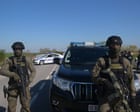
The latest arrests didn't happen in a vacuum. RAF Lakenheath has become a flashpoint for two reasons: its role as a hub for US fighter jets and persistent reports about the return of American nuclear weapons to British soil. When protesters showed up to block the gates, they weren't just met with local Suffolk constabulary; they were met with a legal framework designed to dismantle paramilitary groups.
Police aren't just looking for people throwing red paint or scaling fences. Under Section 12 of the Terrorism Act, you can be arrested for simply "inviting support" for a proscribed group or wearing clothing that suggests you're a member. During the Lakenheath actions, officers have been scrutinizing placards and t-shirts with a level of intensity usually reserved for active terror cells.
What changed with the Palestine Action ban
For years, Palestine Action operated as a direct-action network focused on sabotaging the UK arms industry, specifically targeting Elbit Systems. They'd smash windows, drench buildings in red paint, and occupy roofs. While they were frequently arrested, they often won in court by using the "necessity" defense—arguing their small-scale damage was intended to prevent the much larger "crime" of genocide in Gaza.
That loophole is effectively closed. By labeling them a terrorist group, the government has bypassed the need to prove specific criminal damage in many cases. Now, the state only needs to prove you're associated with the "brand" of Palestine Action.
The risk of "I oppose genocide" placards
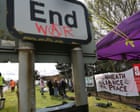
A strange legal battle is currently playing out across the UK, including at the Lakenheath protests. Hundreds of people, many of them retirees and professionals, have started carrying signs that read: "I oppose genocide. I support Palestine Action."
They're doing it to dare the police to arrest them. It's a strategy of mass defiance meant to make the ban unworkable. In London alone, over 500 people were processed in a single day for holding these signs. At Lakenheath, the seven recent arrests highlight that the police are willing to follow through, even when the "support" is purely verbal or written on cardboard.
If you're planning to attend a protest at a sensitive site like Lakenheath or Brize Norton, you need to understand that the rules have changed. The police are no longer just managing a crowd; they're gathering evidence for counter-terrorism units.
Real consequences for protesters
The "Filton 24" and the "Brize Norton 5"—groups of activists currently held on remand—provide a grim preview of what's ahead. Some of these individuals have been in prison for months without a trial, facing conditions far harsher than standard protesters. There have been reports of hunger strikes and "non-association orders" where they're kept away from other inmates.
What you need to know before you go
- The 14-Year Shadow: Membership or "inviting support" for Palestine Action can lead to a decade-plus in prison. Even "expressing an opinion" that is supportive can be enough for an arrest.
- Identification Matters: Police at Lakenheath are using "street bail" systems to harvest data. If you're arrested under the Terrorism Act, they have significantly broader powers to seize your phone and search your home.
- The Base is Federal: Remember that RAF Lakenheath houses US personnel. Actions there involve both UK law and international military agreements, which usually results in a much faster and more aggressive security response than a protest at a corporate office.
Don't mistake the police's initial calm for leniency. They're filming everything. In the eyes of the current UK legal system, there's no longer a distinction between a "peace activist" and a "terrorist supporter" if the name Palestine Action is involved. If you're going to stand at those gates, do it with your eyes open to the fact that the state is now using its heaviest hammers to crack this nut.
The next step for anyone concerned about these civil liberties is to watch the ongoing judicial reviews. Legal challenges are currently trying to quash the proscription order, arguing it's an overreach that criminalizes political speech. Until a judge says otherwise, that t-shirt in your closet is a legal liability.