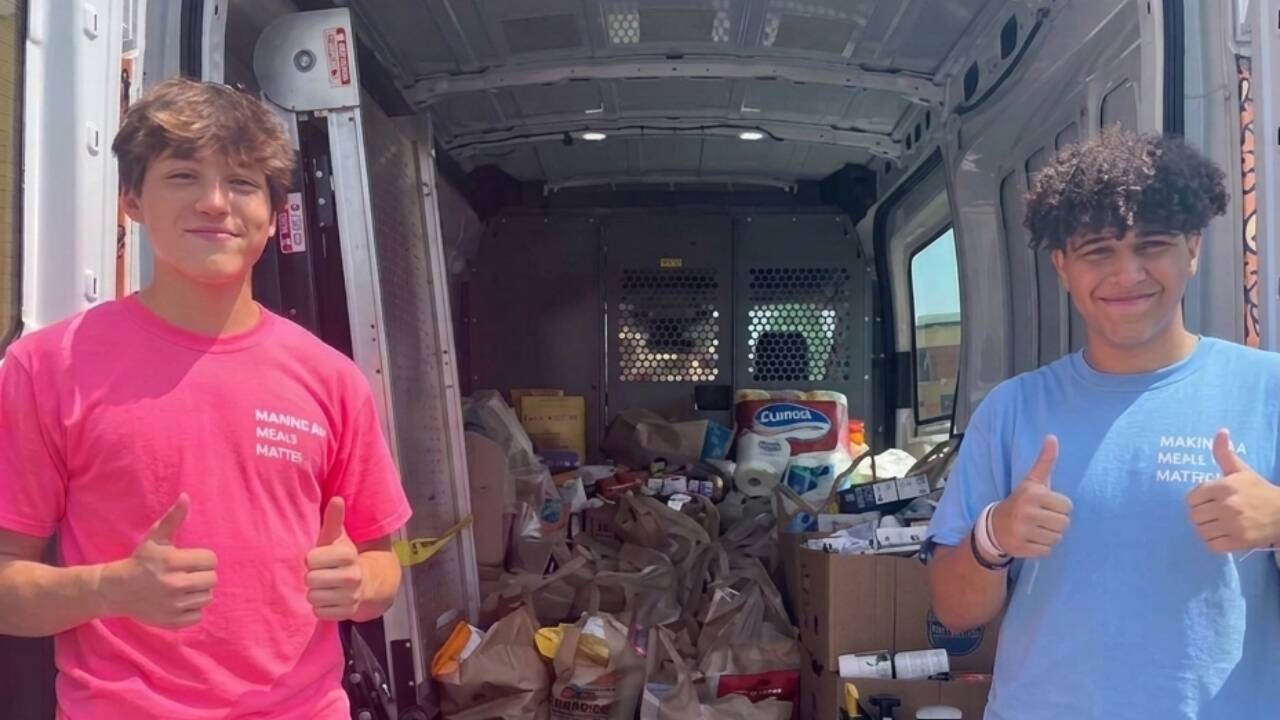
Two University of Wisconsin students built a volunteer network to fight hunger by solving a logistics problem that institutional food banks consistently overlook—the "last-mile" transport gap between surplus food donors and local pantries. Instead of raising money for canned goods or running traditional food drives, these students organized a decentralized fleet of student drivers to rescue perishable, high-nutrient food from campus dining halls, local grocers, and regional farms before it hits the dumpster.
Their operation exposes a brutal truth about modern food insecurity. America does not have a food shortage. It has a distribution failure.
Every year, tens of billions of pounds of edible food rot in landfills while millions of Americans—including a staggering percentage of college students—skip meals to pay rent or buy textbooks. Traditional charitable food systems were designed decades ago to move shelf-stable commodities in bulk. They rely on centralized warehouses, rigid weekday delivery schedules, and commercial-grade refrigeration trucks. When a university dining hall finishes a Tuesday dinner rush with forty pounds of untouched roasted chicken and steamed vegetables, or a local grocery store pulls slightly bruised produce from its shelves at closing time, the legacy hunger-relief apparatus is simply too slow to catch it. By the time a traditional food bank can schedule a pickup, the food is spoiled or legally unrecoverable.
The Architecture of a Student-Run Rescue Network
To understand why the Wisconsin model works where established nonprofits stall, you have to look at the mechanics of hyper-local food recovery.
When the two Wisconsin students started looking into campus food insecurity, they noticed an immediate contradiction. On one side of town, local food pantries were desperate for fresh produce, dairy, and prepared proteins. On the other side, campus food service operations and nearby retailers were throwing those exact items away daily because they lacked the staff to package and transport them.
The students did not try to build a new warehouse. They built a routing system.
Using basic scheduling software, group messaging platforms, and the personal vehicles of fellow students, they created a rapid-response logistics layer. A donor kitchen flags a surplus batch. An automated alert goes out to a vetted pool of student volunteers. Within an hour, a volunteer arrives with insulated transport bags, weighs the food for tax and safety tracking, and drives it directly to a partner shelter, community fridge, or campus pantry.
It is an asset-light model. By eliminating the overhead of commercial real estate, full-time drivers, and fleet maintenance, the network directs nearly one hundred percent of its human capital toward actual distribution. In logistics, this is known as crowdsourced last-mile delivery, the exact same economic principle that powers modern ride-share and meal-delivery apps, repurposed for mutual aid.
Why Institutional Food Systems Fail the Perishable Test
Veterans of the hunger-relief sector know that the hardest calories to move are the healthiest ones. Canned beans and boxed pasta can sit in a warehouse for two years. Fresh spinach, milk, and prepared meats have a shelf life measured in hours.
Historically, large food banks avoided prepared foods and delicate produce because the liability and cold-chain requirements were too expensive to manage. Even after the passage of the Bill Emerson Good Samaritan Food Donation Act in 1996—which protects food donors from civil and criminal liability when donating to nonprofits in good faith—corporate legal departments remained paranoid. Store managers often found it easier and safer to lock their dumpsters than to navigate the paperwork and pickup windows required by regional food banks.
The Wisconsin students neutralized that friction by making donation effortless for the businesses.
Instead of asking a busy kitchen manager to box, label, and load pallets onto a truck, the student volunteers handle the packaging and heavy lifting on-site. They provide the donor with clean, reusable containers and immediate digital receipts for tax deductions. When you remove the labor cost from the donor, corporate compliance suddenly becomes much easier to secure.
The Hidden Reality of College Food Insecurity
Mainstream media coverage of student-led charity tends to lean heavily on feel-good tropes about youthful idealism. That framing misses the darker economic reality driving these initiatives. Students in Wisconsin are building food rescue networks because they are watching their peers go hungry in real time.
For decades, the cultural stereotype of the "starving college student" living off instant ramen was treated as a harmless rite of passage. Today, it is a symptom of severe economic distress. As tuition, housing, and textbook costs have outpaced financial aid and entry-level wages, food has become the most flexible item in a student's budget. You cannot pay half your rent, and you cannot negotiate the price of a required lab fee, so you skip lunch.
Federal safety nets have largely failed to keep up with the changing demographics of higher education. The Supplemental Nutrition Assistance Program (SNAP) still enforces strict work requirements and eligibility exemptions that disqualify vast numbers of low-income, full-time college students unless they meet narrow criteria, such as working at least twenty hours a week or caring for a dependent.
Campus food pantries emerged across the country over the last decade to plug that gap. Yet most campus pantries operate on shoestring budgets, rely on irregular donations, and struggle to stock fresh food. A pantry filled with expired canned soup and stale crackers does not solve malnutrition; it merely delays it. By injecting fresh, prepared dining-hall meals and grocery produce directly into the campus ecosystem, the Wisconsin volunteer network fundamentally changed the nutritional profile of student food aid.
The Brutal Math of Volunteer Burnout
No investigative look at grassroots logistics is honest without examining its structural weaknesses. Grassroots volunteer networks are agile, cheap, and fast, but they are notoriously fragile.
The primary vulnerability of any student-led operation is institutional memory loss. Every May, a massive percentage of the workforce graduates and leaves town. The founders move on to full-time jobs. The best volunteer coordinators take internships in other cities. Without rigorous documentation, automated onboarding, and an entrenched leadership pipeline, a thriving campus network can collapse within two semesters.
There is also the hidden cost transferred onto the volunteers themselves. When students use their own cars to haul fifty-pound crates of produce across icy Wisconsin roads in January, they are absorbing the cost of fuel, vehicle depreciation, and insurance risk. What looks like "zero-overhead" logistics on a nonprofit balance sheet is actually subsidized by the personal bank accounts of twenty-year-olds.
Furthermore, volunteer reliability fluctuates wildly around midterms, finals, and university holidays. Unfortunately, hunger does not take a break during exam week, and grocery stores still generate surplus food over Thanksgiving and spring break. If a volunteer misses a scheduled pickup at a major grocery chain, that store manager might cancel the partnership altogether, reverting back to the dumpster because a missed pickup disrupts their back-of-house operations.
Cold-Chain Compliance and Food Safety Realities
Moving perishable food in the backseat of a Honda Civic introduces legitimate public health variables that traditional food banks spend millions of dollars to control.
Foodborne illness is the single greatest existential threat to any food rescue operation. One outbreak linked to improperly cooled chicken or unpasteurized dairy can shut down a grassroots network overnight and validate every fear held by cautious corporate attorneys.
To survive scrutiny from local health departments, student-run networks have to enforce strict Time and Temperature Control for Safety (TCS) protocols without the luxury of refrigerated box trucks. That means keeping hot foods above 135 degrees Fahrenheit or rapidly cooling them below 41 degrees before transport. It means equipping student drivers with calibrated digital thermometers, commercial-grade thermal blankets, and strict time limits—typically ensuring that no batch of food spends more than two hours in the temperature "danger zone" between pickup and drop-off.
When these protocols are followed, the system works. When corners are cut because a volunteer is rushing to make an afternoon lecture, the risk spikes. Scaling a network like the one in Wisconsin requires shifting from informal peer-to-peer favors to rigid, standardized operating procedures that treat every student volunteer like a certified food handler.
Replicating the Model Without Reinventing the Wheel
The real value of the Wisconsin story is not that two students had a good heart. It is that they proved a replicable blueprint for localized food logistics.
Consider a hypothetical example of a mid-sized college town with three major grocery stores, two university dining halls, and four local shelters. In a traditional setup, those entities operate in complete isolation. The dining halls pay waste-management companies to haul away surplus food. The shelters spend scarce grant money buying retail groceries.
If a local group introduces a lightweight coordination layer—even just a dedicated part-time dispatcher and a rotating roster of thirty volunteers—that closed loop breaks open. The waste-hauling fees drop for the institutions, the food budgets stretch further for the shelters, and the community captures thousands of pounds of high-protein, fresh calories that would otherwise generate methane in a landfill.
To make this work outside of a university bubble, communities have to solve the two problems the Wisconsin students had to navigate:
- Standardized Liability Waivers: Providing businesses with pre-vetted legal documentation citing federal and state Good Samaritan protections so store managers do not have to ask corporate headquarters for permission.
- Micro-Grants for Gear: Securing small local grants—often just a few thousand dollars from civic clubs or municipal sustainability funds—to buy commercial cambros, insulated bags, and fuel stipends so volunteers are not paying out of pocket to do community service.
Why Charity Is Not a Permanent Fix
We should be clear-eyed about what food rescue actually accomplishes. Moving surplus food from a dining hall to a pantry is a brilliant logistical patch, not a cure for poverty.
Relying on food waste to feed hungry people creates an uncomfortable systemic dependency. If grocery stores and university dining services optimize their inventory management—which they are actively trying to do using predictive AI and tighter purchasing algorithms—the volume of edible surplus will shrink. A hunger-relief strategy built entirely on the inefficiencies of the commercial food industry will eventually run out of supply if the industry becomes more efficient.
Moreover, people experiencing food insecurity deserve autonomy, not just whatever leftover catering trays happen to be available on a Thursday night. Cash assistance, higher student wages, affordable housing, and expanded SNAP access remain the only policy levers that address the root causes of hunger.
Until those systemic levers are pulled, however, the gap between surplus and scarcity remains wide open. The two students in Wisconsin did not wait for a federal task force, a million-dollar endowment, or a municipal fleet of refrigerated trucks to close that gap in their own backyard. They looked at a broken supply chain, realized they already had the cars and the phones needed to bypass it, and started driving.