Most local news clips about superhero window washers at Omaha hospitals get reduced to thirty seconds of feel-good fluff between the weather forecast and a traffic report. People smile, share the video on Facebook, and scroll right past.
That reaction misses the entire point.
When commercial high-rise cleaners strap into their harnesses at facilities like Children's Nebraska in Omaha, wearing Spider-Man, Batman, or Captain America suits instead of standard high-visibility vests, they aren't just pulling off a cute PR stunt. They're executing a high-risk rope-access job while delivering a legitimate psychological intervention for pediatric patients stuck in isolation. It's a rare intersection of blue-collar grit and pediatric therapy.
What Actually Happens During an Omaha Hospital Superhero Visit
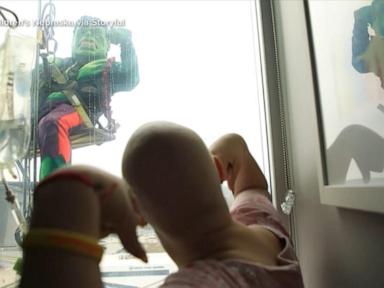
If you've ever watched a typical local broadcast segment on these events, you see the highlight reel. A guy in a red-and-blue spandex suit waves through a fourth-floor glass pane while a toddler presses a tiny hand against the inside window.
Behind that three-second clip sits weeks of logistical coordination between hospital child life specialists, facility security teams, and commercial building maintenance crews. You can't just show up at a pediatric medical center with climbing gear and a Halloween costume.
The workers performing these descents are certified rope-access technicians—often affiliated with local Omaha commercial window cleaning companies that already hold the building's maintenance contracts. Before anyone goes over the parapet wall on the roof, safety managers have to inspect every anchor point, carabiner, and descender. Costumes have to be modified so capes don't tangle in belay devices and masks don't obstruct peripheral vision eighty feet above concrete.
Once they drop over the edge, the pace changes completely from a normal workday. A standard commercial window clean is all about speed and efficiency—squeegee, wipe, drop, repeat. During a superhero event, technicians hover outside specific pediatric units for ten or fifteen minutes at a time. They mimic web-shooting motions, play rock-paper-scissors through the double-paned glass, and draw smiley faces in the soap suds before rinsing them away.
The Psychology Behind Distraction Therapy in Pediatric Care
Hospital rooms are terrifying for kids. Everything smells like antiseptic, strangers poke them with needles, and they have zero control over their schedules or bodies.
Pediatric psychologists and Certified Child Life Specialists call what happens at that window cognitive distraction therapy, and the clinical backing for it is rock solid. When a child's brain is locked onto an unexpected, high-novelty stimulus—like Batman rappelling down the outside of an intensive care unit—their nervous system shifts out of a hyper-vigilant fight-or-flight state.
Research published in journals like Pediatrics and the Journal of Pediatric Psychology has consistently shown that active distraction measurably lowers self-reported pain scores and cortisol levels in hospitalized children. Passive distraction, like watching cartoons on an iPad, helps a little. Interactive, real-world surprises work dramatically better because they demand active visual and emotional engagement.
Even more importantly, these visits give sick kids a reason to interact with their environment on their own terms. A child hooked up to an IV pole can't run down the hallway, but they can walk up to a window and wave at Iron Man. Parents get a rare break from watching their kid look miserable, and nurses often use the excitement afterward to get through difficult medication rounds or dressing changes while the patient is still riding that emotional high.
Why Omaha's Pediatric Community Embraced This Tradition
Omaha has a uniquely tight-knit medical and philanthropic culture, anchored heavily by Children's Nebraska (formerly Children's Hospital & Medical Center). Because it serves as the primary pediatric referral center not just for eastern Nebraska, but for huge stretches of western Iowa, South Dakota, and northern Kansas, families often travel hundreds of miles and stay for weeks at a time.
When you're a family from a small rural town stuck in a hospital room three hours from home, isolation hits hard. Local window-washing crews in the Omaha metro area recognized early on that they already possessed the exact specialized equipment needed to reach rooms that standard hospital visitors couldn't safely enter—especially immunocompromised oncology or transplant wards where strict infection-control rules ban outside guests.
Glass is the ultimate infection barrier. A window washer can get within twelve inches of a bone marrow transplant patient's face without introducing a single airborne pathogen into the room. That simple physical reality is why superhero window washing caught on across major children's hospitals from Pittsburgh to Omaha and never faded out like other viral trends.
What Most People Get Wrong About These Events
Because the videos look effortless, viewers tend to make a few predictable assumptions that don't hold up in reality.
First, people often assume the guys in the suits are hired actors or local charity volunteers learning to rappel for the weekend. That would be a massive liability nightmare. You cannot put an amateur on a bosun's chair or a rope-descent system outside a multi-story hospital. Every person hanging off that roof is a trained, insured commercial technician who cleans glass for a living. They're trading their regular hourly efficiency for a slower, physically exhausting shift in breathable—or sometimes brutally hot—synthetic costumes.
Second, people think these visits only impact the younger kids. Walk through an adolescent ward during a superhero drop and you'll see sixteen-year-olds acting too cool for school until Captain America taps on their glass, at which point the phone comes out and they're grinning just like the five-year-olds down the hall. Teenagers dealing with chronic illness carry a heavy psychological load, and breaking the monotony of hospital life hits them just as hard.
Third, there's a misconception that it's a one-off annual gimmick. While major media coverage usually clusters around National Superhero Day in April or the autumn Halloween season, many facilities schedule smaller window visits or coordinate with local first responders—like Omaha firefighters and police officers—throughout the year to keep morale up during long winter stretches.
The Real Safety Challenges Nobody Talks About on the News
Working off the side of a building is inherently dangerous, and adding costumes increases the risk profile if crews aren't disciplined.
Wind is the biggest enemy in Nebraska. A sudden gust whipping around the corner of a hospital tower can swing a technician laterally into a window frame or tangle drop lines. Crew leads monitor anemometers closely and will scrub or pause a descent immediately if gusts cross safety thresholds, regardless of whether local TV cameras are already set up in the parking lot.
Visibility through costume masks is another genuine hazard. Standard Spider-Man or Deadpool lenses fog up fast when a technician is sweating under a safety harness in direct sunlight. Experienced crews swap out opaque fabric eye-pieces for perforated mesh or wear open-face helmets with face paint so they can clearly see their primary ropes, backup safety lines, and the glass right in front of them.
Then there's the weight distribution issue. Every worker must wear an ANSI-compliant full-body harness over or integrated cleanly with their suit, with dual-line fall protection attached to independent roof anchors. If you look closely at news footage from Omaha, you'll always spot the heavy nylon webbing and steel D-rings strapped right over the superhero logos. Safety never takes a back seat to aesthetics.
How You Can Actually Support Hospitalized Kids in Omaha
Watching a viral clip makes you feel good for ten seconds, but passive clicks don't buy art supplies for a child life department or fund family housing for rural parents. If seeing those window washers put a lump in your throat, put that energy somewhere practical.
- Donate directly to Child Life programs. At hospitals like Children's Nebraska, the Child Life department is the team that coordinates therapeutic play, procedural prep, and special events like window-washer visits. They rely heavily on community donations to stock sensory toys, gaming consoles, and comfort items.
- Check the hospital's specific wish list before buying anything. Hospitals cannot accept used stuffed animals, knitted blankets from unverified sources, or latex balloons due to severe allergy and infection protocols. Always pull the current Amazon or target registry directly from the hospital foundation's website so your money doesn't go to items they legally have to turn away.
- Support local blood and platelet drives. Many of the kids watching those superheroes from behind the glass are oncology or surgical patients who depend on steady platelet donations from the Omaha community just to make it to the next week.
- Recognize the tradespeople behind the scenes. If your business manages commercial property in the metro area, ask your maintenance vendors if they participate in community outreach or charity cleanings—many local firms are eager to volunteer their crews when building managers greenlight the access.
Next time a video of superhero window washers pops up in your feed, watch the faces inside the glass rather than just the stunts outside. Those technicians aren't pretending to be heroes for a camera crew; for twenty minutes on a random Tuesday, they're giving a sick kid their childhood back.